Italy suspends Schengen with Spain after 60,000 cross into Ceuta from Morocco
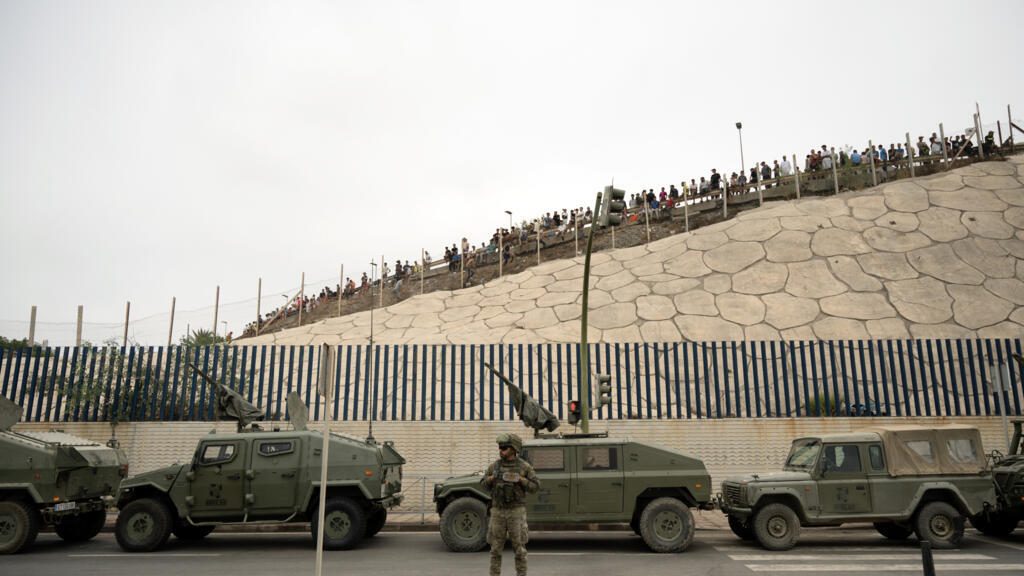
The death of 67 migrants at Europe's only land border with Africa has triggered border closures and calls to eject Spain from the free-movement zone, exposing deep fractures in EU migration policy.
Roughly 60,000 people crossed from Morocco into the Spanish enclave of Ceuta over recent days, killing at least 67 through drowning and a stampede at a breakwater barrier. The surge, one of the largest the European Union has faced in years, prompted immediate border hardening across the continent.
Italy announced on Saturday that it would suspend its Schengen arrangement with Spain for one month, halting visa-free movement between the two countries. France separately tightened checks along its Spanish border and said it would raise its police and gendarmerie presence there fivefold to 334 officers.
Several other EU governments went further, suggesting Spain's membership in the Schengen free-movement zone itself should be revoked. Spain's foreign minister José Manuel Albares pushed back, insisting the zone's integrity was "guaranteed" and reminding reporters that travellers cannot move from Ceuta or Melilla to mainland Spain without passing a police checkpoint. "Enough of this deliberate confusion," he said.
A city overwhelmed
Ceuta, a territory of just 18.5 square kilometres on North Africa's Mediterranean coast, saw its streets fill with exhausted arrivals, many of whom had swum around a small border barrier jutting into the sea. Shops shut. Annual fiestas were cancelled. By Friday evening, officials said more than 48,000 of those who had entered were already returning to Morocco.
Prime Minister Pedro Sánchez flew to the enclave on Friday with his interior minister, dispatching troops, additional police, drones, divers and boats. Sánchez placed responsibility on organised crime. "What has emerged from our talks with Moroccan authorities is that trafficking mafias took a self-serving interpretation of a Supreme Court ruling," he said, referring to a recent judgment that irregular migrants arriving by sea could not be immediately returned.
Morocco's authorities have not issued an official statement on the crossings.
European fault lines
European Commission President Ursula von der Leyen called the scenes at Ceuta "unacceptable", declaring: "We cannot allow anyone to come to our Union without abiding by our rules." Finland and Denmark backed Italy's Schengen suspension. German Chancellor Friedrich Merz demanded Morocco "take back illegal migrants immediately." France and Britain offered logistical help to Madrid even as Paris tightened its own frontier.
Portuguese Prime Minister Luís Montenegro said he was considering reinforcing border checks but saw no justification for removing Spain from Schengen.
A recurring pressure point
Ceuta and the nearby enclave of Melilla remain the EU's only land borders with Africa, making them perennial flashpoints. In 2021, more than 10,000 people reached Ceuta over two days during a diplomatic dispute between Madrid and Rabat over the Western Sahara. Sánchez visited Algiers on 20 July, the first such trip by a Spanish head of government in four years, though officials have not confirmed any link between that thaw with Morocco's regional rival and the latest surge.
For now, the immediate question for European policymakers is whether the Schengen system can absorb the political shock. Italy's one-month suspension is temporary, but the precedent of a member state unilaterally closing its border with another over migration pressure tests the architecture that underpins the single market and free movement for 400 million Europeans.