Satellite images show extent of damage to Saudi Arabia’s oil pipeline that bypasses Strait of Hormuz
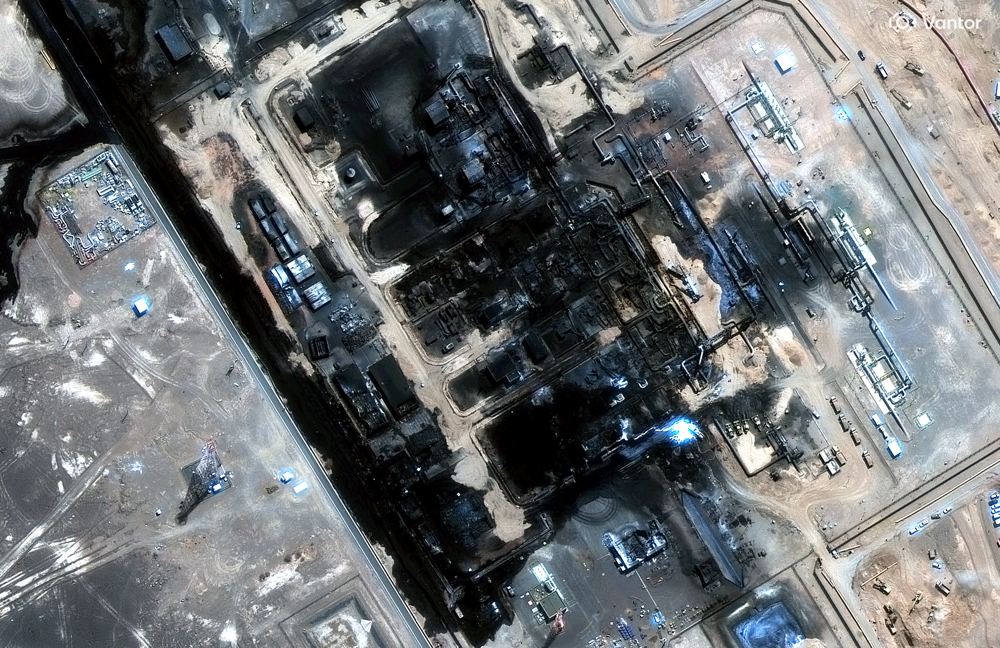
Saudi Arabia temporarily shut the roughly 750-mile pipeline as attacks threaten a key alternative to the Strait of Hormuz.
Satellite photos show the extent of the damage caused by a drone attack on Saudi Arabia's East-West pipeline , a highly strategic network that transports crude oil from Abqaiq on the kingdom's eastern Gulf coast to the port of Yanbu on the Red Sea.
Saudi Arabia on Friday temporarily closed the roughly 750-mile system, or Petroline, as a precautionary measure following multiple attacks by drones launched from Iraq. Several people were injured in the attacks, the Saudi government said, with drones targeting a key stretch of the pipeline in the Riyadh and Medina regions.
OPEC kingpin Saudi Arabia has relied on the East-West pipeline to shift crude exports away from the strategically vital Strait of Hormuz as fighting continues between the U.S. and Iran. The East-West pipeline is estimated to have a total design capacity of 7 million barrels per day, following recent expansions.
The pipeline's closure comes as Yemen's Iran-backed Houthis have ramped up attacks on targets in Saudi Arabia and launched a lightning ground offensive to exercise control of another critically important oil choke point on the other side of the Arabian Peninsula: the Bab el-Mandeb Strait.
There are concerns that the Houthis' advance toward the Bab el-Mandeb Strait could have significant ramifications for energy markets and global trade, particularly if the militant group ratchets up threats or attacks on Red Sea shipping.
Oil prices have rallied in recent days amid deepening supply concerns in the Middle East.
International benchmark Brent crude futures for November expiry rose 3.4% to $108.17 per barrel on Monday morning, extending gains after jumping more than 20% over the past month.
U.S. West Texas Intermediate futures for October expiry, meanwhile, traded 3% higher at $103.07. The contract, which is up nearly 25% over the past month, surpassed $100 for the first time since May last week.