Nobel Prize in medicine goes to the light switch for brain cells
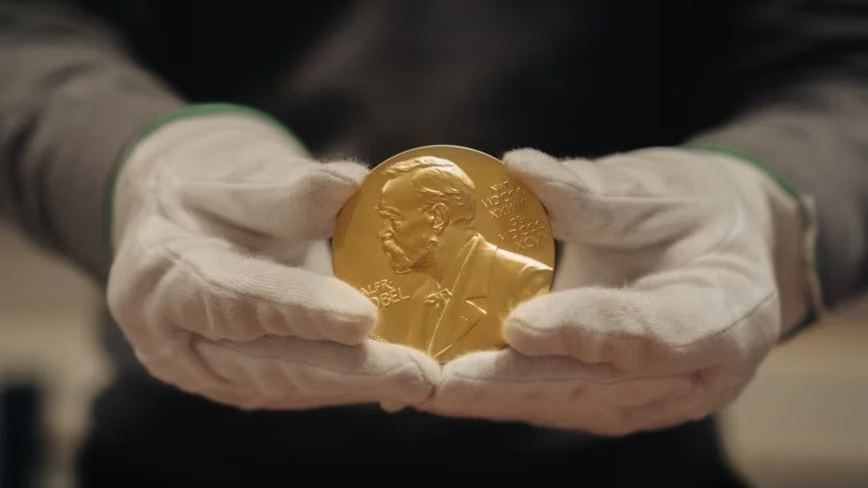
Karl Deisseroth, Peter Hegemann and Georg Nagel have won the 2026 Nobel Prize in Physiology or Medicine. The prize rewards optogenetics, a method that switches nerve cells on and off with light. The Nobel Assembly at Karolinska Institutet in Stockholm announced it on Monday, according to its press release. Deisseroth works at Stanford University and […] This story continues at The Next Web
Karl Deisseroth, Peter Hegemann and Georg Nagel have won the 2026 Nobel Prize in Physiology or Medicine. The prize rewards optogenetics, a method that switches nerve cells on and off with light. The Nobel Assembly at Karolinska Institutet in Stockholm announced it on Monday, according to its press release .
Deisseroth works at Stanford University and the Howard Hughes Medical Institute in the US. Hegemann is a professor at Humboldt University of Berlin, and Nagel at the University of Würzburg. The two German scientists made their discoveries at Max Planck institutes in Martinsried and Frankfurt. They will share the prize money of 12 million Swedish kronor equally.
“Optogenetics provides opportunities for mapping the brain in a way that we could once only dream of,” said Per Svenningsson, who chairs the Nobel Committee.
The work began with a single-celled green alga, Chlamydomonas, which swims towards light. Hegemann wanted to know how. In the early 2000s, he and Nagel found the answer: a protein on the cell’s surface called channelrhodopsin.
When blue light hits the protein, a channel opens, charged ions flow into the cell and an electrical signal starts. The two scientists found that any cell they put the protein into became sensitive to light, the committee said.
Deisseroth, a psychiatrist by training, put the gene for the protein into rat nerve cells. Blue light then made the cells fire. He published the result in 2005. Two years later, he made the switch work in the brains of living mice. Thin optical fibres carried the light deep into the brain.
The method lets scientists show which nerve cells cause which memories, feelings and behaviours. Before, they could only watch brain activity and guess at the link.
Optogenetics is still mainly a research tool, the committee said at the announcement. In medicine, researchers have used it to partly restore sight in people with retinitis pigmentosa. The inherited disease destroys the eye’s light-sensing cells. Patients wear goggles that turn what they see into light aimed at the retina, Svenningsson said. Several clinical trials are under way. Other teams are testing a retina chip instead.
Asked about brain-computer interfaces, a committee member said optogenetics could guide future systems. It shows which circuits control which functions. Companies such as Precision Neuroscience already put brain implants into patients.
A reporter also asked whether the work could explain the neural networks behind AI. Thomas Perlmann, the committee’s secretary-general, said the similarities between AI and the human brain should not be exaggerated.
Deisseroth had worked past midnight and just gone to bed when his phone started buzzing, he told The New York Times . He still planned to make his children’s school sandwiches, as he does every morning.