NYT, AFP and Economist join SPUR coalition on AI use of news
The New York Times, Agence France-Presse, and The Economist have joined a coalition that wants AI companies to stop using news without permission, the group said on Monday. The coalition, known as SPUR Standards for Publisher Usage Rights, has now reached over 80 members across more than 20 countries. It was founded in February by […] This story continues at The Next Web
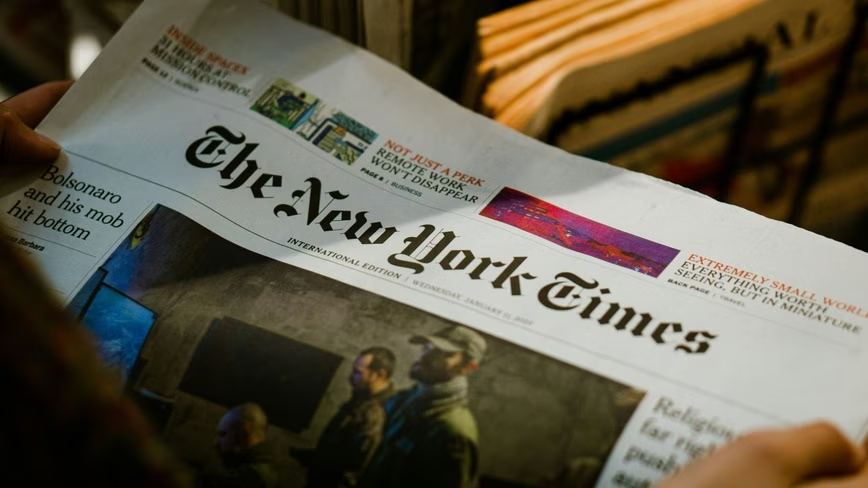
The New York Times, Agence France-Presse, and The Economist have joined a coalition that wants AI companies to stop using news without permission, the group said on Monday.
The coalition, known as SPUR Standards for Publisher Usage Rights, has now reached over 80 members across more than 20 countries.
It was founded in February by the BBC, the Financial Times, the Guardian, the Telegraph and Sky News, with the Associated Press joining later.
The Atlantic, ITV News, The Observer, L’Equipe, Radio France, NZZ, and Germany’s publishers’ association BDZV are also on board, according to a list published by Press Gazette . So are press groups from Japan, Brazil, Argentina, and Mexico.
“Intellectual property protection and technological advancement can and must co-exist,” said Rebecca Grossman-Cohen, who leads strategic partnerships at The New York Times.
SPUR does not license content on behalf of its members, who still strike their own deals with AI firms, according to its website.
Instead, it is writing shared rules and technical tools so publishers can track how AI systems use their work and get paid for it.
This month, it launched its first standard: it provides AI tools and model developers with a method for recording instances when they retrieve an article, use it in an answer, cite it, or display it to users, after which the records are sent back to the publishers.
“We can’t simply hope for the best when it comes to AI companies and the future of publishing,” said David Buttle, SPUR’s co-founder.
Last month, around 300 publishers urged US lawmakers to ban stealth AI bots that scrape their sites.
At the same time, the US Justice Department has sided with OpenAI in one case, arguing that training AI on publishers’ work can be fair use.
News sites are also losing visitors as search engines give AI answers. Over 2,500 sites saw Google search referrals drop by a third worldwide between November 2024 and November 2025, the Reuters Institute found.