Army eyes changes to emergency war gear stocks amid review
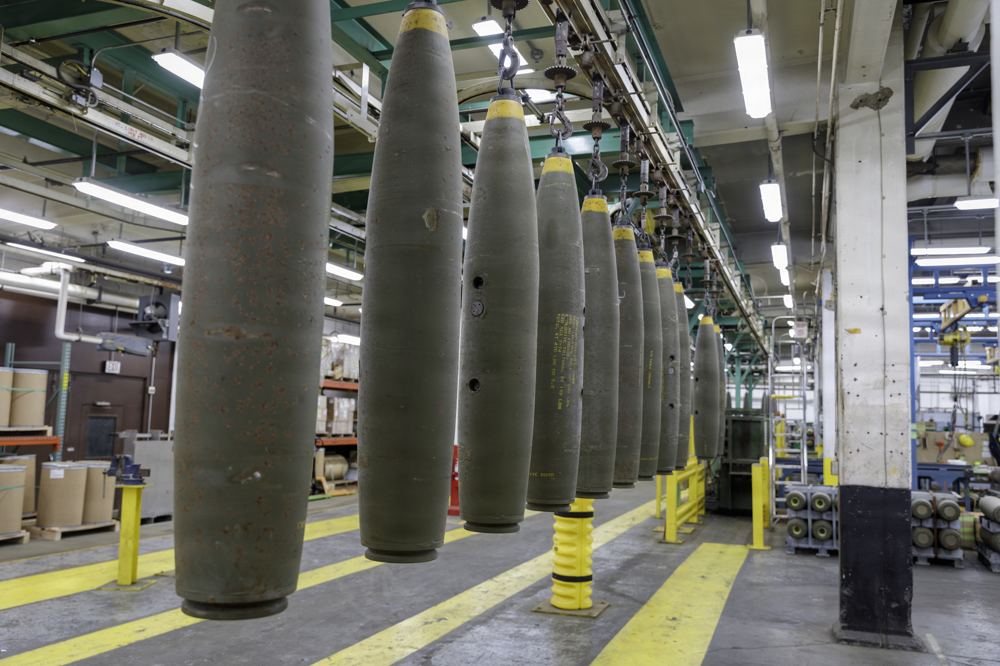
The Army is nearing decisions on changes to make to its own emergency stockpiles.
As the war with Iran provides the military with new insights on how to prepare for contemporary conflict, the Army is nearing decisions on changes to make to its own emergency stockpiles.
The service expects to soon make a decision in light of a wide-ranging review of its prepositioned stocks “within the next calendar year,” Maj. Gen. Gavin Lawrence, deputy commanding general of U.S. Army Materiel Command, told Military Times in an interview.
The review, called TAP2E, Total Army Power Projection Equipment, aims to assess the laydown of the Army’s forward-deployed and stored gear, including weapons and large vehicles, that can be activated and distributed rapidly if conflict needs arise.
The effort continues through 2032, according to a recently published Army strategy, and will cost $702 million in the next year, per Army budget documents.
“Strategically placing TAP2E in key theaters, such as the Indo-Pacific and Europe, shortens deployment timelines and demonstrates a credible commitment to allies, underpinning the nation’s integrated deterrence posture,” a budget overview for Fiscal Year 2027 states.
The Army has at least seven publicly identified stockpiles , according to a 2024 congressional report. They include two in North America; two in Asia; one afloat; and two in Europe.
The Army’s budget proposal calls for an eighth stockpile in the southwest Indo-Pacific and increases to “comprehensive maintenance and care” funding for the existing prepositioned stock focused on Europe.
“Together, these TAP2E investments ensure that forward-positioned assets are maintained at the highest state of readiness, providing a tangible deterrent to adversaries and a rapid response capability for the Joint Force,” the proposal states.
“Is it located in the right places? Do we have the right equipment in the right quantities to support preposition of materiel?” Lawrence said. “That’s critically important, right, as you look at our ability to support and prosecute operations in a contested environment, and so we’re in the process of doing that in lockstep with [the Office of the Secretary of Defense] as they make posture decisions. So we are supporting and prioritizing where we’re putting materiel accordingly.”
Last year, the then-commander of Army 8th Theater Sustainment Command, Maj. Gen. Gavin Gardner, outlined some changes that had already been identified , such as stashing less equipment on ships through the program called APS afloat and moving one new set of equipment to the Pacific in light of an increased focus on that region.
Lawrence added that another change in motion was increased reliance on Joint Theater Distribution Centers, or stockpile sites that hold more expendable gear such as medical supplies.
“We’re working hand-in-hand with the combatant commands to identify where those need to be and provide materiel according to those requirements,” he said. He declined to say how many sites had already been set up or what the total number might be.
In June, the Air Force’s Air University compiled a number of proposals dating to 2023 about how to improve Army Prepositioned Stocks for future conflict. Among them were moving maintenance and reset facilities for APS afloat stocks from stateside locations to regions in the Pacific, where the vessels are tethered, and moving prepositioned gear from concentrated “iron mountain” storage locations to smaller and more distributed caches that are harder for an enemy to target.
Lawrence emphasized that the Army was “in lockstep” with the Pentagon in carrying out changes to prepositioning stocks and “awaiting some additional guidance” from OSW before making concrete changes.