Book examines Joseph Beuys’s bid to merge art and economics
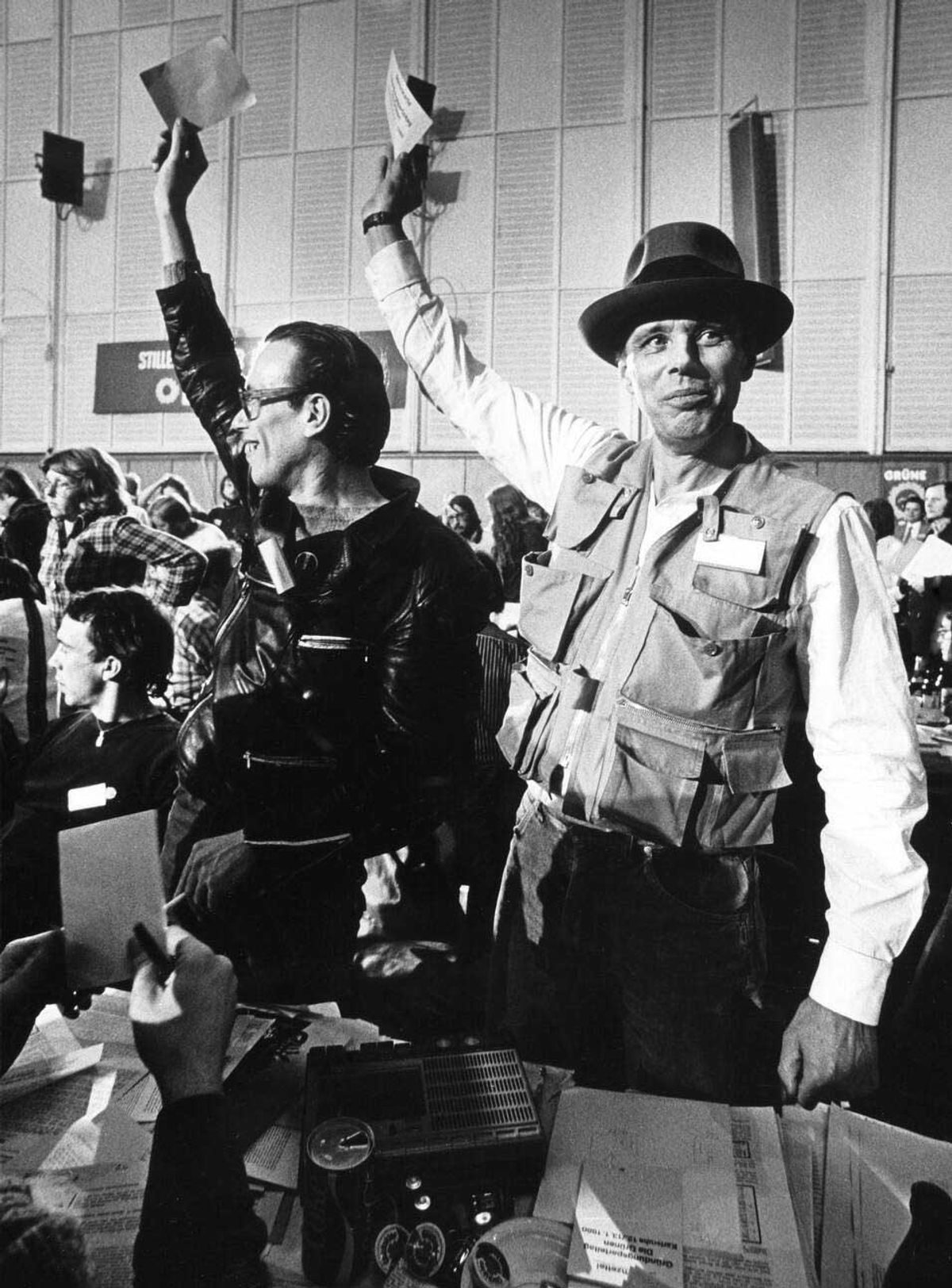
A new academic study re-evaluates the German artist Joseph Beuys not just as a cultural icon, but as a figure who tried to use art to overhaul capitalism—a project whose relevance is being tested by Germany’s current political shifts.
Princeton University Press has published Joseph Beuys and History, a new book by Daniel Spaulding that dissects the German artist’s sweeping ambition to redefine the relationship between art and economics.
Beuys, who died in 1986 at the age of 64, remains a towering figure whose stature in the art market continues to climb. Yet Spaulding, an assistant professor at the University of Wisconsin-Madison, shifts the focus from Beuys’s market value to his economic theories, questioning whether art can truly function as an independent economic force.
At the core of the book is the concept of "economimesis," an amalgam of economics and representation drawn from the theorist Jacques Derrida and philosopher Immanuel Kant. Spaulding uses this framework to judge whether Beuys succeeded in making art operate within the economy on its own terms, or whether his work ultimately remained at the mercy of broader market forces.
“Beuys was tremendously ambitious, perhaps to the point of megalomania,” Spaulding writes. The artist aimed to use the German concept of Gestaltung—meaning design or shaping—as the basis for a total remaking of society, politics and economics. He believed there should be no distinction between collective political practice and art making.
Spaulding argues that Beuys came closest to achieving this economic fusion in 1977 with Honigpumpe am Arbeitsplatz, an industrial system that circulated honey through the Fridericianum in Kassel at documenta 6. The author notes that this piece operated as efficiently as commercial production, directly paralleling and contesting the logic of post-war capitalism.
Most of Beuys’s other economic interventions fell short by those standards. His Nur Noch… series, begun in 1981, declared the end of capitalism in a set number of days. Updated by the artist for years, Spaulding suggests the work now reads as a running joke rather than a viable economic blueprint.
Beuys built his career on crafting potent myths, from his widely doubted tale of being saved by Tatar nomads using fat and felt after a Luftwaffe crash in Crimea, to his 1974 New York performance locked in a gallery with a coyote. He also bridged culture and public life directly by co-founding the Green Party.
Forty years after his death, Beuys is safely housed in German museums as a national treasure. But Spaulding’s book arrives at a stark moment for the country Beuys sought to reshape. In reunified Germany, a far-right party opposed to immigration is now a serious contender for power, underscoring the vast distance between the artist's radical vision and today's political reality.