Ankle-tagged Le Pen cleared for 2027 French presidential run
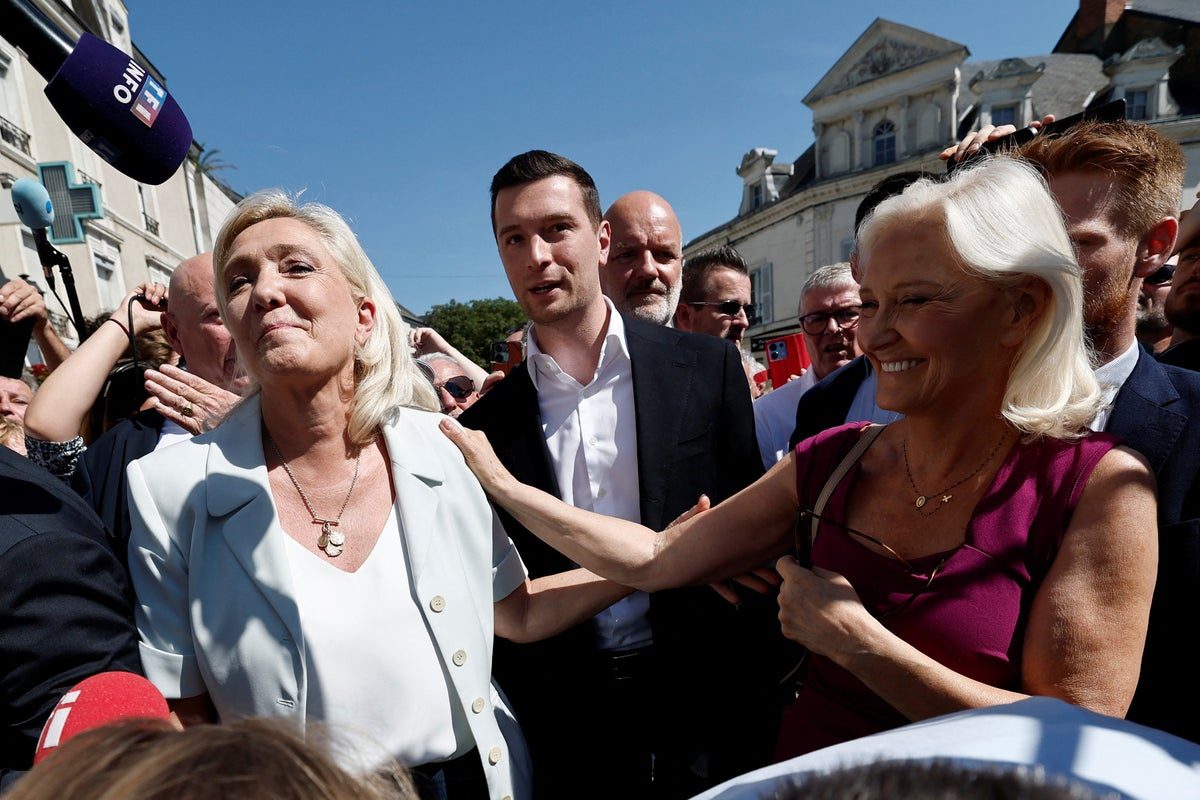
Marine Le Pen's ability to contest France's 2027 presidential election has been secured by an appeals court, setting up a polarising race that will dictate the economic direction of the EU's second-largest economy.
Marine Le Pen will run in next year’s French presidential election after a Paris appeals court upheld her embezzlement conviction but shortened an associated electoral ban. The National Rally leader, who must wear an ankle tag for the next ten months of campaigning, declared there was no longer any scenario in which she would not stand.
Her candidacy guarantees a fiercely contested battle to replace Emmanuel Macron, with profound implications for European markets and fiscal stability. France is a key driver of EU economic policy, and Le Pen's platform introduces significant uncertainty for investors already wary of Paris's public debt levels and labour market rigidities.
An Ifop survey for LCI and Le Figaro this week suggests Le Pen would secure 36 per cent of the vote in an early first round, outpacing centrist Édouard Philippe at 19 per cent and left-wing candidate Jean-Luc Mélenchon at 15 per cent. However, securing the presidency requires a second-round majority, a structural hurdle Le Pen has historically failed to clear. “She still lacks vote transfers and suffers from a credibility deficit,” said Dr Emile Chabal of the University of Edinburgh.
The legal constraints could paradoxically aid her anti-establishment narrative. “The more proceedings [Trump] had on his back, the strong he got in the polls because it made him look like he was going against the system,” noted Gregoire Roos of Chatham House. Yet Dr Pierre Purseigle of the University of Warwick warned the conviction could deter the moderate voters she needs. “It does however expose the hypocrisy and the delinquency of a candidate and a party which long railed against politicians’ corruption,” he said.
Le Pen's path is further complicated by internal economic policy disputes, most notably over pensions. While her party advocates a legal retirement age between 60 and 62, her protégé Jordan Bardella recently floated scrapping a fixed retirement age entirely. An RN MP recently described the divide as an “explosive issue” causing “internal paralysis”.
To present a unified economic front, Le Pen has sidelined Bardella's independent ambitions. “Now she is the candidate, that sends Bardella a signal that he needs to be loyal,” Roos said. Dr Chabal added that Bardella would “now have to fall back in line behind his mentor” and sharply “curtail” his independent ambitions.
Her campaign still depends on a final ruling from France’s supreme court, the Cour de Cassation. If that court blocks her, Bardella would face severe logistical hurdles to mount a viable alternative campaign before the April 18 election.