Trump's volatile Nato summit accelerates Europe's defence shift
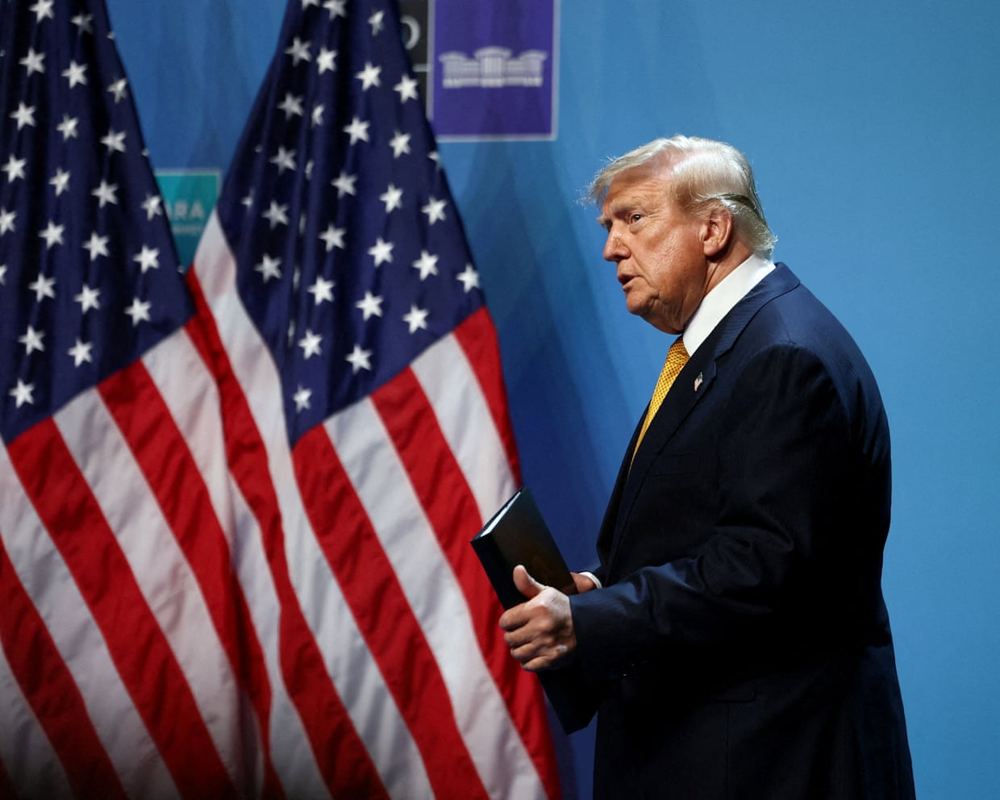
Donald Trump’s abrupt pivot from attacking Nato allies to praising them in Ankara underscores a deeper US strategic dysfunction that will force Europe to fund its own security regardless of who occupies the White House.
Donald Trump opened this week’s Nato summit in Ankara by calling Iran's leaders "scum", threatening to sever trade ties with Spain, and berating allies for not supporting his war with Iran. Hours later, he emerged from a closed-door meeting to declare there was "a lot of love in that room" and praised Ukrainian president Volodymyr Zelenskyy as "ingenious". The sudden warmth towards a leader he once told "you don't hold the cards" stunned observers.
Analysts attribute this sharp reversal to a mix of personal diplomacy and political pressure. Nato secretary general Mark Rutte apparently deployed his proven strategy of flattering the US president into viewing Europe’s rising defence spending as a personal victory. Trump’s sudden praise for Zelenskyy may also stem from disappointment in Vladimir Putin, who has offered no concessions to end the war, and an awareness of shifting sentiment in US Congress ahead of midterm elections.
The summit's host also played a decisive role. Ian Lesser of the German Marshall Fund noted the event's "bipolar quality", arguing Trump views foreign policy through individual leaders rather than institutional alliances. "President Trump was keen to be sure that President Erdoğan was able to claim a success from the summit," Lesser said, pointing to Trump’s long-standing admiration for the Turkish president.
For European governments and economies, however, the diplomatic whiplash is less important than the underlying structural damage. The broader consequence of such volatile behaviour is a permanent shift in how Europe must approach its own security. Regardless of the summit's unexpectedly positive finale, Nato is on a path to becoming a Europe-led military bloc.
European allies are now bound to a commitment to spend 5 per cent of GDP on defence by 2035. This represents a massive, long-term fiscal reordering for continental economies. It is a transition driven not by an immediate withdrawal of American forces, 80,000 US troops remain stationed in Europe, but by a chronic loss of trust in Washington's reliability.
Charles Kupchan, a Georgetown University professor and former White House adviser on Europe, warned that Trump is merely a symptom of a deeper American malaise. "The underlying problem is the collapse of the political center, the reality that the United States doesn’t really have a foreign policy any more," he said.
As US grand strategy swings wildly from one presidential election to the next, European leaders can no longer anchor their long-term security or economic planning to Washington. The Ankara summit offered the latest proof that Europe must prepare for a future where it cannot count on Uncle Sam.