Barry's Earnest Revival Shows Modern Opera Can Survive Premieres
Jack Furness’s new production of Gerald Barry’s The Importance of Being Earnest at Garsington Opera demonstrates that contemporary music theatre can achieve the rare feat of sustaining a performing life beyond its debut.
Garsington Opera has opened a new production of Gerald Barry’s The Importance of Being Earnest, directed by Jack Furness. The staging is a maximalist affair, featuring a grand piano on stilts, a dirt floor, working hoses, miniature cows, a kangaroo that meets a nasty end, and an exploding chaise longue. While the sheer volume of these zany elements occasionally turns the comedy sour and slows the pacing, the production serves a larger purpose for the European cultural sector.
New operas are notoriously difficult to sustain, often closing after their initial run and leaving commissioning institutions with sunk costs. Barry’s work, however, has achieved what the production describes as "that holy grail of contemporary music theatre: life beyond the premiere." For venues like Garsington, programming a proven modern piece reduces financial risk compared to staging entirely untested works, while still fulfilling a public mandate to present contemporary art.
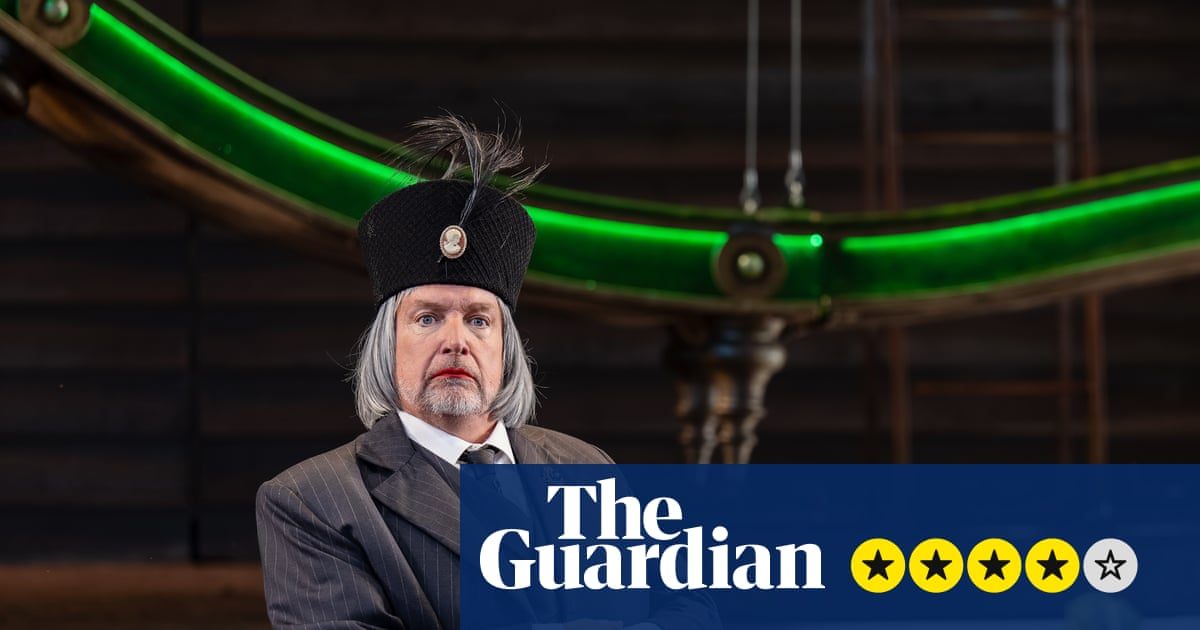
The cast navigates Barry’s score, which transposes Oscar Wilde’s comedy into what the composer calls "an opera of delirium." Henry Waddington’s Lady Bracknell serves as the evening's anchor, blending deadpan delivery with outlandish costumes that include a blunt grey bob, a beard, and later, a latex cape and military helmet. Waddington keeps a gun in a Thatcherite handbag, utilizing an astonishing facility with words in both English and German to draw the loudest laughs of the night.
The supporting ensemble prioritizes sharp diction and physical comedy over traditional vocal tone. Seán Boylan’s Algernon, Zahid Siddiqui’s Jack, and Holly Brown’s Gwendolen execute taut coordination, highlighted by an ability to spit tea on command, while Jennifer France’s Cecily provides high soprano squeaks. Susan Bickley offers an oddly touching Miss Prism, Kevin Whately takes the warm speaking role of Dr Chasuble, and Peter Lidbetter delivers a po-faced butler whose plate-smashing is a masterclass in comic timing.
Musical coherence is maintained by Douglas Boyd, who leads a subset of the Philharmonia Orchestra positioned on stage throughout the performance. Hannah Wolfe’s costume designs add crucial visual structure to the chaos, ranging from Algernon’s silk pyjamas and bowtie to Cecily’s hysterically frilled pink outfits. The result is a high-definition account of Barry’s sharply mimetic score, confirming that modern operatic works can hold a permanent, viable place in the European repertory cycle.