England reach World Cup semi-finals but Tuchel warns over tactical flaws
England have reached the World Cup semi-finals, but Thomas Tuchel's public dissatisfaction with the team's tactical execution highlights the commercial risk of relying on individual brilliance rather than systemic performance.
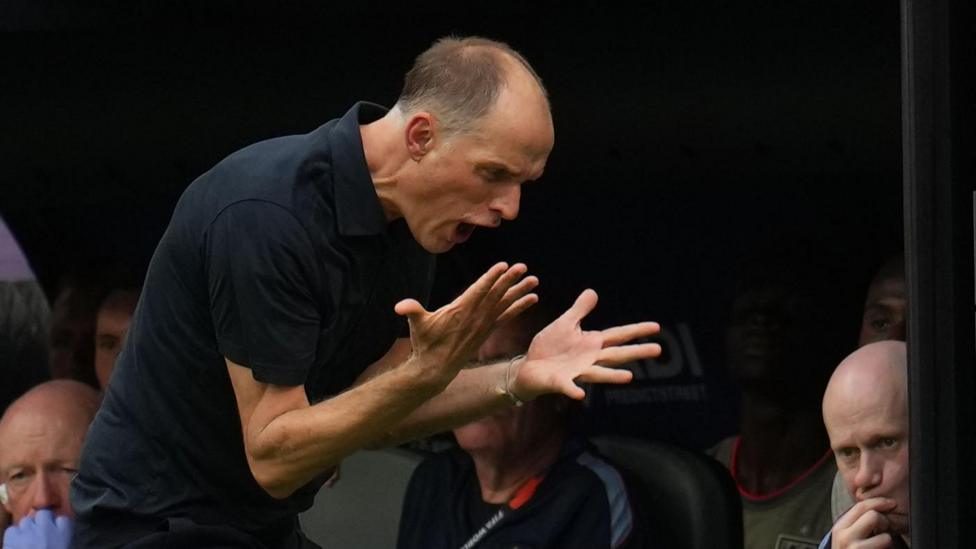
England fought hard to beat Norway in Saturday's World Cup quarter-final, securing a semi-final match against Argentina. Despite the victory, manager Thomas Tuchel offered a blunt assessment of his side's display.
"The result is fantastic but I'm not happy with the performance," Tuchel said. He praised the team's effort, spirit and belief in overcoming adversity, but criticised the players for being "sloppy" and "not fast enough" on the ball.
Tuchel's frustration stems from a failure to execute his predefined tactical framework. Players were selected for specific roles, such as Jude Bellingham and Morgan Rogers at number 10, designed to dominate possession and press aggressively. Against Norway's 4-5-1 defensive block, England were supposed to use short, repetitive passing to bait pressure before accelerating the play out wide.
While this baiting pattern emerged briefly in the first half, it faded after the break. England's possession dropped sharply from 68% to 44%. Assistant coach Anthony Barry's earlier criticism of "fearful patterns" remains relevant, as players were too slow to recognise open spaces out wide, forcing passes through congested middle areas.
For the broader European football economy, the England team acts as a primary marketing vehicle. Deep tournament runs generate significant broadcast and sponsorship revenues. However, surviving on chaotic transitions and raw individual talent, rather than a coherent, high-performance style, limits the commercial appeal of the product and increases the financial risk of an abrupt elimination. Furthermore, an inability to execute complex tactical frameworks can suppress the transfer market valuations of the players involved.
Both goals against Norway came from capitalising on disorganised defensive transitions rather than structured attacking play. Elliot Anderson's direct carry from a goal-kick and Morgan Rogers' long-range strike were ultimately finished by Bellingham, whose innate timing compensated for the system's breakdown.
Bellingham noted that the psychological facet of managing adversity remains crucial. Yet Tuchel knows individual quality alone is an unsustainable model. With Argentina next, a side that has shown vulnerabilities out wide, the manager will be desperate to finally make his wide-triangle attacking system function.