Trump's Hormuz toll threat drives Gulf exporters to Red Sea routes
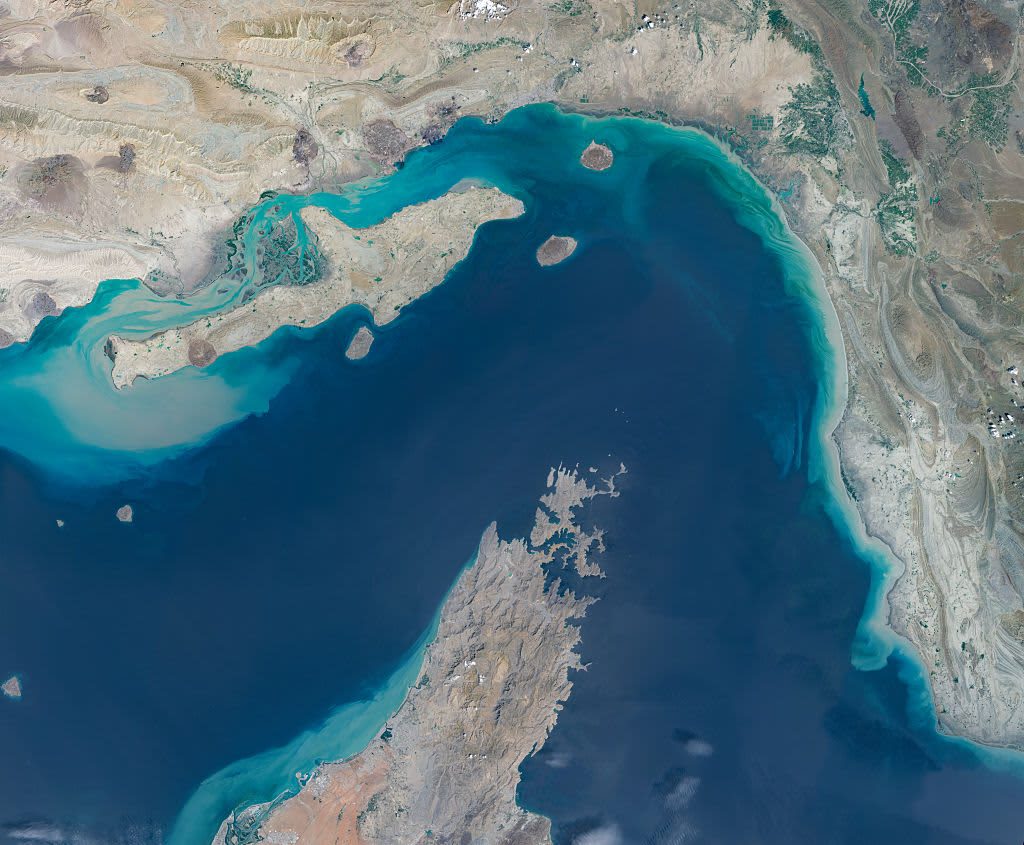
Gulf oil producers are accelerating infrastructure projects to bypass the Strait of Hormuz after a threatened US transit fee, a shift that redistributes rather than eliminates global supply risks for European energy markets.
A threatened 20 percent transit fee on the Strait of Hormuz by US President Donald Trump has triggered an accelerated push by Gulf states to reroute crude oil exports away from the vulnerable waterway. The move is reshaping Middle Eastern logistics networks, though it risks simply displacing maritime disruptions rather than resolving them.
Saudi Arabia is currently diverting roughly 4 million barrels per day through its 750-mile East-West pipeline to the Red Sea port of Yanbu. Bob McNally, president of Rapidan Energy Group, described the kingdom's ability to move this volume as a major success. "What real master stroke was Saudi Arabia being able to put all that extra oil through the Yanbu pipeline," he said.
The United Arab Emirates is pursuing a parallel strategy. DP World is reportedly in talks to build a new port and container terminal at Fujairah on the country's east coast, bypassing the Strait entirely. Ahmed bin Sulayem, chief executive of the Dubai Multi Commodities Centre, noted that the plans represent both an "immediate action" but "also a medium- and long-term plan." The UAE is also using chartered tankers to shuttle crude from inside the strait to larger vessels outside it for delivery to Asia.
However, rerouting does not eliminate geopolitical risk for global oil markets; it shifts it. Tankers loading at Yanbu must pass through the Bab el-Mandeb Strait, where Houthi attacks remain a persistent threat. Analyst Andy Lipow warned that any halt to these Red Sea shipments could remove several million more barrels a day from global supply, a scenario that would quickly transmit price shocks to European economies.
The broader limits of the Gulf's bypass infrastructure remain a constraining factor. The International Energy Agency estimates that Saudi Arabia and the UAE hold the only operational crude pipelines capable of avoiding Hormuz, offering just 3.5 million to 5.5 million barrels a day of available capacity. Kuwait, Iraq, Qatar, Bahrain and Iran still rely almost entirely on the waterway. If a prolonged closure occurs, Lipow noted that Saudi Arabia, Kuwait and Iraq could be forced to reverse recent production increases as onshore storage fills.
Developing comprehensive alternatives will require years of investment. Adam Posen, president of the Peterson Institute for International Economics, estimated it would take 18 to 24 months of sustained crisis before sufficient pipelines and alternative shipping routes are built. In the meantime, Carole Nakhle, CEO of Crystol Energy, observed that the UAE's rapid infrastructure moves carry strategic weight beyond energy security, reducing Tehran's leverage in future regional negotiations.