Drone strikes push Russian refining to 21-year low as Europe forms defence pact
Ukrainian drone attacks have slashed Russian oil refining to levels not seen since 2005, crippling Moscow's war economy and prompting a nine-nation European coalition to develop a cheaper alternative to the Patriot missile system.
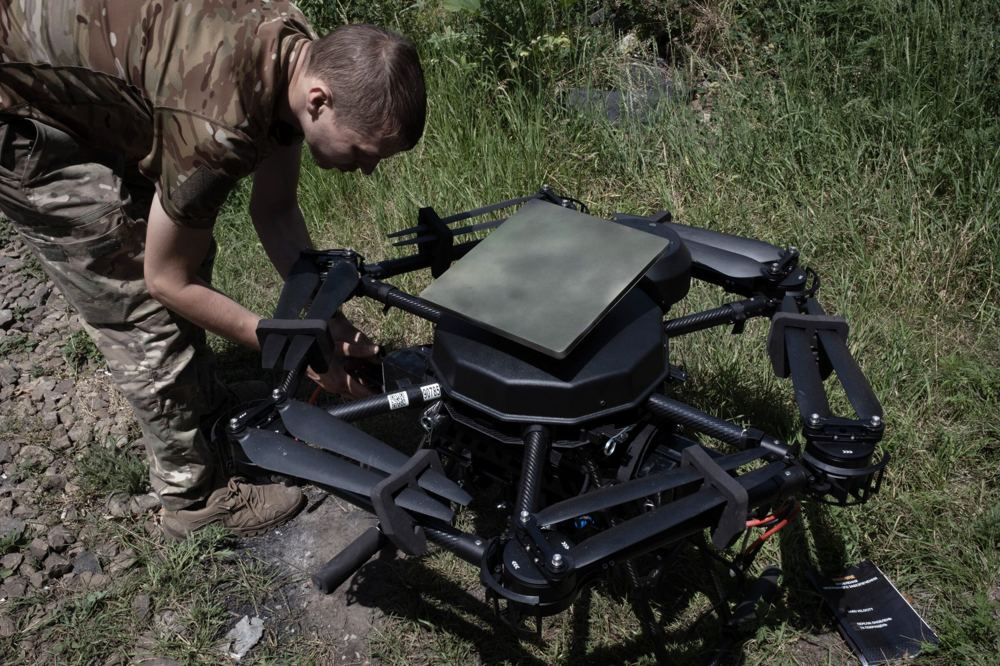
Ukrainian long-range drone attacks have pushed Russia into its worst fuel crisis since the federation's creation, cutting oil processing to 3.91 million barrels a day. According to EA Analytics, this is the lowest daily output since March 2005 and represents a drop of 1.4 million barrels compared to last year.
The recent strikes have hit deep inside Russian territory. A Tuesday morning attack ignited a fire at the Gazprom Neftekhim refinery in Salavat, roughly 1,300 kilometers from the frontline, which processed 7.2 million tonnes of oil last year. Days earlier, Ukrainian drones disabled the primary processing unit at Rosneft’s Syzran refinery.
The resulting petrol shortage reaches up to 45,000 tonnes a day, forcing sales restrictions at fuel stations in 88 of 89 Russian-controlled regions. An estimated 50 million people are affected, with Crimea left entirely isolated and wholesale diesel prices surging by 75.8 percent.
The damage is delivering a severe blow to Moscow's wartime finances. The budget deficit reached nearly 8 trillion roubles by late June against a planned 5 trillion, while state economists slashed GDP growth forecasts from 1.3 percent to 0.1 percent. “Nothing is working, nothing is flying, nothing is being produced,” Russian economist Vladimir Milov told The Insider.
With 70 percent of Russian freight reliant on roads, the crisis threatens broader supply chains and food prices. “We have to prepare for this and it will be a long-term situation. Basically, it cannot be fixed. Russia’s current outlook is essentially very simple: to become an importer of petrol. Like most countries in the world,” Milov said.
Europe builds Patriot alternative
As Russian ballistic missiles killed 265 Ukrainian civilians in June alone, nine European countries and Ukraine formed a coalition in Paris to build the Freya antiballistic missile. The programme, based on Ukrainian FP-7.x missiles, aims to provide a cheaper, faster alternative to scarce Patriot systems.
President Volodymyr Zelensky said Ukraine needs 100 Patriot missiles a month to survive the winter, but PAC-2 GEM-T munitions are expensive and increasingly unavailable following recent tensions involving the US and Iran. The Freya programme represents Europe’s push to secure its own air defence independent of depleted American stockpiles.