Unconventional Belt-Driven Mountain Bike Gains Market Credibility on European Circuit
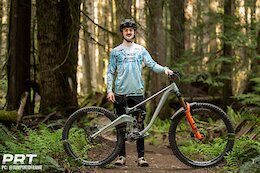
A 22-year-old Canadian racer’s recent silver medal in Austria on a belt-driven gearbox bike suggests a potential shift in how cycling manufacturers target the enduro racing market.
Canadian enduro racer Lief Rodgers secured a silver medal at the Enduro World Cup in the slippery conditions of Leogang, Austria. This marks his fourth top-10 finish of the season on the circuit. The 22-year-old is currently training in Europe ahead of the final World Cup of this block, scheduled for July 19 at Lech Arena in Switzerland.
Rodgers’s consistent results are drawing attention not just for his ranking, but for the unconventional machinery he uses to achieve them. He competes on the Priority Vanth, a 165mm travel high-pivot mountain bike. Crucially, it is equipped with a belt-driven gearbox rather than a traditional chain drivetrain.
This setup challenges prevailing assumptions in the cycling equipment market regarding what constitutes a competitive racing machine. Rodgers argues that succeeding in grueling, pedaling-intensive enduro races proves the durability of belt-driven systems more effectively than downhill events do. His background as a former cross-country junior World Cup racer makes this adaptation particularly notable.
The performance carries direct implications for component manufacturers and their marketing strategies. Rodgers suggested that Gates, the company behind the belt drive technology, might need to reconsider which discipline it targets for its $100,000 first-place prize purse. The technology's proven viability in enduro conditions offers a new avenue for product validation.
Rodgers’s rapid ascent follows a deliberate transition from traditional cycling disciplines. After failing to qualify for the cross-country World Championships in his first year as an under-23 rider, he entered the Squamish Enduro in 2022. He placed second in the under-21 category, a result that directly qualified him for the Enduro World Series.
That breakthrough shifted his career trajectory away from road and track cycling, where he had previously represented the Canadian national team. His extensive aerobic base from those disciplines now provides a distinct physiological advantage on the demanding European circuit. As the racing block concludes in Switzerland, his continued success could accelerate industry investment in alternative drivetrain technologies.