$50.1m T-Rex sale highlights fossil market boom, European academics warn
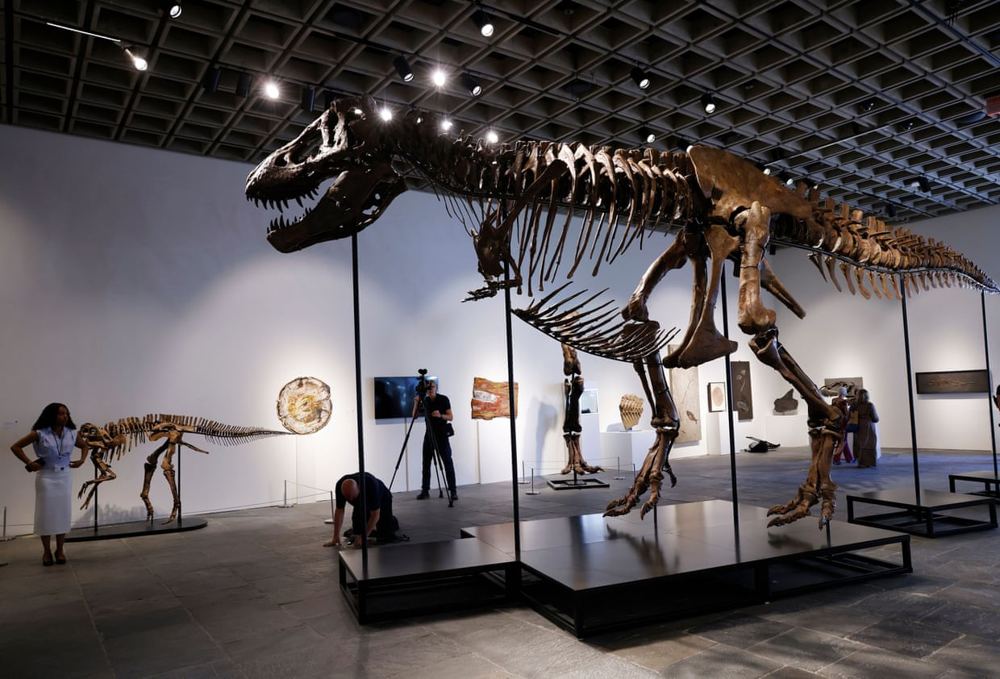
A Tyrannosaurus rex skeleton has sold for a record $50.1m in New York, underlining a booming alternative asset market that European scientists warn is pricing out museums and damaging research.
A fossilized Tyrannosaurus rex named Gus sold at Sotheby’s in New York on Tuesday for $50.1m with fees to a phone bidder, smashing the pre-sale estimate of $20m to $30m and setting a new record for a dinosaur fossil.
The sale surpasses the previous record of $44.6m set by a stegosaurus named Apex at a Sotheby’s auction in 2024, illustrating how rapidly the market for premium paleontological specimens is escalating. Once the domain of natural history museums, significant fossils are increasingly being positioned and traded as rare artworks or high-end alternative investments.
This rapid price appreciation signals a shift in how high-net-worth individuals allocate capital, with natural history competing with fine art for trophy asset status. For auction houses, this represents a lucrative new category, but it creates an uneven playing field where private bidders wielding vast capital easily outmuscle university budgets.
This commodification has drawn sharp criticism from European researchers who argue the surging prices carry a severe cost for public science. “The current trend towards dinosaur fossils being marketed and sold like rare artworks at vast prices by auction houses is very concerning, as is the idea of buying dinosaur fossils as a status symbol or a commodity,” said Richard Butler, a vertebrate palaeontologist at the University of Birmingham.
Butler noted that a fossil not in a recognised museum collection is lost to research, a problem exacerbated as prices move out of the reach of publicly funded institutions. Stephen Brusatte of the University of Edinburgh echoed these concerns, acknowledging the legality of the US auction, which allows landowners to sell finds, but stressing the scientific loss.
The 67-million-year-old skeleton, standing 3.8 metres tall and measuring roughly 38 feet in length, was excavated between 2021 and 2023 on a South Dakota ranch by the commercial outfit Theropoda Expeditions. It is roughly 61% complete by bone count and features an exceptionally preserved skull showing signs of combat or scavenging.
Sotheby’s vice-chairman Cassandra Hatton attributed the $50.1m result to the specimen's quality, stating the market “responds when great specimens are taken care of in the right way.” This diverges sharply from systems in countries such as Brazil and Mongolia, where all fossils belong to the state, keeping them in the scientific domain rather than the private trophy market.