China GDP misses target as export boom masks domestic slump
China's economy grew just 4.3% in the second quarter, missing its lowered target and signalling that a reliance on surging exports to prop up a weak domestic market will continue to pressure European manufacturers.
China’s economy grew by 4.3% in the second quarter, falling short of Beijing’s official target as weak domestic demand and elevated oil prices outweighed a booming export sector.
The expansion marks a sharp deceleration from the 5% growth recorded in the first three months of the year. It is the first full quarter of gross domestic product data since the outbreak of the Iran war on 28 February, a conflict that has driven up oil costs and complicated the economic outlook for major energy importers.
In March, Beijing lowered its annual growth goal to a range of 4.5% to 5%, the most modest expansion target set by the government since 1991. The latest figures suggest even this reduced benchmark will be difficult to reach without a sudden turnaround in domestic spending.
That internal frailty was laid bare in separate economic data released on Wednesday. The country's prolonged property market slump continued, with new home prices contracting by 0.1% in June, albeit at a slightly slower pace than the previous month. Consumer spending remains similarly fragile, though retail sales did manage a 1% increase last month following a 0.6% decline in May.
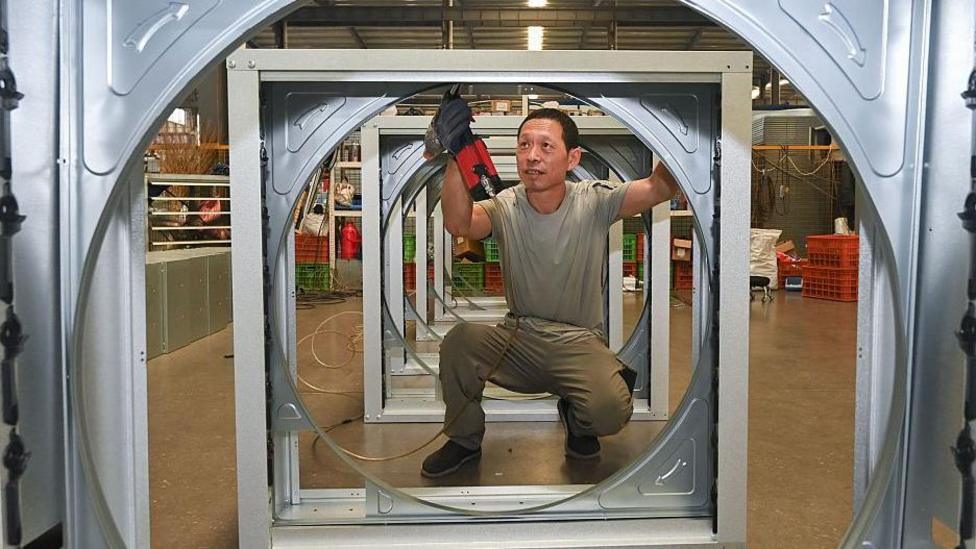
Yet, the headline GDP miss masks an extraordinary performance in China's factories. Customs data released on Tuesday showed exports surged by 27% year-on-year in June. This was powered by soaring global demand for Chinese semiconductors used in artificial intelligence data centres, alongside a historic milestone in the auto sector. Monthly car exports exceeded one million units for the first time, driven by relentless foreign demand for Chinese electric vehicles.
For European policymakers and corporate leaders, this dual economy presents a highly specific challenge. China's inability to stimulate internal demand means its vast manufacturing base will remain heavily dependent on foreign buyers to maintain capacity. As a result, European markets should expect continued upward pressure on inbound shipments of electric vehicles and tech hardware. This dynamic ensures that trade tensions with Beijing will persist, even as the broader Chinese economy loses momentum.