Thinking Machines launches open AI model to break big tech lock-in
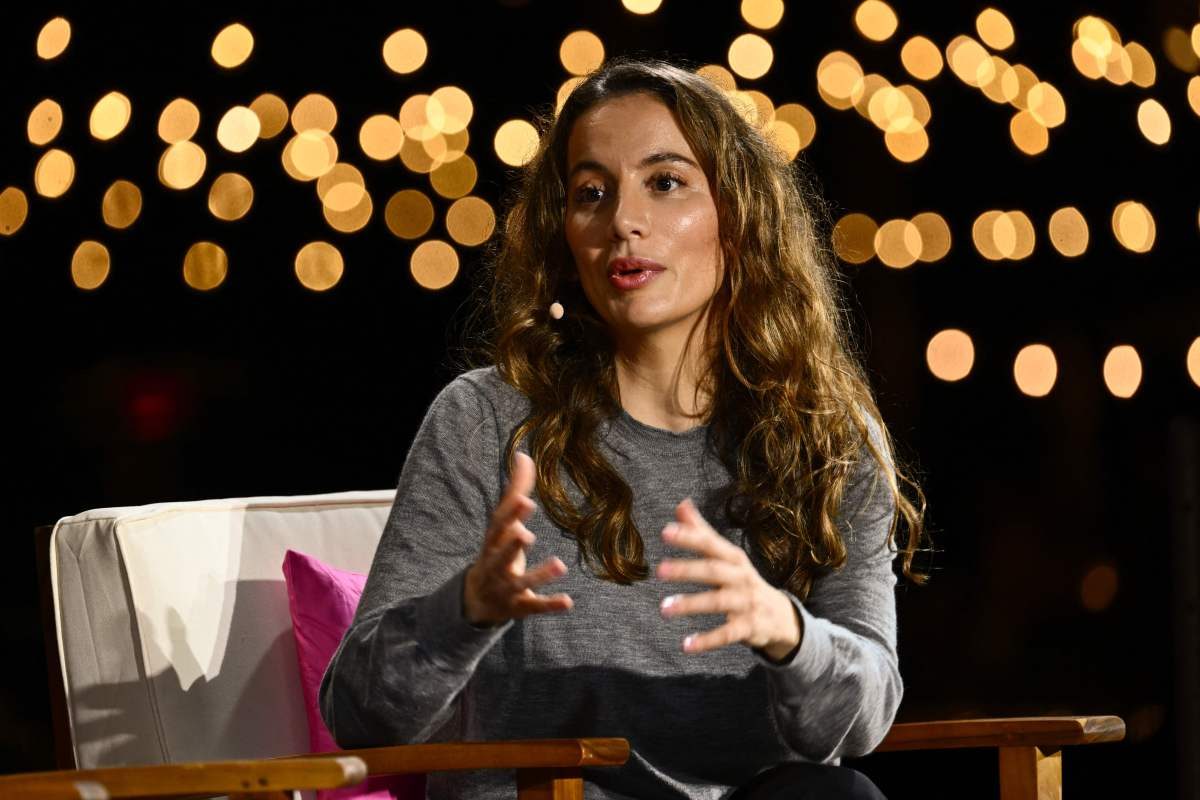
Thinking Machines has released its first open-weight AI model, betting that enterprises will abandon expensive, one-size-fits-all proprietary systems in favor of cheaper, customizable alternatives that keep corporate data in-house.
Thinking Machines Lab, the startup founded by former OpenAI CTO Mira Murati, released its first proprietary AI model on Wednesday. Called Inkling, the model is open-weight, meaning outside companies can download and modify it directly rather than paying for metered access through a centralized provider.
Inkling is a mixture-of-experts system with 975 billion total parameters, activating only about 41 billion per task to reduce computing costs. It was trained on 45 trillion tokens of text, image, audio, and video data, and reasons natively across all three formats. The company explicitly states Inkling is “not the strongest model available today, closed or open,” focusing instead on well-rounded performance and flagging uncertainty rather than guessing.
The release is a direct challenge to the dominant business model of US giants OpenAI, Anthropic, and Google. Rather than selling a finished general-purpose chatbot, Thinking Machines is positioning Inkling as a base for organizations to fine-tune internally using its Tinker platform. This targets a growing enterprise frustration with vendor lock-in and the surrendering of valuable corporate data to centralized AI labs.
That frustration was articulated recently by Microsoft CEO Satya Nadella, who warned that enterprises using proprietary models pay twice: through subscriptions and by handing over business knowledge absorbed into future versions. A recent project with Bridgewater Associates, the world’s largest hedge fund, illustrates the alternative. By training an open-source model on its own financial expertise, Bridgewater scored 84.7% on financial reasoning tests—beating top proprietary models—while costing roughly a fourteenth as much to run.
Thinking Machines brought the model to market in roughly nine months, compared to several years for its larger rivals. It trained Inkling entirely on Nvidia’s GB300 NVL72 systems under a strategic partnership that saw Nvidia make a “significant investment” in the startup. Because the model's weights are public, the company must generate revenue entirely through its Tinker customization and hosting platform, rather than charging for access to the model itself.
The approach requires customers to possess serious machine learning talent to ensure their customizations are safe. Furthermore, the company acknowledged using outputs from other open-weight models, including Moonshot AI’s Kimi K2.5, to generate early post-training data, though it insists its next model will rely on fully self-contained post-training.