Google adds custom AI avatars and Gemini Omni to Vids platform
Google has updated its Vids platform with custom digital avatars and advanced editing tools, signaling a direct challenge to specialized AI video startups in the enterprise software market.
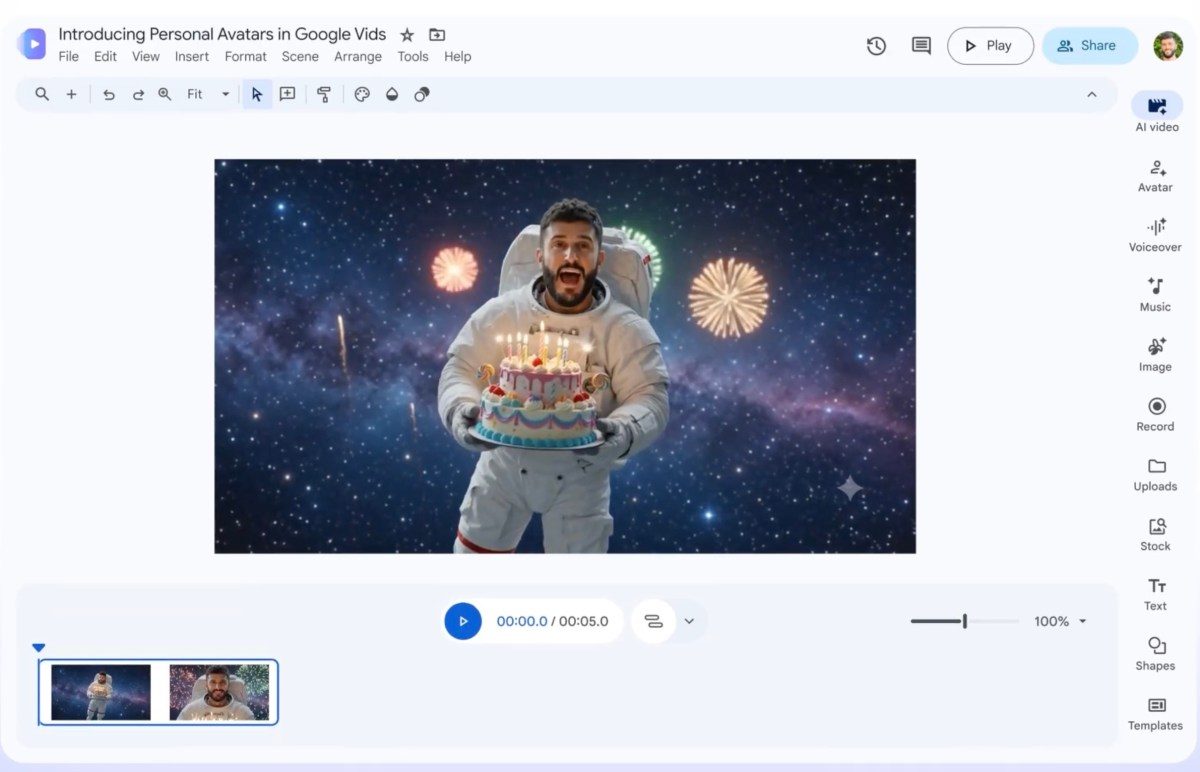
Google announced on Thursday an update to its Vids platform, introducing custom digital avatars that mimic a user’s appearance and voice based on an uploaded selfie and voice recording. The tech giant is also integrating its multi-modal AI model, Gemini Omni, into the service.
This integration allows users to generate videos by combining written prompts with uploaded reference images. The system can also adjust lighting, swap backgrounds, or apply visual effects to existing mobile recordings.
Furthermore, Gemini Omni now supports step-by-step edits. This enables users to modify their video projects incrementally rather than restarting the generation process from scratch.
These upgrades shift Google Vids beyond its initial function as an AI-assisted workplace presentation tool. By embedding these capabilities within Google Workspace, the company is positioning the software as a comprehensive solution for corporate communications, such as internal training videos or company updates.
For European enterprises, this move could accelerate the adoption of automated video content while squeezing independent software vendors. The bundling of advanced generative features into an existing Workspace subscription creates a high barrier to entry for standalone competitors relying on premium pricing.
This strategic expansion places Google in direct competition with a growing field of specialized AI video startups. Companies such as HeyGen, Synthesia, Captions, and D-ID have previously dominated the niche of personalized, avatar-driven video generation for businesses.
Addressing potential misuse, Google stated that the new AI avatars will be strictly linked to the account holder’s likeness and their specific Google account. The generated content will also carry an invisible SynthID watermark to verify its artificial origin.
Access to these personal avatar features will be restricted to users aged 18 or older in select regions. This cautious rollout reflects the broader regulatory scrutiny facing generative AI tools across global markets. Such guardrails are increasingly mandatory for tech firms operating under Europe’s stringent AI regulations.