Burnham takes UK premiership facing economic policy questions
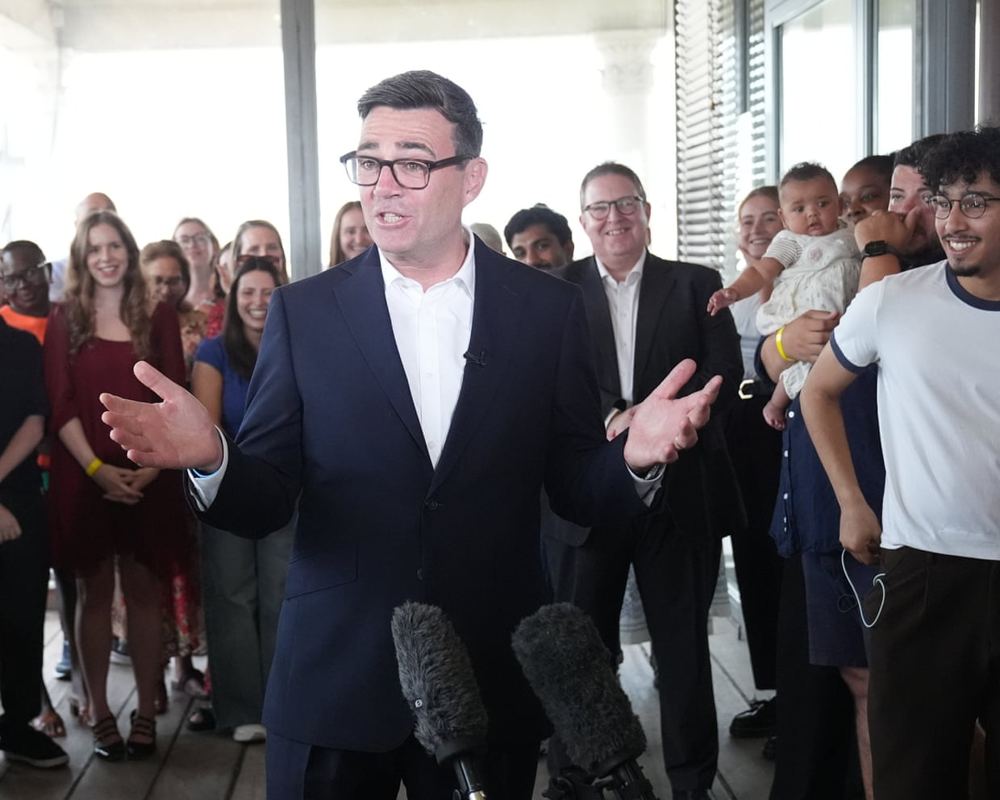
Andy Burnham will become the UK's next prime minister on Monday, but his ascent without a leadership contest leaves European investors guessing about his plans to reshape the country's economic model.
Andy Burnham became the leader of the Labour Party on Friday, taking the top job without a contest after twice failing to be elected by party members. Sir Keir Starmer will remain prime minister until Monday, when he will tender his resignation to King Charles. The monarch will then invite Mr Burnham to form a government, shifting a long-held political promise into an immediate test of governance.
The transition carries significant weight for European markets and investors. Mr Burnham has built his political identity on a northern, provincial sensibility, arguing that ordinary places deserve serious economic attention. Crucially, he has diagnosed Britain’s economic ailments by arguing that private control of essential infrastructure makes inflation harder to manage.
This stance points directly toward either widespread public ownership or significantly tighter state regulation. For companies operating in UK utilities, transport and communications, Mr Burnham’s premiership introduces a period of heightened policy uncertainty.
Yet the precise mechanics of his economic agenda remain opaque. Mr Burnham openly condemns the Thatcherite settlement that has guided the British economy for decades. However, what remains largely unwritten is exactly which institutions, powers and fiscal choices would replace it. By securing the leadership in a coronation rather than a contest, Mr Burnham has been allowed to forestall that fiscal reckoning.
He is not a political novice. As Manchester mayor during the pandemic, Mr Burnham demonstrated a knack for turning dry funding disputes with Boris Johnson’s government into broader moral arguments about who should bear the cost of a crisis. He possesses a coherent diagnosis of what ails the country, using rhetoric shaped by a deep interest in the power of language to change minds.
The poet Tony Harrison, whose memorial Mr Burnham attended earlier this year, envisioned Britain united across the class, economic and ethnic differences that split the nation. Mr Burnham claims this vision shaped him. For the European business community, the pressing question is whether this unifying rhetoric can coexist with the disruptive economic interventions his infrastructure views imply, and how quickly he will be forced to reveal his hand.