France and Germany agree China trade roadmap and joint nuclear drill
France and Germany have agreed to draft a joint plan to counter Chinese trade practices and announced unprecedented military integration, signaling a structural shift in European industrial defense policy.
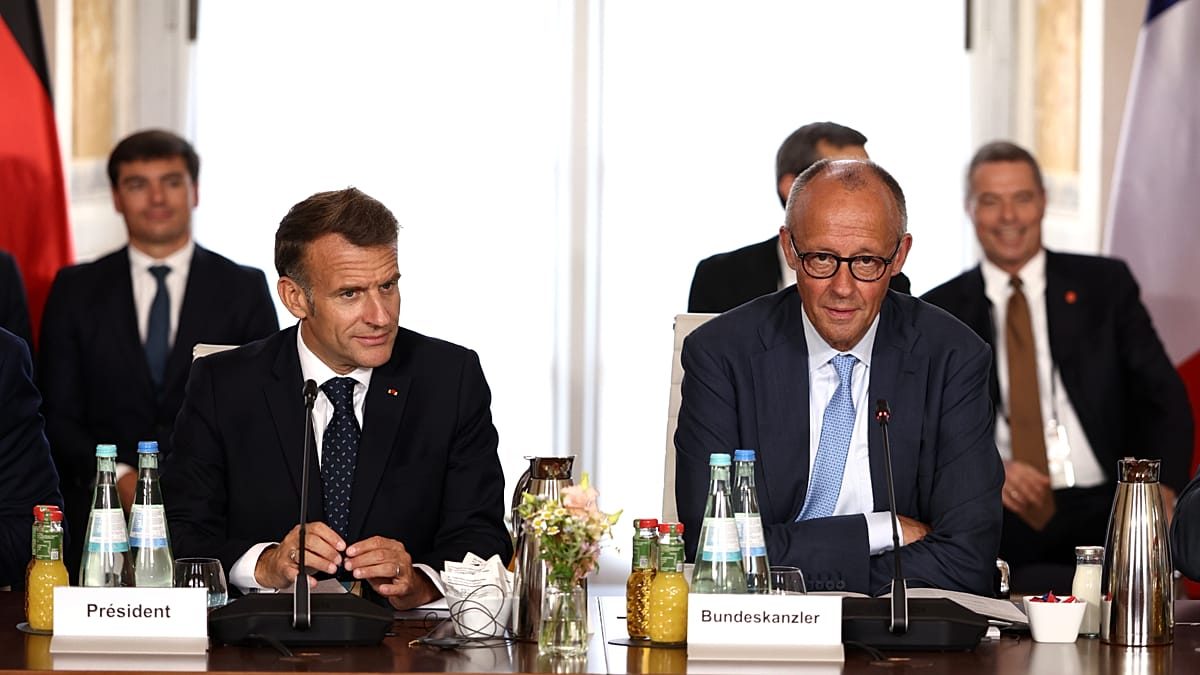
Germany and France have pledged to draft a joint roadmap by September to counteract China's trade practices, while simultaneously announcing that German forces will participate in a French nuclear exercise later this year. The commitments were made during the 26th Franco-German ministerial council at the Noervenich air base near Cologne.
The agreement on China represents a notable shift for Berlin. German businesses are heavily invested in China, leading the country to traditionally take a more cautious stance on trade friction compared to France, which has long pushed for a tougher approach. By aligning with Paris, Europe's two largest economies are now presenting a unified front to shield local manufacturing.
Emmanuel Macron warned that European industry is currently vulnerable to state-subsidized imports. "Right now we are being shaken" by Beijing's trade policies, the French president said. "We want to protect our companies and our industries. We've seen it in chemicals, we see it in machine tools, in the automotive sector and in many others."
Friedrich Merz highlighted the economic gravity of the situation by pointing to the EU's sharply rising trade deficit with China. Critics argue this deficit is fueled by an allegedly undervalued currency that artificially lowers the cost of Chinese goods. "I think it goes without saying that we have to address this imbalance, because it comes at the expense of our industry," the German chancellor said.
For European manufacturers, a unified Franco-German push could mean swifter deployment of trade defense instruments. Paris and Berlin want "to have a Franco-German roadmap on this issue by September", with economy, finance and foreign ministers tasked with formulating the plan. "We are going to push again very strongly to reinforce the mandate given to the European Commission to move much faster on market investigations and on these instruments to protect our industries," Macron added.
Unprecedented military alignment
Alongside the trade initiative, the two leaders outlined significant steps toward military integration. A newly created "strategic steering group" will examine how to strengthen deterrence in the future. As part of this, Germany will send conventional forces to take part in a French nuclear military exercise. "Alongside this work on a shared doctrine, German conventional forces will this year take part in a nuclear exercise of the French military," Merz said.
The chancellor stressed this move bolsters, rather than replaces, existing alliances. "This is complementary to our nuclear participation and deterrence within NATO, which we still hold to," he added.
Germany will also join a French-led military manoeuvre in the autumn under the Coalition of the Willing. That exercise will support a planned Multinational Force for Ukraine. Macron said the coalition will hold drills in countries neighbouring Ukraine in the coming months "to validate our deployment plans and demonstrate that we are ready."