Latvia faces migrant surge as Lithuania weighs Schengen checks
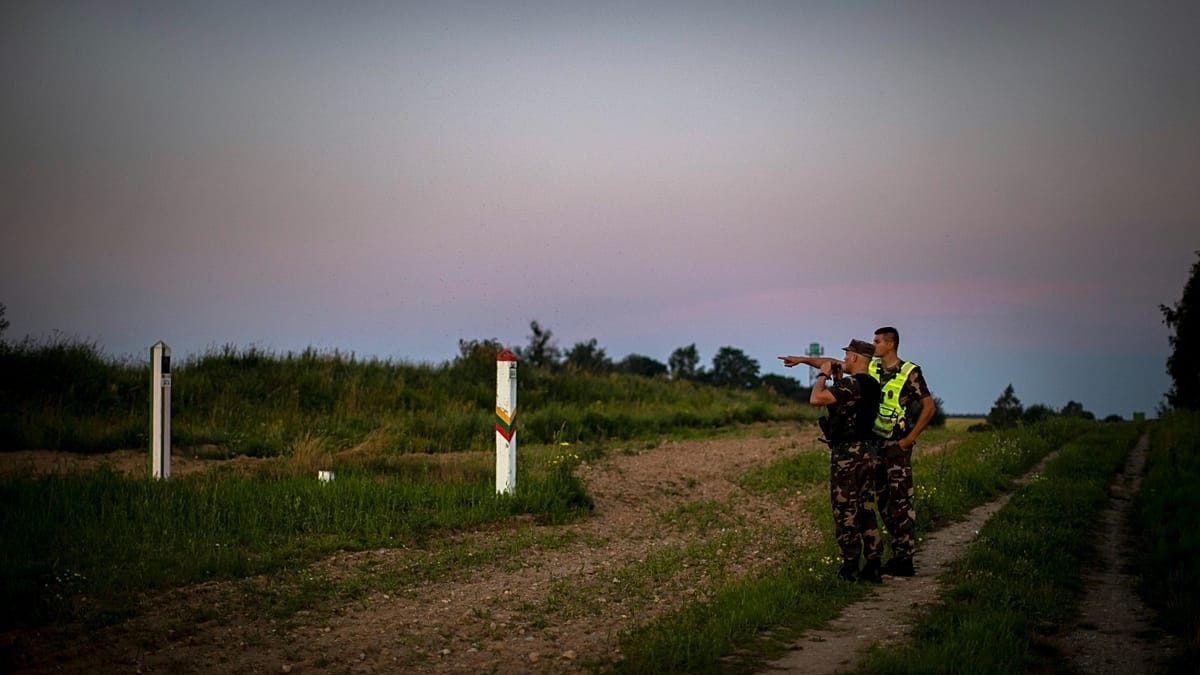
Belarus has shifted migrant routes towards Latvia's border, forcing Riga to call on its neighbours for support as the Baltic state heads into an election campaign. Lithuania is now considering whether to introduce temporary border controls to manage a rise in secondary migration from Latvia.
Belarus has sharply redirected migrant flows towards Latvia's 173-kilometre frontier, making it the primary target on the EU's eastern border just months ahead of the country's parliamentary elections on 3 October.
On Thursday, Latvia recorded 111 attempted illegal crossings in a single day. By comparison, Lithuania, which shares a border four times longer at 679 kilometres, recorded just two attempts that day, while Poland reported none the previous day.
The sudden concentration of pressure threatens to ripple across the Baltic region. Secondary migration from Latvia into Lithuania has increased more than fourfold compared to the first half of last year, prompting Vilnius to debate whether to introduce temporary border controls. "If we had no other way to manage the flow and stop migrants at the border," new Lithuanian Interior Minister Martynas Katelynas told Lithuanian public broadcaster LRT, he would not rule out the measure.
Reinstating checks on the Latvian-Lithuanian border would deal a fresh blow to the EU's Schengen area, echoing Poland's decision to carry out checks on travellers arriving from Lithuania and Germany over the past year. "At the moment there is no question of restoring border control on the Latvian-Lithuanian border," Latvia's Interior Minister Jānis Dombrava said, noting that an agreement was signed on Thursday to deepen law enforcement cooperation instead.
Baltic officials frame the influx not as a spontaneous crisis, but as state-sponsored hybrid warfare designed to stretch national resources. "Russia's ongoing war against Ukraine, openly supported by the Belarusian regime, has significantly increased security risks in the region and provides additional motivation for Belarus to continue hybrid activities, including the instrumentalisation of migration," a spokesperson for Latvia's Interior Ministry said.
Authorities allege Belarus facilitates crossings by flying migrants in legally before transporting them to the frontier, providing equipment to breach barriers, and blocking them from turning back. "This is not spontaneous migration," Lithuanian State Border Guard Service spokesperson Lina Laurinaitytė said. "It is a state-organised operation designed to exert political pressure on the European Union."
Despite barriers and expanded surveillance built since 2021, Latvian resources are stretched. "The State Border Guard is doing everything possible,” Dombrava said, “however, given the intensity of the migration pressure, the resources currently available are not always sufficient to intercept every group of illegal migrants in time."
Estonia has deployed two 12-member teams, and Lithuania has sent nine border guards and two dogs. "The Latvian-Belarusian border is both the external border of NATO and the European Union, and thus also our border," Estonia's Veiko Kommusaar said.