UK's new PM to base part of executive office in Manchester
Britain’s new prime minister plans to establish a northern executive base to devolve state power, a high-stakes test of whether the UK can genuinely rebalance its highly centralized economy away from London.
Andy Burnham, Britain’s newest prime minister, intends to move part of his executive office to Manchester to create what he calls “No 10 North”. The dedicated department will oversee plans to devolve power and resources to cities and regions across the UK. Burnham has vowed the base will not be an outpost of London, but “the nerve centre of a rewired Britain”.
The proposal is a direct attempt to dismantle the UK’s acute economic centralization, a structural issue that has long skewed investment, talent, and property markets toward the capital. If successful, shifting real decision-making out of London could reshape regional economies by signaling to the private sector that secondary cities are viable investment hubs. Anthony Breach, director of research at the Centre for Cities, notes that such relocations act as a crucial signal to business communities that a location is “worth investing in”.
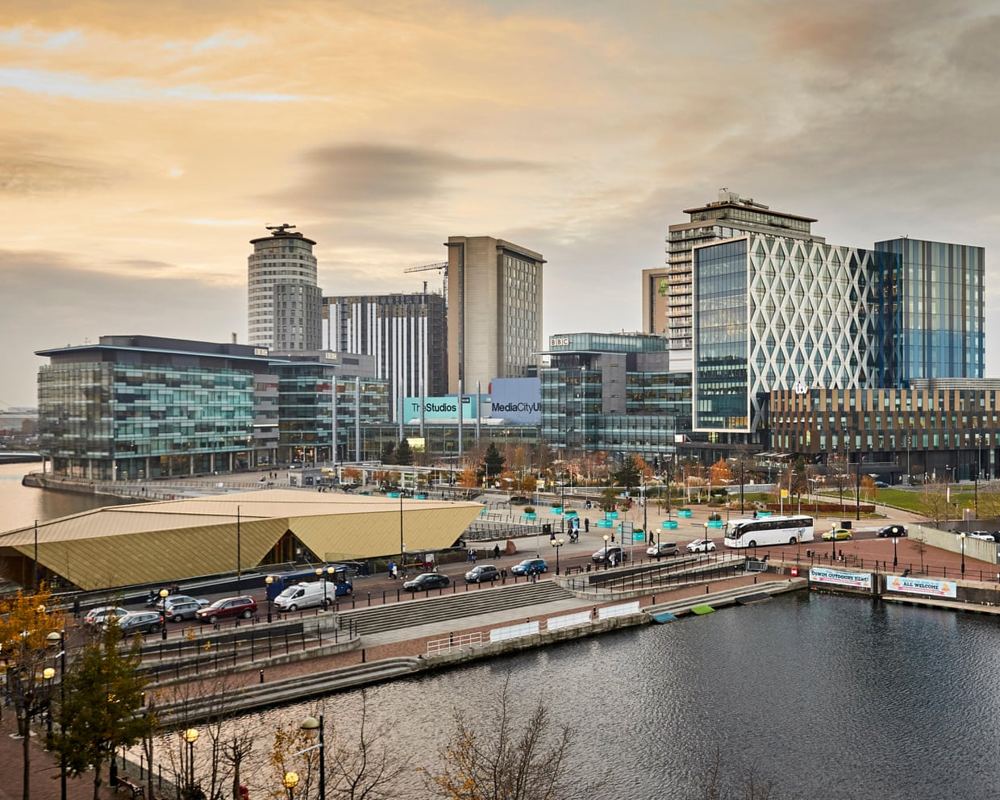
The BBC’s move to Salford 15 years ago offers the most prominent template for this kind of decentralization. Despite fierce initial resistance from London-based talent, Jeremy Clarkson said he would rather quit than work in “a small suburb with a Starbucks”, the broadcaster relocated entire divisions, including BBC Sport and 5 Live. Today, MediaCity hosts 3,500 BBC staff and 250 tech and creative businesses.
Alice Webb, now CEO of MediaCity who oversaw the BBC's shift, attributes that success to unwavering leadership from the top. “Yes, there was a lot of resistance, but there was also a deep, deep conviction, a very strong sense of leadership from the top of the BBC, that this was the right thing to be doing,” she says. The relocation also forced a rapid technological upgrade and a more flexible working culture.
The Treasury’s hub in Darlington, described by chancellor Rachel Reeves as “a No 11 of the North”, provides a more recent civil service parallel. A fifth of all Treasury staff are based there, including second permanent secretary Beth Russell. A Treasury source notes the move only succeeded because a senior minister championed it, proving to ambitious staff that relocating would not be “the nail in the coffin for your career”.
However, the risks of poorly executed relocations are substantial. When the Office for National Statistics moved its head office from London to Newport in 2007, 90% of staff resigned rather than relocate, causing a measurable slump in output and a loss of institutional expertise. Furthermore, while 21% of the civil service is now based outside London, Hannah Keenan of the Institute for Government points out that two-thirds of senior roles remain in the capital.
“Civil servants understand where the power is,” Keenan says. For Burnham’s “No 10 North” to avoid becoming what one Labour MP dismissed as “performative” and a “gimmick”, it will require the prime minister and his most senior officials to actually base themselves in Manchester. Only their physical presence can shift the underlying gravity of British economic governance.