“If you call yourself a pop band you can get away with anything...”
In this extract from the new issue of MOJO, we uncover how Depeche Mode submerged themselves in Berlin’s techno and S&M scenes - and emerged ready to corrupt UK pop.
When Depeche Mode’s principal songwriter Vince Clarke left the band shortly after debut album Speak & Spell , the omens didn’t look good for the fresh-faced synth pop outfit from Basildon. However, with keyboard player Martin Gore taking the creative reins, Depeche Mode became something else entirely. Something darker, richer, and more subversive.
In the new issue of MOJO, on sale now, Dorian Lynskey traces one of the most remarkable metamorphoses in modern music, uncovering how Gore, Dave Gahan, Andy Fletcher and new recruit Alan Wilder emerged - via West Berlin’s notoriously decadent techno and S&M club scene, with a new kind of electronic music - one which would soon see them become global superstars. In this extract from our cover feature, MOJO discovers how Gore submerged himself in the nocturnal underbelly of Cold War-era Berlin, and injected a new transgressive element into British pop…
Dave Gahan once said that Depeche Mode worked so relentlessly during the 1980s that whenever he got home he didn’t know what to do with himself. The impact on Martin Gore was not dissimilar. “I don’t know how Martin did all that and wrote all those songs,” says Mute Records boss and Depeche producer Daniel Miller. “It was just tour, record, tour, record, and that did have its price of course. It was not the healthiest way of doing things, but it seemed right at the time.”
When Depeche Mode returned to Berlin’s Hansa studios to complete their fourth album, Some Great Reward , they fully immersed themselves in Berlin’s nightlife, none more so than the German-speaking Gore, who fell in love with a Berliner called Christina Friedrich and relocated there for two years. Gore had been a shy, quiet teenager who didn’t drink, rarely left Basildon and dated a devout Christian. “That pulls your reins back a little,” he drily told me in 2001, “but after we split up I moved to Berlin and got as far away from Basildon as I could, not geographically, but mentally. I think I discovered freedom in my life for the first time.”
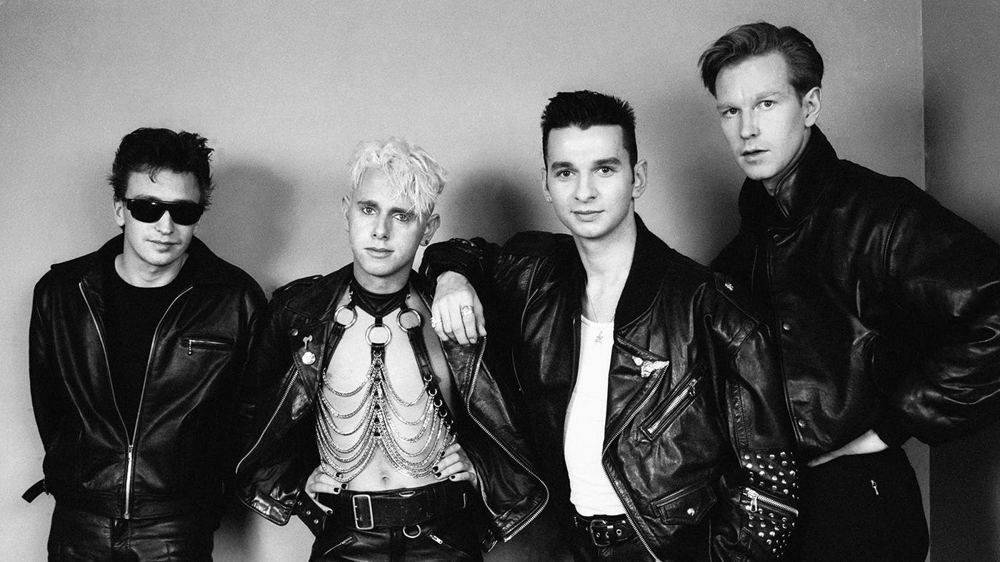
Gore’s expeditions into Berlin’s demimonde took in gay clubs including David Bowie ’s old haunt Dschungel as well as S&M clubs (“a fascinating scene”), which initiated a radical change of image. He took to appearing in black nail varnish and lipstick and outré ensembles of black leather, padlocks and chains, including a skirt that he would be asked about for years to come.
Gahan, who had been stealing cars and spraying walls while the teenage Gore was writing songs in his bedroom, was amused by the songwriter’s delayed adolescence. “He has totally changed,” the singer told the NME’s Danny Kelly. “But he’s just being the way he wanted to be anyway.” Four years into a relationship with Joanne Fox (they were married in 1985), Gahan craved stability but, as he told me, was in denial. “I’d already had these wild years, and I did have a longing to have some kind of normality in my life on a personal level. But to be honest I was fooling myself.”
Gore’s nocturnal excursions fed into the new album’s obsessions. Some Great Reward would essay boredom, hedonism, deceit, heresy, power and sex. To the dismay of the church-going Andy Fletcher, he suggested calling the album Perversions . Master And Servant used S&M as a broader metaphor for control and submission, while Blasphemous Rumours, in the dry assessment of Smash Hits’ reviewer Neil Tennant, gave God “a severe ticking off”. “We kind of subtly corrupt the world,” Gore told Record Mirror’s Andy Strickland. “Basically, if you call yourself a pop band you can get away with anything.”
Get the new issue of MOJO, in UK shops and available to order for delivery wherever you are now!, to read the full story behind Depeche Mode’s daring mid-80s transformation. “Everybody was growing up…” discovers Dorian Lynskey. More info and to order your copy HERE !