Roy Hattersley: Labour politician who helped start the party's modernisation
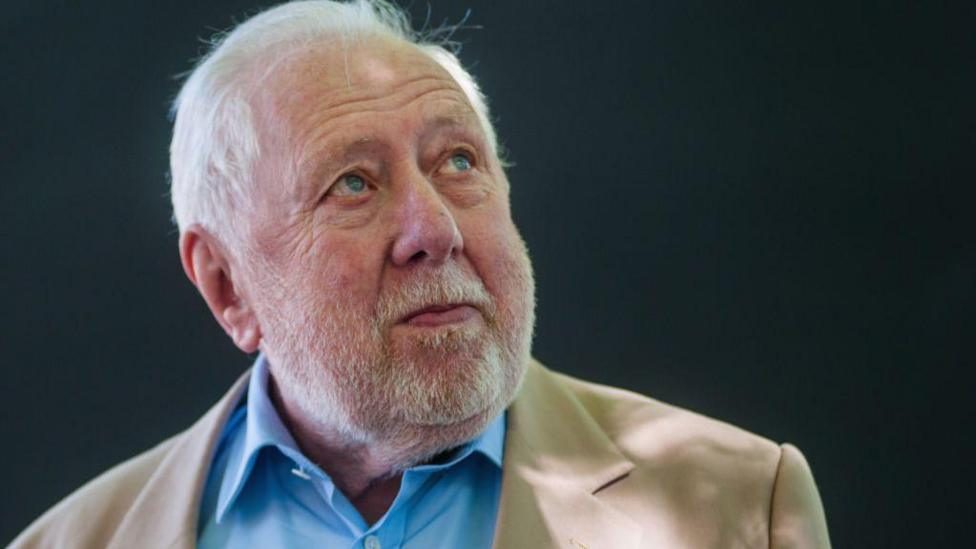
Able Labour politician, often at odds with his party, who became a successful author and columnist.
Roy Hattersley, who has died at the age of 93, was one of Labour's cleverest and most articulate post war politicians.
But he was fated to spend more than two-thirds of his career in opposition, and only briefly achieved cabinet rank.
A moderniser before the term was invented, he vigorously opposed Labour's shift to the left after Margaret Thatcher's victory in 1979.
As Neil Kinnock's deputy leader in the 1980s, he encouraged his party to embrace multilateral disarmament, the market economy and the European Union.
As a result, they saw off the challenge of the SDP and laid the foundations for New Labour which, eventually, resulted in the 1997 Blair landslide.
Roy Sydney George Hattersley was born in Sheffield on 28 December 1932, into a family steeped in Labour history.
His mother, Enid, who served a term as the city's Lord Mayor, described herself as being born into the party.
His father, also called Roy, shared her political drive. He had once been a Catholic priest - before quitting the church to run off with Enid, two weeks after he'd married her to someone else.
Young Roy was a political campaigner in his early teens, delivering leaflets and knocking on doors in support of local councillors and parliamentary candidates.
He won a scholarship to Sheffield Grammar School before going to the University of Hull to read economics, following a friend's suggestion that it was an essential subject for any budding politician.
On leaving Hull, he worked briefly in a Sheffield steel mill and spent two years teaching in further education.
In 1956, he was elected to Sheffield City Council, and served, for a time, as chairman of the housing committee.
In 1959, he fought the seat of Sutton Coldfield, failing to dislodge the sitting Conservative MP as Harold Macmillan won a landslide nationally.
And over the next three years, Hattersley unsuccessfully applied for 25 seats before being selected for the Conservative marginal of Birmingham Sparkbrook.
In the general election of October 1964, Hattersley won the seat as Labour scraped back into power with a parliamentary majority of just four.
This was partly due to his previous support for the former Labour leader Hugh Gaitskell, who was an opponent of unilateral disarmament and other policies sacred to the Trade Unions.
He got his first foot on the ladder when he was appointed parliamentary private secretary to pensions minister Margaret Herbison. But it was three years before he received his first ministerial posting.
In 1968, Roy Jenkins and Tony Crosland urged Wilson to promote him, and he became an under-secretary of state at the Ministry of Labour, under the forthright Barbara Castle.
His first task was to help implement the unpopular Prices & Incomes Act, which sought to hold down wages to curb inflation.
At the same time, Castle was trying to roll back the power of the Trade Unions.
She outlined her proposals in a White Paper, In Place of Strife. Amongst other measures, it suggested a ballot was needed before strike action was taken.
There was a bruising row in cabinet and Castle's plans collapsed, and Hattersley moved to the Ministry of Defence.
In 1969, he was required to sign the order that sent British troops into Northern Ireland - while his boss, Denis Healey, recovered from a trip to hospital.
Hattersley also disbanded the B Specials, the controversial reserve police force, replacing it with the Ulster Defence Regiment.
In the 1970 general election, he held his seat but Labour was out of office and he spent all but five of the next 27 years in opposition.
Hattersley was appointed shadow spokesman on foreign affairs, and became a keen supporter of the Common Market.
And he was one of 69 Labour MPs who voted, with the Conservative government, in favour of British entry - an issue that would split the Labour Party for the next two decades.
When Labour regained power in 1974, Hattersley was made minister of state for foreign affairs.
In 1976, he supported Jim Callaghan in the leadership election, and was appointed secretary of state for prices and consumer protection.
But three years later, Labour was swept out of office following the industrial strife of the Winter of Discontent, and the Conservatives held power for the next 18 years.
Hattersley became shadow minister for the environment and helped organise Denis Healey's unsuccessful leadership campaign.
But Labour was ideologically split down the middle, and it was the candidate of the left, Michael Foot, who won.
Despite believing that the Labour left was leading the party to oblivion, he refused join many of his political soulmates, who had left to form the centrist SDP.
In 1983, Labour stood on a leftwing manifesto and was soundly defeated.
In the aftermath, Hattersley stood for the leadership but was defeated by Neil Kinnock - and settled for the post of deputy leader.
Together, the so-called "dream ticket" worked to eradicate Militant - a Trotskyite far-left group - in the hope of making Labour electable again.
This meant throwing out policies previously seen as party shibboleths, but victory remained elusive.
After two election defeats, both Hattersley and Kinnock resigned.
They had rejected unilateral disarmament, accepted that Britain's future lay in Europe, stopped short of full-throated support of the miners' strike, and spoke warmly about the market economy.
Hattersley supported John Smith in his successful bid for the leadership, but - having turned 65 - left Parliament at the 1997 election.