G7 expected to deliver minerals pact, but EU resists Trump’s minimum price plan
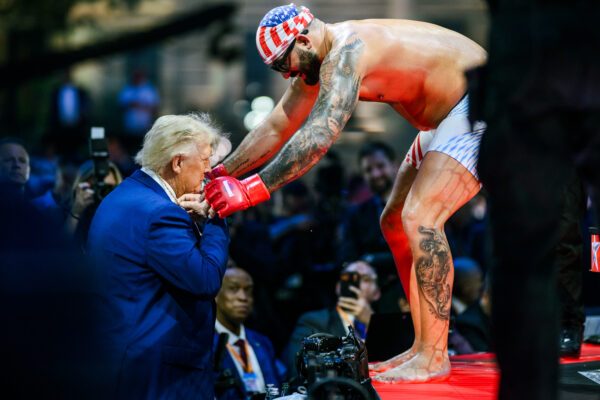
The Trump administration has been pushing a plan for minimum pricing of critical minerals shaped by a Pentagon-drafted formula. But EU leaders fear this could replace one dependency (China) with another (the US).
Leaders of the G7 countries are expected to reach agreement on a list of critical minerals on which they should cooperate to curb Chinese dominance, but the EU is pushing back against a US demand for minimum pricing of minerals.
The G7 plans to release an outcome document on critical minerals at the summit that will focus on a small number of strategically important minerals, including heavy rare earth elements such as antimony, graphite and tungsten.
But the EU is leading resistance to a plan drawn up by US vice president JD Vance that would feature minimum pricing for critical minerals based on a pricing formula drawn up by the US Pentagon.
The formula, which is based on artificial intelligence, is designed to estimate fair market prices by taking production costs into account while excluding what Washington sees as distortions caused by Chinese market practices.
However, EU officials are wary that this would replace one dependency with another by leaving them reliant on a US-controlled pricing formula.
The minimum price proposal has also received a lukewarm reception from the mining sector.
The EU Commission’s economic agenda is based on reducing dependencies, among them China’s dominant position in controlling minerals access.
At a press conference on Monday (15 June), EU Commission president Ursula von der Leyen told reporters that “we see a concentration of critical minerals in China” which controls access to around 70 percent of the world’s supply.
Benjamin Fox is our trade and geopolitics editor. His reporting has also been published in the Guardian, the East African, Euractiv, Private Eye and Africa Confidential, among others. He is based in Nairobi, Kenya, although he often reports from London.