Why Mary Cassatt was more than just a painter of the 'modern Madonna'
The curator Mary G. Morton tells us about her new publication that paints the Impressionist artist in a new light
As the centennial of the death of Mary Cassatt (1844-1926) brings renewed attention to the US-born Impressionist, a new publication challenges the image of her as a sentimental painter of mothers and daughters. In Cassatt Reconsidered, Mary G. Morton uses her expertise as a curator and head of French paintings at the National Gallery of Art in Washington, DC, to examine how the art world shaped Cassatt’s reputation, and posits a broader view of her within radical French Modernism.
The book coincides with major exhibitions on Cassatt, including at the Musée d’Orsay in Paris (until 31 January 2027), the Art Institute of Chicago (until 3 January 2027) and the New Britain Museum of American Art in Connecticut (7 November-14 February 2027). Looking closely at the artist’s work and framing her within the experience of women in a modern Paris, Morton shows why Cassatt deserves another look.
Mary G. Morton: I thought I knew enough about Cassatt until a 2014 exhibition at the National Gallery on Cassatt’s artistic pas de deux with Degas emphasising their radical technical experimentation. A few years later, an encounter with the PhD candidate Nicole Georgopulos transformed Woman with Sunflower (1905) in my mind from a generic mother and child image to a complex realist allegory, a kind of feminist manifesto responding to and supporting the contemporary suffrage movement. The public recognises Cassatt’s name but associates her with images of maternity. There is so much more to her art, to her story.
How did the art market contribute to the narrowing of Cassatt’s reputation?
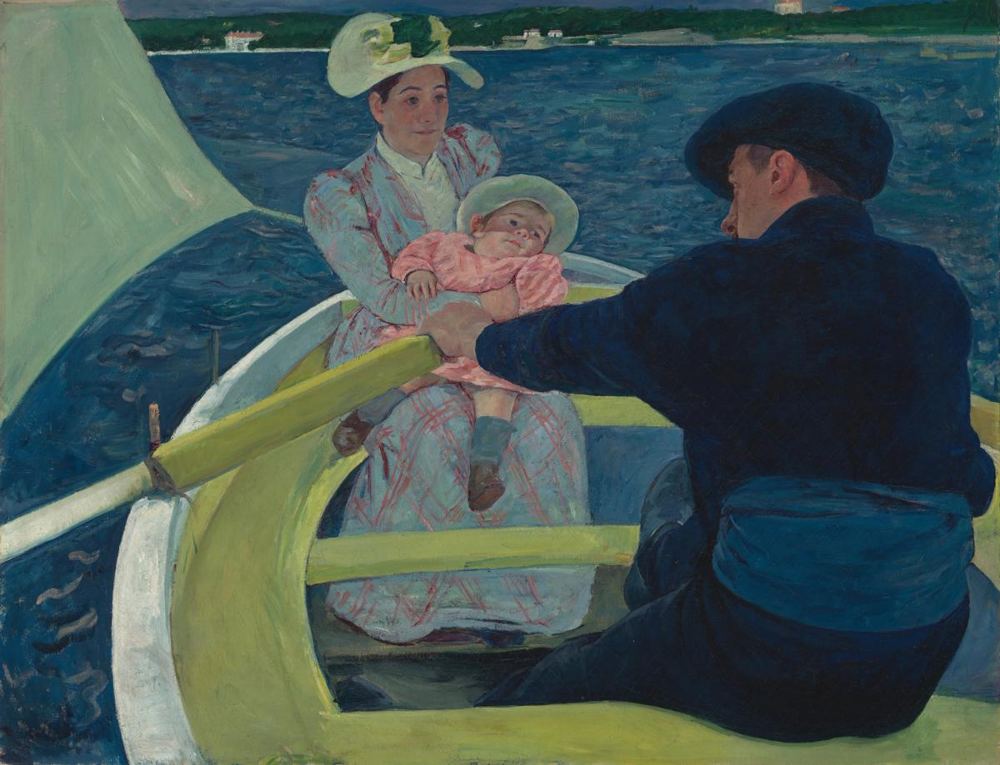
Her dealer essentially marketed her as a painter of motherhood, the painter of the “modern Madonna”, hiring critics to write about her in this vein. And while he had success selling her work, the strategy did not serve her well in art historiography. Another dynamic is the burgeoning field of American art history in the 20th century, when Cassatt became an asset to curators as an Impressionist. In most major US museums, her work hangs with US artists, depriving her of the aesthetic context in radical French Modernism. She looks loud, garish, awkward, whereas if you put her with Degas, Renoir and Morisot, she fits in.
What would you like museums, scholars and the public to see differently about Cassatt?
It would be great if Cassatt could exit the limited box she has been put into. Cassatt was the most successful avant-garde artist of the 19th century to represent the lived experience of women in modern urban Paris. She created a fresh visual vocabulary for women’s interests and concerns, refusing the oppressive social norms of her class and producing an extraordinary body of work. Cassatt brings us women’s side of the story.
The primary aim of this book is to provoke readers who might be familiar with Cassatt as a misty-eyed painter of mothers and children to look again. My hope is that the book compels people into museums to find Cassatt’s art and experience what I have: brilliantly expressive, innovative objects that relay a unique vision of humanity and of women’s lives as they were lived more than 100 years ago.
- Mary G. Morton, Cassatt Reconsidered , Getty Publications, 208pp, $35 (hb)