New York Studio School revamp unearths long-forgotten murals
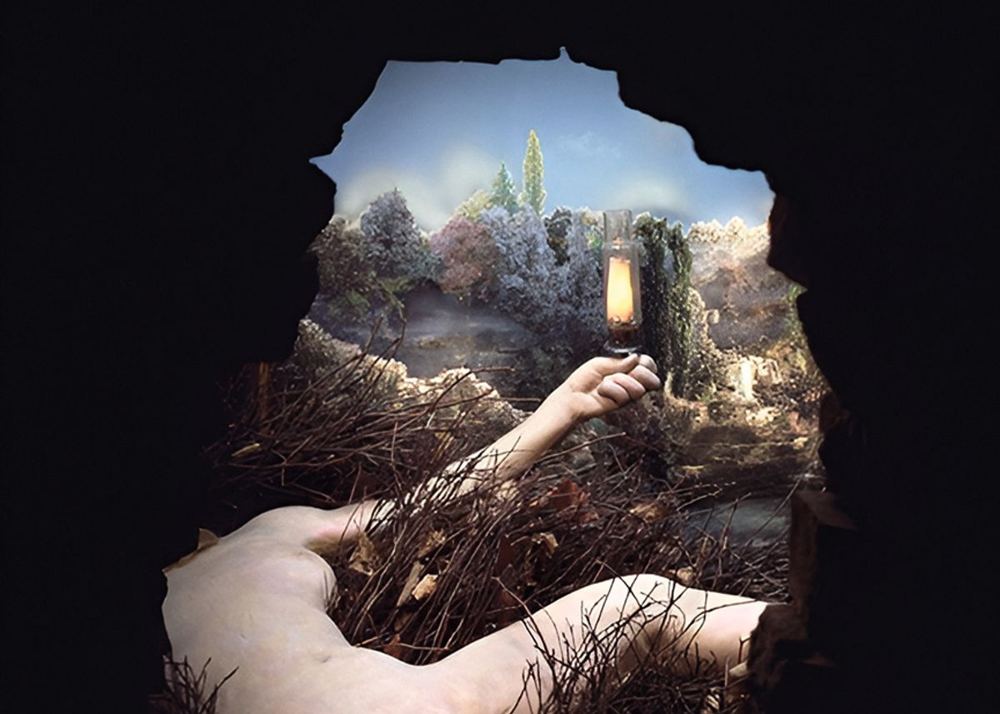
A renovation project at the historic building—the original home of the Whitney Museum of American Art—has uncovered works by Robert E. Locher and Cecily Brown
Back in 1907, Gertrude Vanderbilt Whitney established her sculpture studio in a converted stable and hayloft on MacDougal Alley in the heart of Manhattan’s Greenwich Village. The heiress and artist then proceeded to procure four neighbouring brownstones one by one, with the Lincoln Memorial sculptor Daniel Chester French being the last holdout.
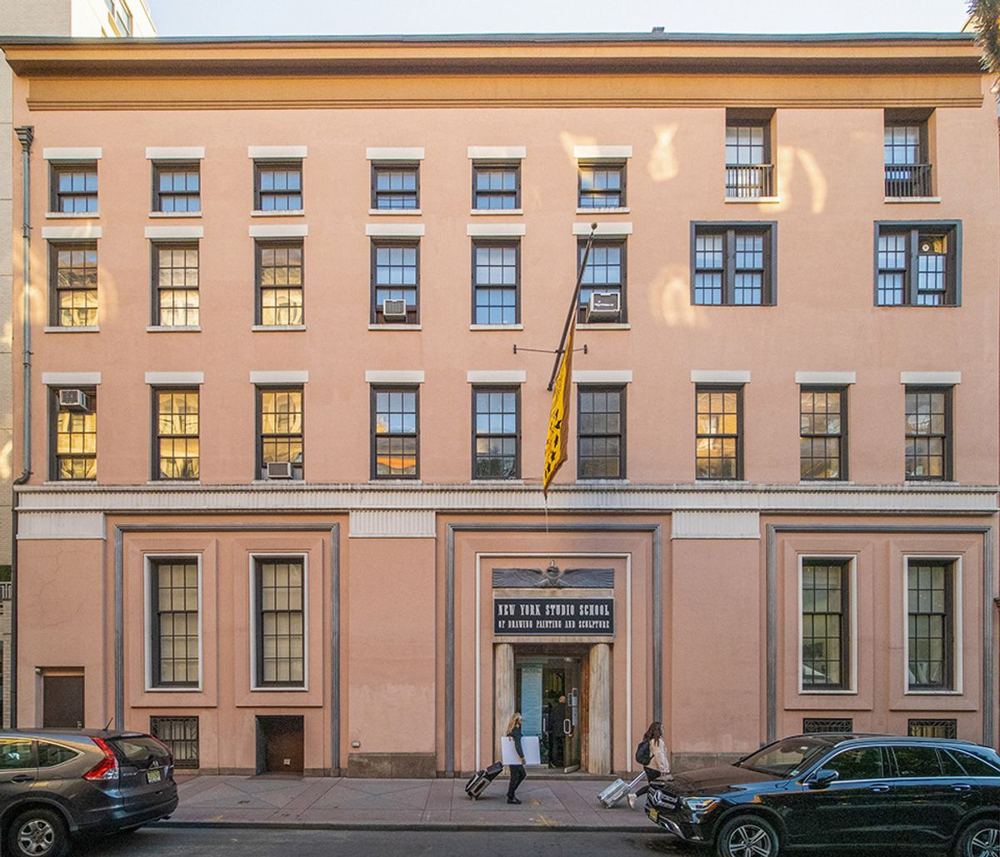
The five buildings that now comprise 8 West 8th Street are some of the New York art world’s most storied. It was here that Whitney promoted US artists at a time when they were widely denigrated, and where she opened the Whitney Museum of American Art in 1931. After the museum relocated uptown, the nascent New York Studio School (NYSS) moved into the compound in 1967.
Over the past century Edward Hopper sketched, John Cage lectured and Philip Guston taught within these walls. Countless other greats practised, exhibited or, in the case of Marianne Faithfull, lived in what is now a National Historic Landmark. “This building has been the incubator for American art for 120 years,” says the artist Matthew Ritchie, sitting in a bare-bones conference room on a warm September afternoon. It has also been sorely in need of a makeover at least since he was a student here in the 1990s.
When Ritchie was named the school’s director last year, the roof and studio skylights, coveted by students for their diffused natural light, leaked, the nearly century-old cloth-wrapped wiring had deteriorated dangerously and wheelchair access was extremely limited. His priority was renovation. The first phase, including doubling the public exhibition space and creating a new accessible lecture and performance hall in wood with stepped seating, is set to be completed this autumn, and phase two will begin in the spring.
Prior to Ritchie’s arrival, the school had obtained public grants for the necessary work, but they required matching funds and their expiration date was fast approaching. He quickly marshalled forces. The board agreed to donate the required money, he says, and the school tapped Matthew Baird of Baird Architects to helm the overhaul.
Ritchie and Baird’s history of collaboration dates back 17 years and across two other local institutions. In 2009, they teamed up to consider the effects of rising sea levels on the built environment as part of the interdisciplinary Rising Currents project at the Museum of Modern Art . Just a few years later, they put their theories into practice after Hurricane Sandy tore through the city, its storm surge flooding much of downtown. Ritchie was on the board of the beloved alternative art space The Kitchen when it enlisted Baird to rehabilitate its waterlogged lobby and black-box theatre.
The architect’s sensitive execution on that project, he preserved visual evidence of flood damage, for example, made him an obvious choice for the NYSS project, which presented a similar challenge. “You have this really cool building that’s got this patina of great artists that have moved through it,” Baird says. “How do you not erase that?”
Thanks to Baird and Ritchie’s handle-with-care edict, the construction crew was on the lookout for treasures buried beneath layers of plasterboard. The artist Cecily Brown had told Ritchie that she painted her first mural on a school wall when she was a student in the 1990s but could not remember where. And the school archives held numerous photos of murals Whitney had commissioned from the artist Robert E. Locher for the original carriage house.
Sure enough, the crew uncovered the work of both artists within a 24-hour period. Brown’s piece, featuring disembodied penises, two of them appearing to kiss, is in the newly expanded gallery space on the main floor. To prevent it from potentially distracting from exhibitions, the design team installed a shallow cabinet in front of the mural.
Ritchie jokes that the set-up resembles a gabinetto segreto , or secret room, the most famous of which was a locked vault of erotic artefacts from Pompeii and Herculaneum. “Who doesn’t want a Cecily Brown mural? And then, who doesn’t want pornography in your brand-new public gallery?” he says with a laugh. “It’s the perfect combination.”
Workers discovered the two Locher murals where a bathroom and a hallway leading to it will be built. Intended to be viewed in the candlelight of Whitney’s dining room, one is a glimmering green, the other a trompe l’oeil image of doric columns. Baird tweaked the layout but not the location of the restroom. “Now it will be the most historic bathroom in New York,” Ritchie says.
A less fortuitous surprise: the beams beneath Robert Winthrop Chanler’s flame-motif fireplace in Whitney’s original second-floor studio were cracking, requiring emergency shoring up to stop the ceiling from collapse, together with the priceless fireplace. “This is the urgency of renovation,” Ritchie says. “You can wait too long, and then you lose it all.”
Because of the grant deadlines for the first phase of the project, Baird needed to work at warp speed, condensing three years of planning, permitting, bidding and execution into one. Owing to New York City’s complex building code, he approached the $2.2m renovation as “100 small projects” rather than gutting the 59,000 sq. ft building. The landmark-restoration specialist Jonathan Raible is overseeing the new roof.
In addition to enhancing the first floor’s public spaces, Baird rewired the building, renovated the wreck of a kitchen and improved accessibility by adding a wheelchair lift to the performance hall. “You can’t have a public programme if you don’t provide correct facilities for the public,” Ritchie says. “You’re not really welcoming them.”
Climbing the narrow staircases to the maze of studios where the school’s 27 full-time, in-person students work, Baird speaks enthusiastically about the second phase of renovations, which will include a student coffee bar. In keeping with his preservationist instincts, he plans to relamp with LED bulbs the elegant Fresnel recessed box lighting that Whitney installed for evenly washed walls, and he hopes to restore the system of baffles that modulated direct light in the studios as well as undertake other restoration while safeguarding the landmark’s character.
Ritchie already has his eye on another, likely longer-term fix for the school: free tuition. “That would require a very large endowment from extremely generous single or multiple donors,” he says, giving his best impression of a silver-tongued salesman, “which we’re eagerly awaiting with an entirely unique naming opportunity.”