France's new building rules sideline air conditioning
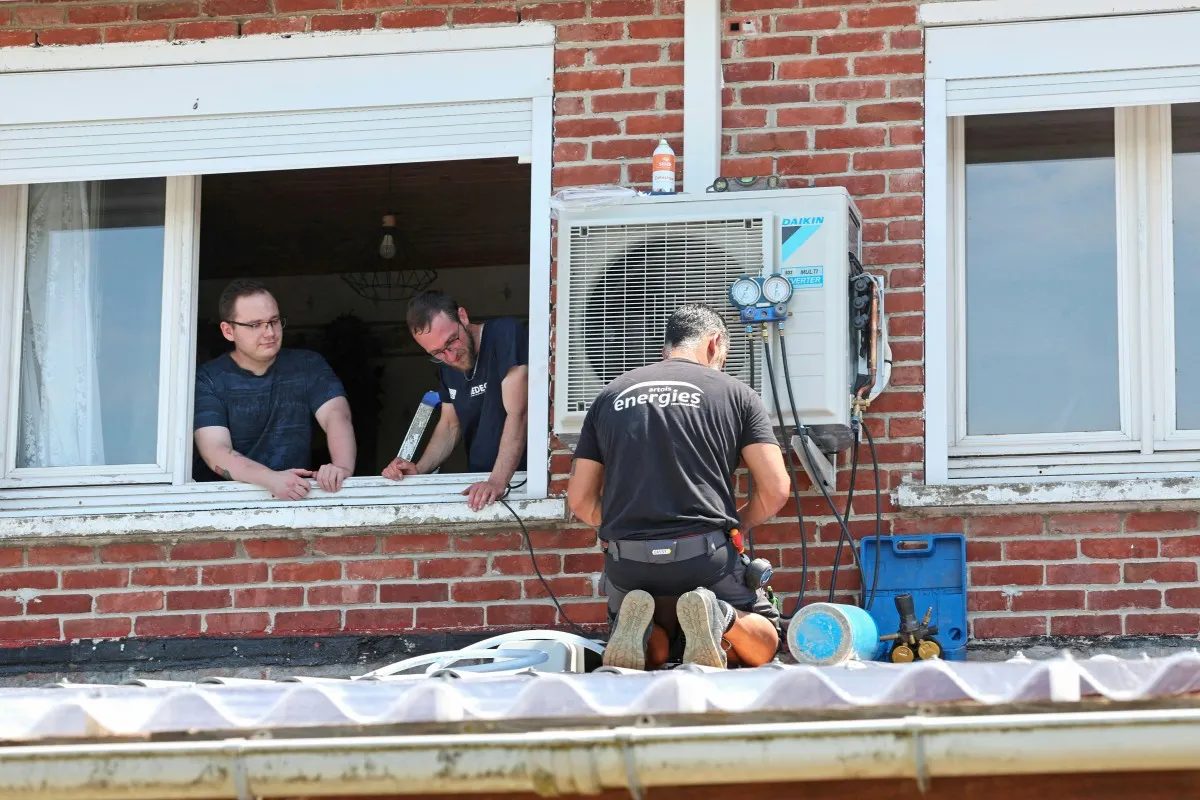
France is penalising mechanical cooling in new construction to cut energy use, forcing a major shift in building design for developers across the country.
In May 2026, France will extend its RE2020 environmental regulations to hotels, hospitals, restaurants and ten other building categories. According to industry estimates from the French building federation, this will bring 70 percent of future non-residential construction under rules that effectively penalise air conditioning.
The regulations do not ban mechanical cooling outright. However, they require architects to prove a building will remain comfortable in summer without it. Designs that only pass because of air conditioning receive an energy score penalty that can deny a building permit entirely.
For the construction and real estate sectors, this forces a shift in capital expenditure. Developers must invest in passive cooling solutions like advanced insulation, strategic shading and airflow engineering. Standard HVAC systems are relegated to a last resort.
The shift is already visible in major projects like Nantes' new 230,000-square-metre university hospital, opening in 2028. Conventional air conditioning is restricted to operating theatres and intensive care, while patient wards will rely on air refreshed to 23C, triple glazing and planted roofs. Management promises "optimal thermal comfort" with lower energy use, though the CGT union told Le Figaro that "we should have air conditioning everywhere."
Early results suggest the passive approach can work. A primary school in Castillon-du-Gard, built with local stone, geothermal energy and bio-based materials, maintained 24C during a recent 35C heatwave. New homes follow the same logic, where the DPE energy label rewards external shutters and orientation rather than installed AC units.
The retrofitting bottleneck
New construction is adapting, but the existing building stock presents a costly dilemma for public finances. A 2021 ADEME study found just 7 percent of school floor space has air conditioning, compared to 64 percent of offices. Retrofitting costs tens of thousands of euros per building, but responsibility is split between town councils, départements and regions, blocking a coordinated rollout.
Alternative infrastructure is emerging to bypass these constraints. In Paris, the Fraîcheur de Paris network pumps chilled Seine water underground to cool the Louvre and National Assembly without heating the streets. The operator plans to triple this network by 2042, extending it to schools and hospitals.