AI datacentres push big tech emissions to a third of France's
Carbon emissions from Microsoft, Amazon and Google have surged to a third of France’s total due to AI datacentre construction, casting doubt on their net-zero pledges and raising questions about Europe's reliance on US cloud infrastructure.
Microsoft, Amazon and Google generated 119m metric tonnes of carbon dioxide equivalent in the financial year ending March 2026, a rise of nearly a fifth on the previous year. This figure represents roughly a third of France’s total emissions, up from a level comparable to Czechia’s output the year prior. The surge is directly linked to a global rush to build datacentres for artificial intelligence.
All three companies detailed the increases in their recent sustainability reports. Microsoft reported a 25% jump to 20m tonnes, driven by infrastructure expansion, reversing years of flatlined emissions. Google saw an 18% rise linked to supply chain growth, though it claims its AI systems helped cut emissions elsewhere by 41m tonnes last year. Amazon recorded a 16% overall increase and a 20% spike in supply chain emissions, which it still framed as progress towards its 2040 net-zero target.
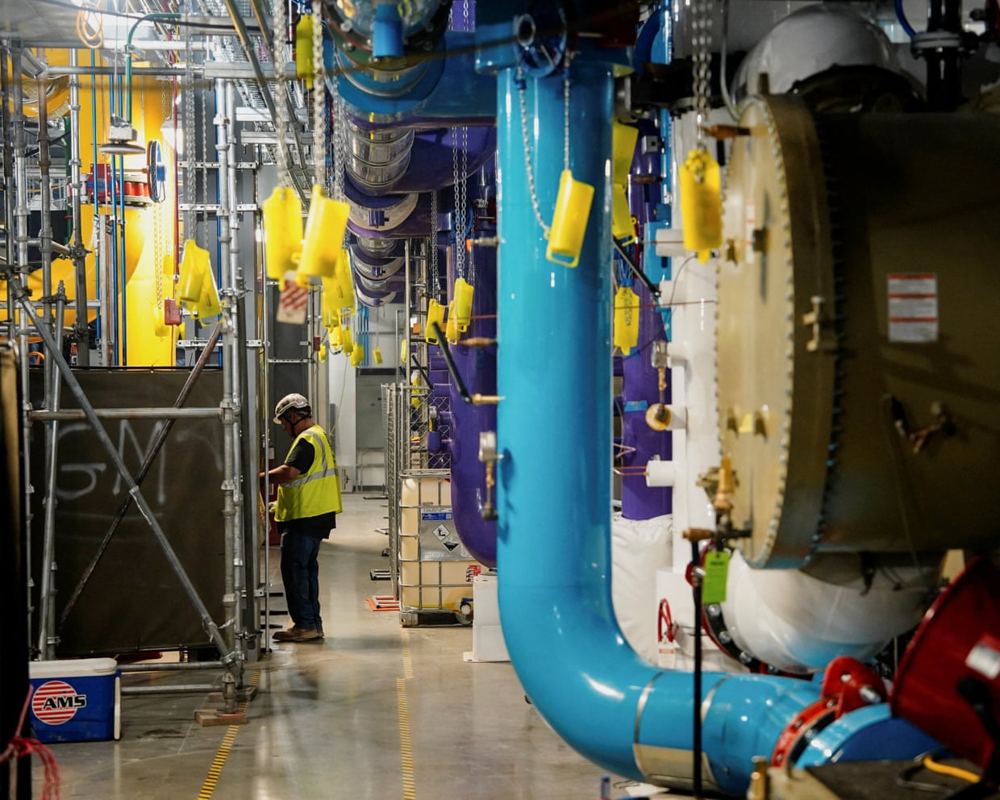
The tech giants are on track to spend $765bn this year, much of it on datacentres in locations stretching from Norway to North Tyneside. This European buildout presents a paradox for the continent's economy and climate goals. As European businesses migrate to these cloud platforms, they effectively outsource and obscure their own digital carbon footprints to US corporations.
Cecilia Rikap, an economics professor at University College London, warned that marketing around sustainable clouds is misleading. “Governments should remember these expanding carbon footprints when the very same companies offer addressing the ecological crisis with AI solutions,” she said. “Basically, shifting to the cloud helps other corporations obscure their environmental footprint.”
The environmental cost extends beyond direct emissions into global commodities markets. Shaolei Ren, an engineering professor at the University of California, Riverside, noted a strong correlation between AI investment and rising emissions. He pointed out that Microsoft’s report hinted at a shortage of carbon credits available to offset the damage. “Everyone is talking about the lack of physical goods and infrastructure like power, but there may also be a lack of virtual goods, carbon credits,” he said.
The building frenzy is set to accelerate, with property consultancy JLL expecting 1,200 new datacentres globally by 2030. The Uptime Institute estimates projects announced last year alone will eventually consume 1.3% of the world’s electricity, nearly doubling current datacentre demand. Despite this escalating physical toll, Microsoft and Google maintain they will reach net zero by 2030.