New US grant rules risk severing transatlantic science ties
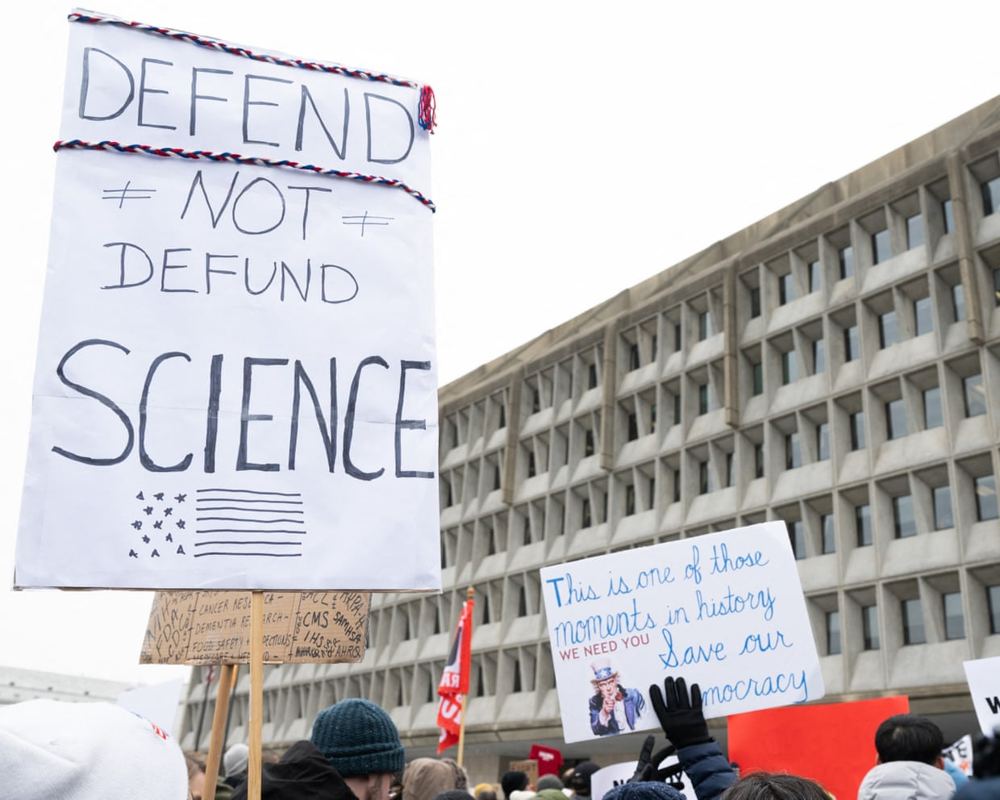
Proposed changes to US federal grant rules would block international research collaborations and shift billions away from basic science toward private tech companies, threatening Europe's deep ties with American academia.
The US Office of Management and Budget has proposed sweeping changes to federal grant regulations that would effectively end publicly funded scientific collaboration between American researchers and foreign institutions. Released in May, the rules would replace decades of established scientific peer review with direct political oversight, requiring that grants specifically advance the president’s policy priorities.
For European research universities and pharmaceutical companies, the most immediate threat is a clause prohibiting the use of funds for any collaboration with a "covered foreign country or covered foreign entity." While the rule is clearly aimed at nations like China, its broad language could easily disrupt long-standing joint projects on cancer, environmental health, and emerging technologies between US and European scientists.
Professional scientific groups are warning of the consequences. The American Astronomical Society stated that "the proposed rule, if passed in its current form, would enact policies that would cause significant harm to the scientific community, research institutions, and professional societies." The public comment period for the proposal closes on July 14th.
A shift to private labs
Alongside these regulatory hurdles, the US government is actively moving money away from basic academic research. The National Science Foundation is cutting basic science program budgets to fund a new $1.5 billion initiative called "X-Labs."
The program, previously named "Tech Labs," explicitly looks "outside of traditional institutions" to support the creation of new products and technologies. This language points to a deliberate redirection of scarce public research funds into private technology companies rather than universities.
This structural shift carries significant economic implications for Europe. If the US abandons basic research, the foundational science that yields broad, publicly available discoveries, Europe's publicly funded institutions may need to absorb displaced talent. Concurrently, European tech firms could face heavily subsidized American competitors that are driven by shareholder returns rather than open scientific advancement.
The cumulative effect of these bureaucratic changes is creating deep uncertainty for researchers who require long time-horizons to complete their work. For a continent competing in high-tech and life sciences, Europe must now evaluate whether the US will remain a reliable partner for academic collaboration or a protectionist rival focused strictly on private commercialization.