London's 34C underground exposes funding limits of climate adaptation
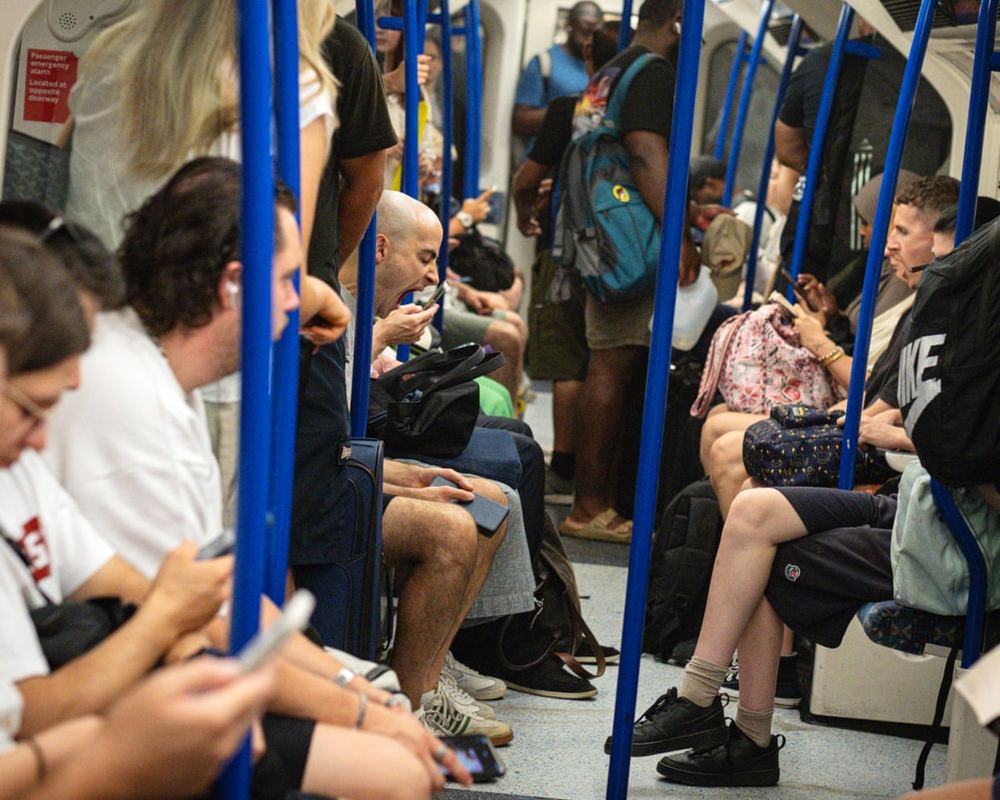
Temperatures on London's underground are hitting 34C, highlighting the economic and logistical barriers facing legacy European transit networks trying to adapt to climate change on constrained budgets.
Temperatures on the London Underground are reaching 34C during morning commutes, a level that exceeds the legal limit for transporting cattle in the UK. Readings taken between 8am and 9am showed the Victoria and Bakerloo line platforms at Finsbury Park, Victoria and Oxford Circus hitting this peak, exactly ten degrees higher than the outside air.
The severe heat is already impacting daily economic activity and worker efficiency. Commuters are being forced to change their routines to cope; one passenger, Craig, said he now travels in gym clothes and changes at the office. At King’s Cross, a barista named Sharmin said the oppressive heat has driven her to request leaving shifts early, and she has seen commuters faint near the station barriers.
Solving this crisis presents a steep infrastructural challenge. The worst-affected routes, like the deep Victoria line and the Bakerloo line, which operates some of the oldest passenger trains in the country, were not built to withstand 30C+ heatwaves. Asher Minns, executive director of the Tyndall Centre for Climate Change Research, noted that the tunnels essentially function as radiators, absorbing heat from the surrounding clay and concrete, compounded by the hundreds of kilowatts generated by train brakes.
For European cities relying on legacy transit systems, the London experience underscores a difficult financial reality. Retrofitting century-old tunnels for a warming climate requires sustained capital investment. However, Nick Dent, TfL’s director of customer operations, pointed to the "short-term and stop-start nature of funding over recent years." This fiscal uncertainty has forced the publicly funded operator to prioritise projects with the most immediate customer benefits over systemic cooling upgrades.
While TfL is introducing air-conditioned trains on the Piccadilly line and DLR, the broader network remains exposed. Minns cautioned that without faster adaptation, transport authorities will face an unpalatable choice: limiting the number of passengers allowed to travel or reducing the number of trains in service during heatwaves. “It can’t go on like this, and it’s not going to get any better,” he said.