EU foreign ministers back qualified majority vote to ban Israeli settlement trade
European Union foreign ministers have expressed majority support for banning imports from Israeli settlements, a move that could reshape regional trade flows and bypass the need for unanimous member state approval.
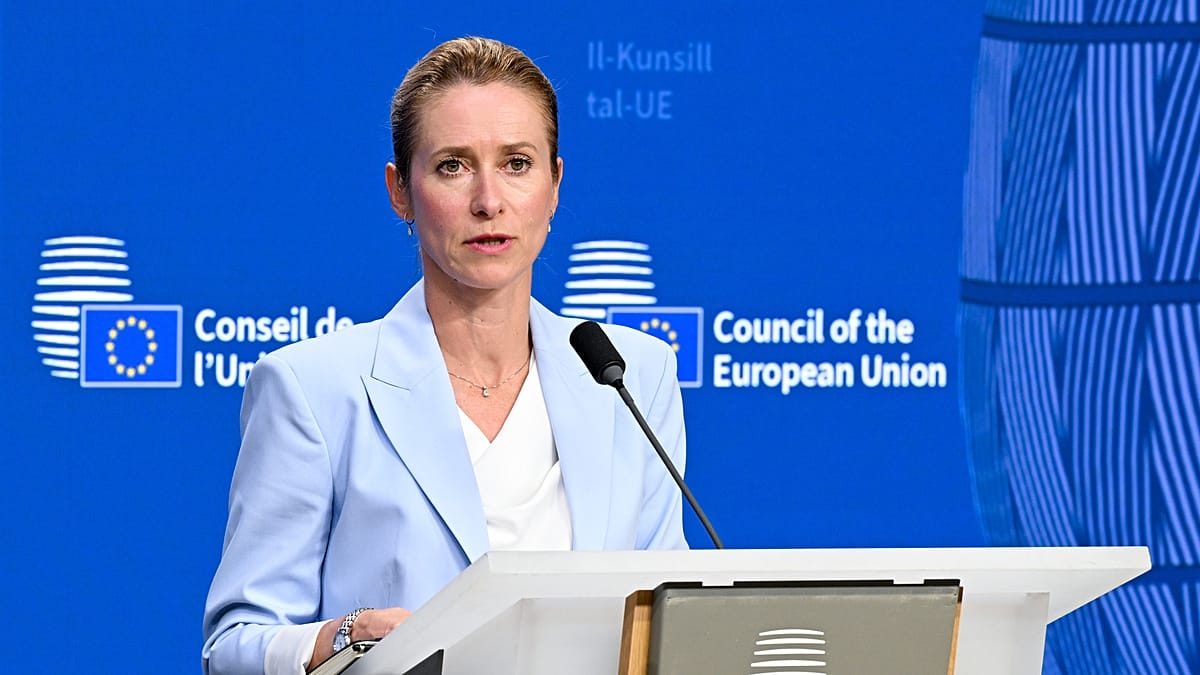
EU foreign ministers overwhelmingly backed a full ban on imports of goods produced in Israeli settlements during closed-door talks on Monday. EU foreign policy chief Kaja Kallas confirmed that this option extracted the most support among member states.
Crucially, a majority of governments agreed to frame the restrictions as a trade policy measure rather than a foreign policy tool. This classification is economically significant, as it allows the ban to pass via a qualified majority of 15 member states representing 65 percent of the EU population, bypassing the need for unanimous consent.
Countries including Belgium, France, Ireland, Luxembourg, the Netherlands, Spain and Sweden have championed this approach. Dutch Foreign Minister Tom Berendsen stated, "These are trade measures, so that means that, as far as we are concerned, that should be possible with a qualified majority."
The European Union already applies a policy of differentiation to settlement-manufactured goods, excluding them from preferential tariffs and the EU-Israel Association Agreement. However, a complete trading ban would fundamentally alter supply chains for companies currently sourcing or distributing these products within the European single market.
This push gains legal weight from a 2024 International Court of Justice advisory opinion, which obliges states to abstain from economic dealings that entrench the unlawful situation in occupied territories. Kallas noted that the Council of the EU’s legal services provided an oral opinion confirming that a qualified majority is sufficient to restrict this trade.
Despite this momentum, the European Commission faces criticism over the vagueness of its initial two-page options paper. Belgian Foreign Minister Maxime Prévot remarked that the proposal feels "more a bone to chew on, than a desire to really move forward."
Spanish Foreign Minister José Manuel Albares echoed this frustration, stating, "I am concerned that we are engaging in delay tactics, debating endlessly without taking action, when such debate is not actually necessary." He added that a decision not to trade would simply be an application of international law. Meanwhile, Italy’s Foreign Minister Antonio Tajani indicated that no measures should be taken before Israel’s upcoming legislative elections.
EU ambassadors are now tasked with developing the Commission’s initial proposal into actionable legislation. Kallas indicated that an extraordinary meeting of foreign ministers could be convened to maintain momentum before the next formal gathering in October.
Addressing the internal debate over voting thresholds, Kallas emphasized the need for consensus while acknowledging the legal pathway forward. She stated, "There is a legal opinion that we can do this also with the qualified majority," adding that "if there is a will, then we can move forward."