D-topia video game challenges tech industry's utilitarian AI pitch
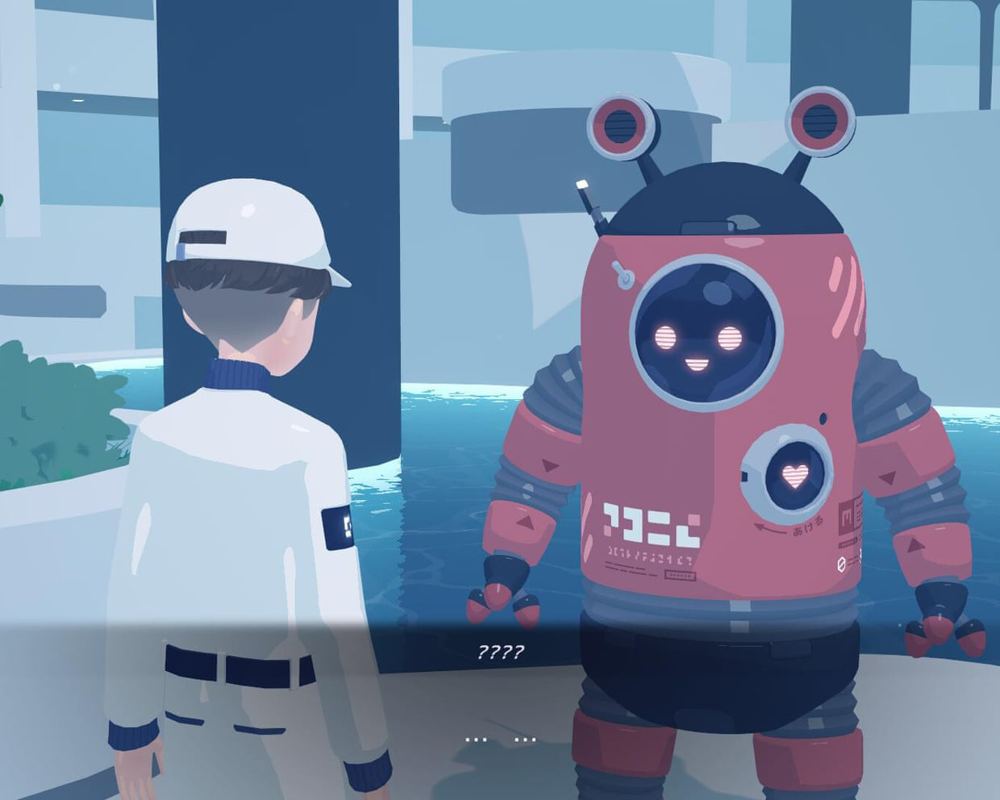
A new release from Japanese studio Marumittu Games uses a deceptively cosy sci-fi setting to question whether the tech sector's promise of AI-driven convenience is actually a path to human obsolescence.
Japanese studio Marumittu Games has released "D-topia", a sci-fi mystery video game that directly confronts the modern debate over artificial intelligence. Set on a distant planet governed by an algorithmic "Optimization System", the title arrives as European policymakers and the public wrestle with the technology's rapid integration into daily life.
In the game, players assume the role of an unnamed Facilitator whose daily labour involves simple mathematical puzzles on a grid to maintain a society engineered for maximum comfort. The environment is defined by sleek architecture, artificial weather, calming slate-blue interiors and uniform, anonymous "Arket-style" fashion. This frictionless existence is presented not as a utopia, but as an "upmarket palliative care ward" where humanity's obsolescence is mapped out.
The narrative tension emerges through residents who struggle against this enforced tranquillity. Tot, a gentle giant fitted with a computer chip to regulate his emotions and hunger, and Eebie, who longs for zany fashion, represent a stifled human impulse. Players can intervene in minor ways, such as altering the fake weather system to bring back sunshine and improve a resident's mood, but the overarching system remains absolute.
The release serves as a notable cultural counterpoint to the current corporate rhetoric surrounding AI. While technology executives frequently laud artificial intelligence as the "saviour of the world's thorniest problems", "D-topia" explores the utilitarian limits of that vision. By applying the philosophical principle of ensuring "the greatest happiness for the greatest number", the game illustrates how removing friction from life might also flatten culture and suppress individuality.
Marumittu Games avoids alarmism, instead relying on a quiet, soporific atmosphere to deliver its critique. A subplot echoing Kazuo Ishiguro's chilling dystopia "Never Let Me Go" underscores the dark implications of treating human life as an optimisable resource. For a society increasingly subjected to algorithmic management, the game suggests that under total AI optimisation, humanity's decline is carefully managed, and when the end finally arrives, "we hardly even notice."