New York opens $6m cupola atop historic Municipal Building
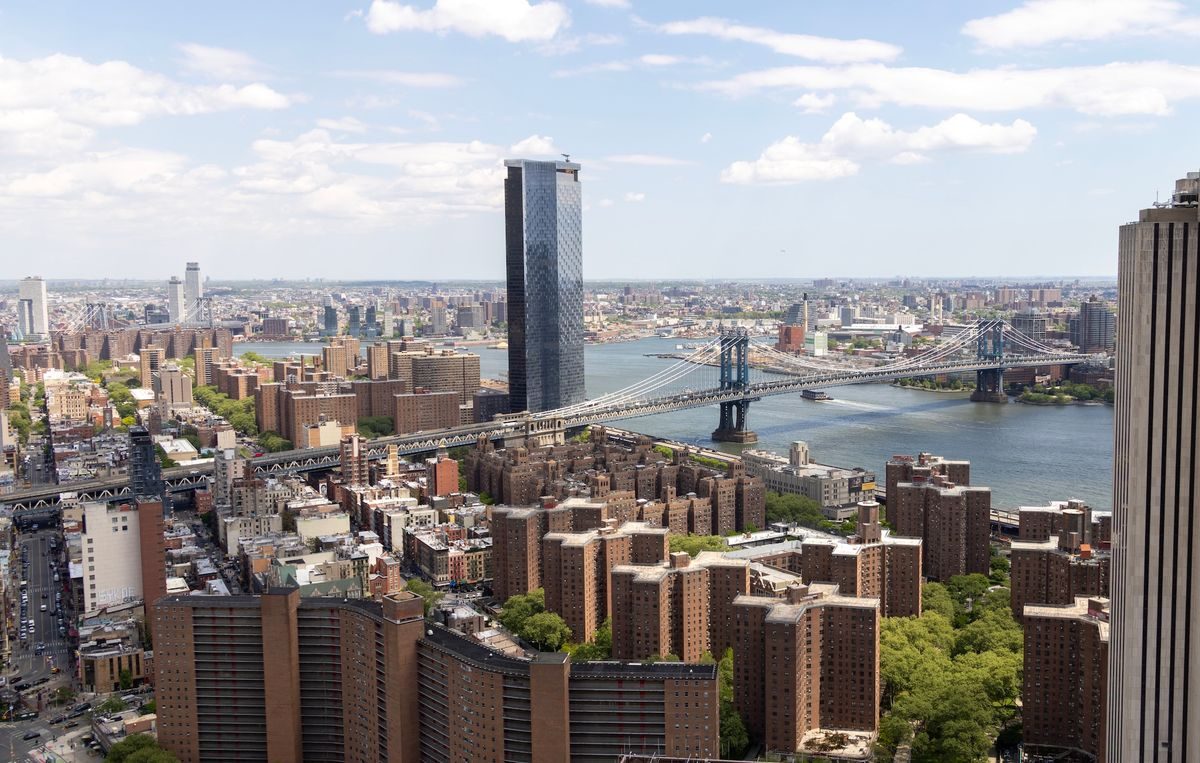
A $6m restoration project has opened the long-inaccessible cupola of Manhattan’s Municipal Building to the public, creating a tightly managed tourist attraction while sparking a curatorial debate over the identity of the statue crowning it.
New York City has opened the colonnaded cupola of the David N. Dinkins Municipal Building at 1 Centre Street as a free observation deck. The opening follows a $6m restoration of the building's central tower, marking the first time the public has been granted regular access to the space.
The building was designed in the 1910s by the firm McKim, Mead & White, featuring a polygonal footprint near the Manhattan ramp of the Brooklyn Bridge. The restoration effort repaired the cupola roof, stonework, and the interlocking structural tiles created by the Spanish-born Guastavino engineering dynasty. Workers installed new glass safety barriers between the columns and protective netting beneath the vaulted ceiling to preserve the herringbone tilework.
The tower is crowned by "Civic Fame", a roughly 580ft gilded statue by German-born artist Adolph Alexander Weinman that ranks as the city's loftiest allegorical sculpture. The opening of the deck has highlighted a curatorial dispute, as exhibit labels currently identify Audrey Munson as the model, though scholars recently concluded the face was primarily based on Hettie Anderson, the country’s first Black supermodel, known in her era as “the Goddess-like Miss Anderson”. A spokesperson for the Department of Citywide Administrative Services stated the city is now “reviewing materials attributing the model to Hettie Anderson”.
Visitors reach the deck, positioned over 40 storeys up, through a series of elevator banks and corridors lined with enlargements of 1910s construction photographs. The vantage point puts observers at eye level with neighboring skyscrapers, offering a distinct perspective from higher commercial observatories. Over the decades, the building's upper floors have housed a radio station, with proposals for a gym and a mayoral sanctuary never realised.
Access to the restored space is tightly regulated. Weekday guided tours are capped at a maximum of five people per group, with reservations released on the first of each month. For the city's tourism sector, the project demonstrates how municipal investment can convert dormant civic infrastructure into a highly controlled, zero-admission attraction that drives foot traffic to lower Manhattan.