Barbican film season explores pan-Africanism's global impact
A new three-month film programme at London's Barbican centre is revisiting the complex history of pan-Africanism, exposing both the movement's transformative political vision and the enduring financial barriers faced by its pioneering filmmakers.
London’s Barbican has opened a three-month film programme accompanying its Project a Black Planet exhibition. The season uses cinema to trace how pan-Africanism shaped the lives of African and African-descended people. It moves beyond abstract political theory to focus on lived experience.
For European audiences, the series offers a necessary correction to the continent's understanding of its own colonial legacy. It highlights how cultural production was intimately tied to liberation struggles. The programme also exposes the systemic financial barriers that marginalised key figures within the film industry.
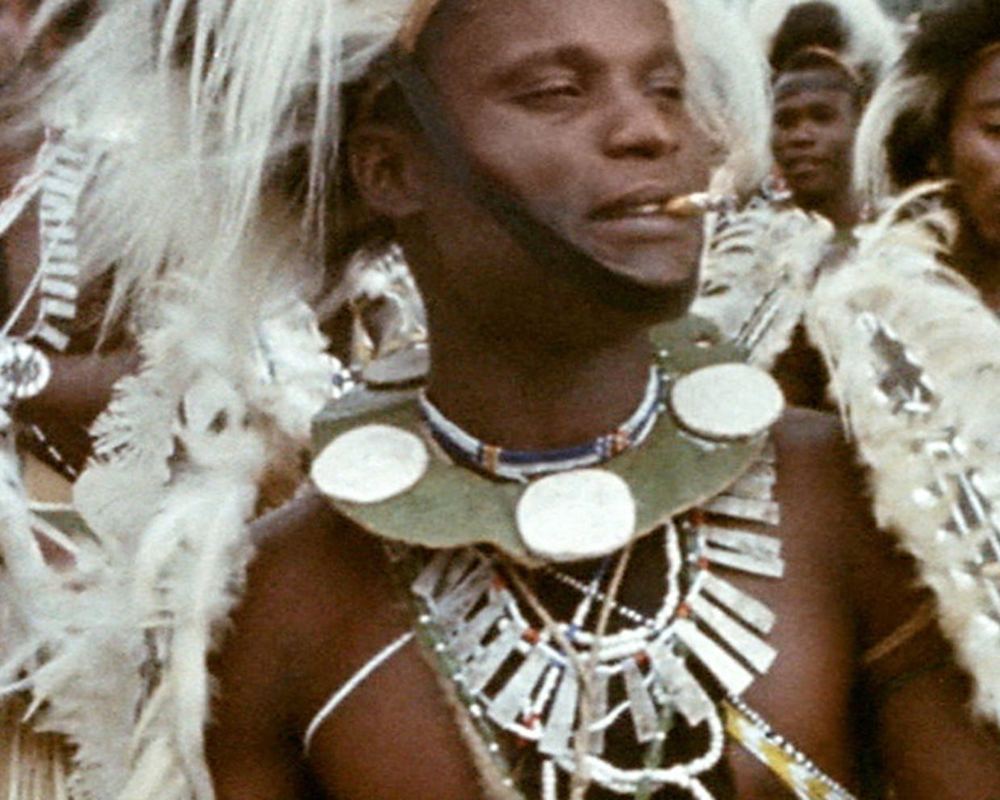
The screenings open with William Klein’s documentary of the 1969 Pan-African Cultural Festival in Algiers. The footage captures a moment when the newly independent Algerian capital became a cosmopolitan centre for the entire continent. It shows a deliberate dissolving of barriers between spectator and spectacle.
The curatorial focus deliberately challenges the traditional male-dominated canon of African cinema. A central example is the work of Sarah Maldoror, whose films accompany the touring exhibition. Her daughter, Annouchka de Andrade, has spent years restoring Maldoror's cinematography after it was sidelined by industry racism and sexism.
De Andrade highlighted that Maldoror’s most famous work, Sambizanga, was kept by a producer for 40 years. A chronic lack of financial resources meant more than 50 of Maldoror's planned projects were left unrealised. This demonstrates the severe economic vulnerabilities faced by independent anti-colonial filmmakers.
The selected films span decades and geographies to show the borderless expanse of the movement. They include Roy Guerra’s 1979 feature on the 1960 Mueda massacre in Mozambique and Ola Balogun’s Nigerian-Brazilian collaboration, Black Goddess. Curator Matthew Barrington notes that the "inherently populist" medium of film shows how pan-Africanism "manifests in the way of people and how they interact".
A section curated by Abiba Coulibaly marks 60 years since the World Festival of Black Arts in Dakar and the Tricontinental conference in Cuba. Coulibaly uses cinema from Algiers, Dakar and Lagos to explore the geopolitical tensions of the era. Her aim is not to deconstruct the movement, but "to sit with all of the discomfort and contradictions within it".
The political stakes of this history are framed by Kodwo Eshun of the Otolith group, whose films also feature in the season. "Pan-Africanism is the transformation of the continent, which implies the transformation of the planet," Eshun said. "If pan-Africanism was a dream, why did Belgium, USA and Britain go to the lengths they did to assassinate Lumumba? It wasn’t a dream, it was a threat."