Glasgow traffic cone arrives in Boston to honour Scottish World Cup fans
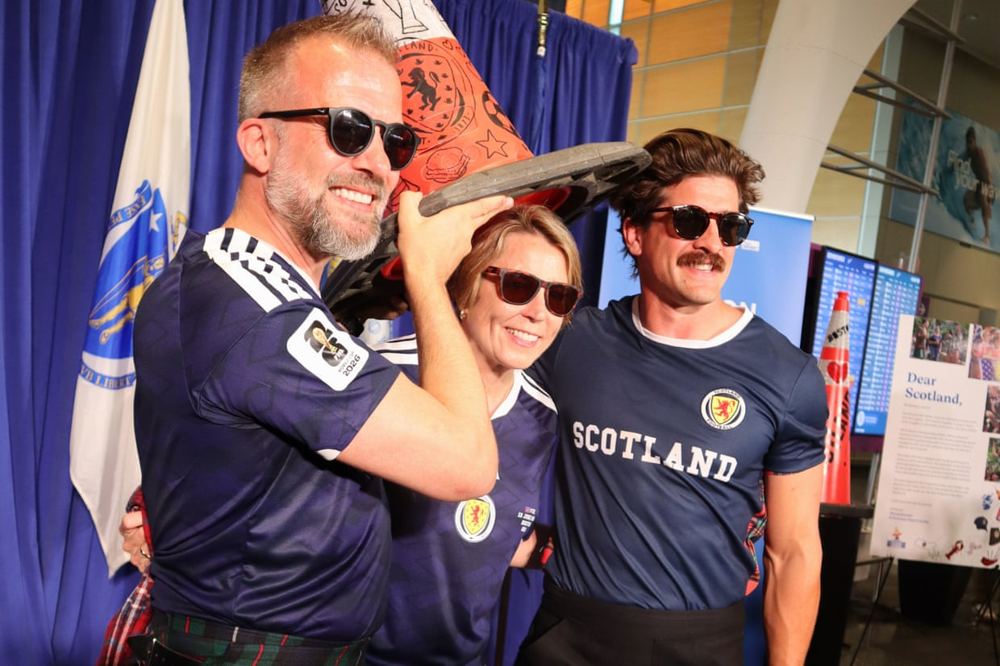
An orange traffic cone has been flown from Glasgow to Boston in a formal ceremony, highlighting the substantial cultural and hospitality impact of Scottish supporters during the recent World Cup.
An orange traffic cone arrived at Boston Logan International Airport on Tuesday aboard a first-class flight from Glasgow. It was greeted by a bagpiper, diplomats, Massachusetts Governor Maura Healey and Boston Mayor Michelle Wu.
Governor Healey admitted it was her first official welcoming ceremony for a traffic cone. She signed the object and joked about Scottish fans drinking all the local beer, promising that Massachusetts would never run out again.
The ceremonial arrival underscores the tangible impact Scottish supporters had on the local hospitality sector during last month’s World Cup. Bars across the city struggled to maintain inventory, with some establishments forced to scramble for emergency beverage deliveries to meet unprecedented demand.
Beyond the economic surge, the visiting fans temporarily transformed downtown Boston into an unofficial Scottish outpost. Supporters placed bright orange cones atop prominent local landmarks, including statues of Samuel Adams, Red Auerbach, former mayor Kevin White and the Make Way for Ducklings sculptures.
Mayor Wu noted on Tuesday that some traffic cones remain atop the city’s most important statues. She recalled how the influx of supporters had unofficially turned the area into New Scotland.
The official commemorative cone features illustrations celebrating both regions and the slogan “No Boston, No Party”. It will spend the next week touring Massachusetts landmarks to raise funds for mental health charities before returning to Scotland.
This tradition originated in Glasgow during the 1980s as a late-night prank before evolving into a symbol of national irreverent humour. The most famous example remains the Duke of Wellington statue in the city centre, where repeated removal attempts have faced strong public opposition.
Danny Campbell, a Scottish escort for the cone, described the phenomenon as a metaphor for life rather than a mere joke. He emphasized that the fans spread joy, cleaned up after themselves and built lasting relationships through humour.
Campbell stressed that the object is not just a silly cone. He stated that it means love, which he described as the whole point of the exchange.