Argentina face FIFA sanction over Falklands banner after England win
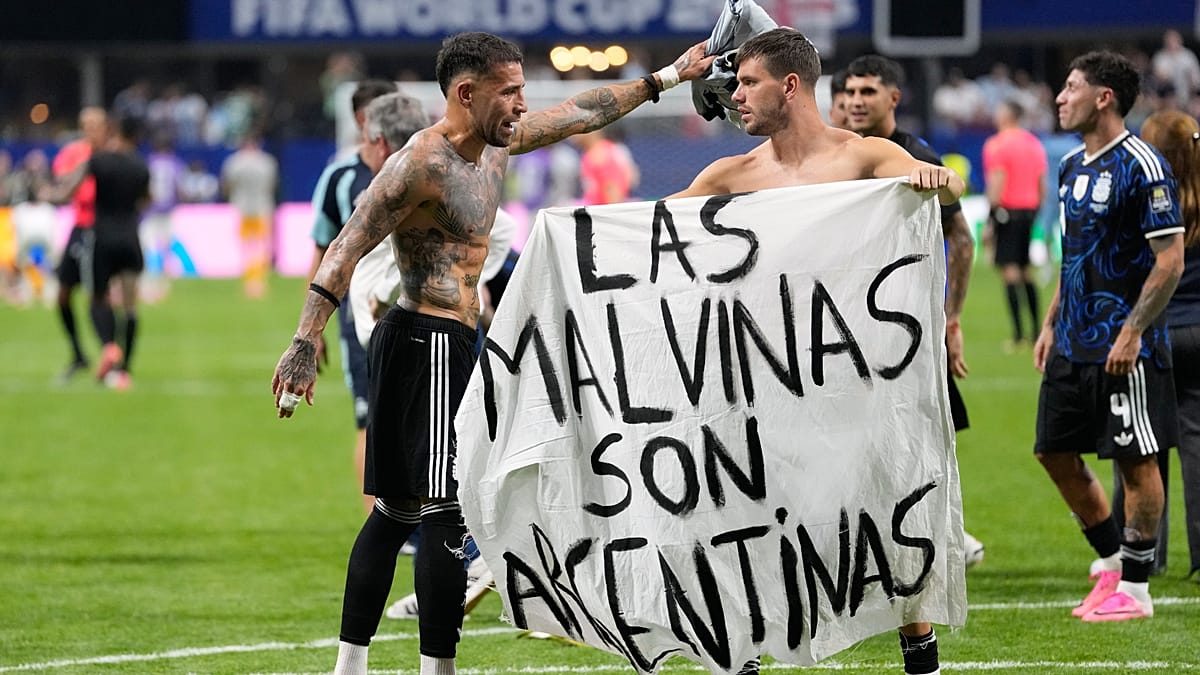
Argentina's World Cup semi-final victory over England was overshadowed by a political banner asserting sovereignty over the Falkland Islands, risking a FIFA fine and dragging a dormant diplomatic dispute back into the European spotlight.
Argentina defeated England 2-1 to reach a second consecutive World Cup final, but the sporting achievement was immediately overshadowed by a diplomatic provocation. Following a comeback secured by goals from Enzo Fernandez and Lautaro Martinez, the defending champions paraded a banner reading "Las Malvinas son Argentinas".
The display puts the Argentine Football Association at direct risk of disciplinary action from football’s governing body. FIFA's Stadium Code of Conduct, established before the tournament, explicitly prohibits banners, flags or paraphernalia of a political nature. There is a clear precedent for financial penalties, as FIFA fined the association 30,000 Swiss francs (€32,455) in 2014 when players posed with an identical message before a fixture against Slovenia.
For a European audience, the incident highlights how major sporting tournaments remain highly susceptible to geopolitical grandstanding. The Falkland Islands, a British Overseas Territory, were the site of a brief but bloody war in 1982 that claimed the lives of 255 British and 655 Argentine soldiers. More than four decades later, the sovereignty dispute continues to dictate diplomatic relations between London and Buenos Aires.
Argentina maintains that the South Atlantic archipelago was unlawfully seized by Britain in 1833 and belongs to Buenos Aires. The United Kingdom firmly rejects this historical claim, citing the fundamental right to self-determination of the islanders. In a 2013 referendum, an overwhelming majority of Falkland residents voted to remain a British Overseas Territory, a result London considers definitive.
The international community has largely sought to remain neutral regarding the competing claims. The United Nations does not formally endorse the sovereignty of either nation. However, the UN has repeatedly issued formal calls for both the UK and Argentine governments to resume negotiations to reach a peaceful, negotiated settlement.
Rather than pushing toward that diplomatic resolution, the World Cup incident shows how Argentine political leaders continue to use football to amplify their territorial claims. Argentina's vice-president, Victoria Villarruel, publicly celebrated the players' actions. "They banned bringing them to the stadium and forgot that we carry them in our blood and our hearts," she posted online, signaling that political exploitation of the dispute is unlikely to fade.