EU fishing rules drive bull ray surge, threatening Trieste mussel farms
Unprecedented groups of protected bull rays are devastating mussel farms in the Gulf of Trieste, forcing a trial of magnetic deterrents to resolve a clash between EU conservation policies and local aquaculture.
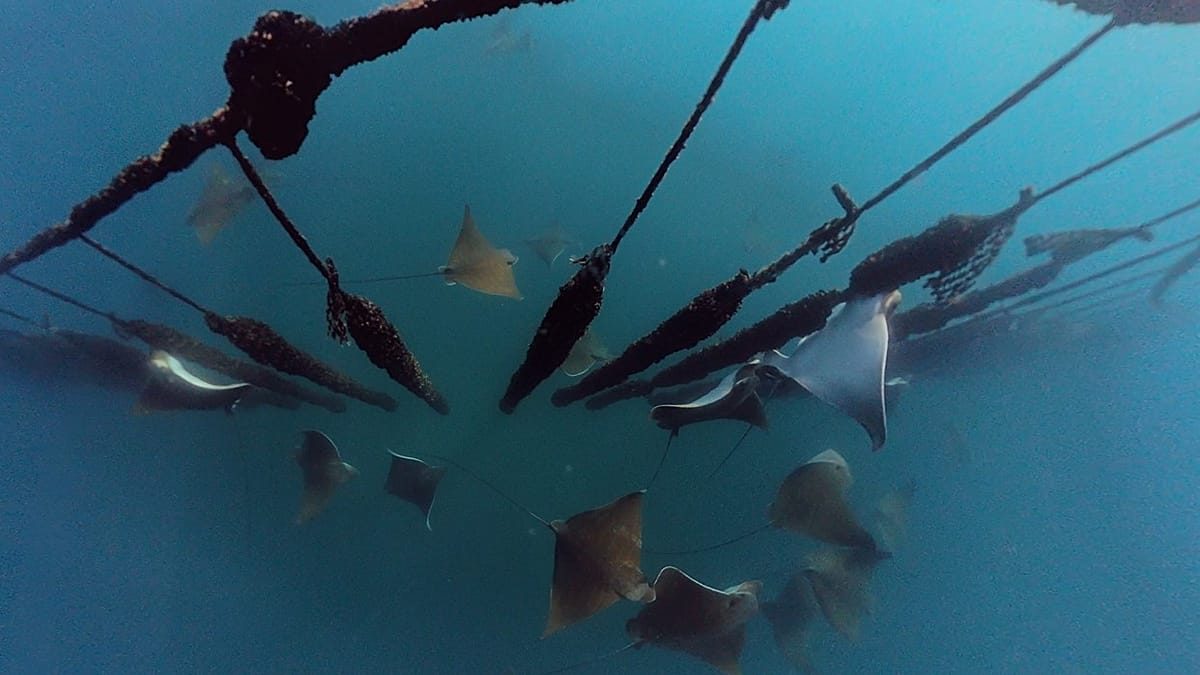
Large groups of protected bull rays have settled in the Gulf of Trieste, damaging local mussel farms by eating directly off cultivation ropes. Groups of up to 50 animals are now gathering along a 20-kilometre stretch of coastline from Grignano to Monfalcone. "This is the first year in which we are seeing a high number of individuals gathering in groups that have reached as many as 50 animals," says Saul Ciriaco, head of monitoring activities for the WWF Miramare Marine Protected Area.
The shift is a direct consequence of changing EU fisheries policies and warming seas. "Stricter and more selective fishing rules have also improved their reproductive performance," Ciriaco explains. Rising winter temperatures mean the gulf is no longer just a transit area for the species, which tolerates waters between 11 and 28 degrees Celsius. "On top of that, winter water temperatures in the Mediterranean have reached a level the bull ray finds tolerable," Ciriaco adds. "So whereas the Gulf of Trieste used to be just a transit area, it has now become suitable for them to stay."
The arrival of these opportunistic feeders is inflicting substantial economic losses on the region's aquaculture businesses. "We had never seen this kind of interaction between bull rays and human activities," explains Simona Clò, scientific director of MedSharks. Because the animals are staying longer, "they have more time to realise that it is simpler and more efficient to eat mussels directly off the ropes," Ciriaco suggests. These losses compound existing pressures on the sector from rising water temperatures and predators like turtles.
Testing technological solutions
To protect both the farms and a species protected by the Barcelona Convention and the UN Bonn Convention, EU-funded projects Life Eu Sharks and Life Prometheus have launched a trial using electromagnetic deterrents. Researchers from the Universities of Padua and the Marche Polytechnic University are working with mussel farmers to attach small magnets to the cultivation lines. "These small magnets have a disturbing effect on the animals, but they are not harmful. We now need to see whether the system actually works," says Ciriaco.
Scaling the technology could present a significant commercial hurdle for an industry already facing tight margins. "It is necessary to assess the effectiveness and applicability of the device, because the cost and labour needed to deploy so many magnets would require a major and costly effort," Ciriaco notes. Meanwhile, the Life Eu Sharks project is using government-supplied drones to photo-identify the rays by the unique stripes on their backs to better track their movements.
Local authorities are now looking at broader economic alternatives to offset the damage to aquaculture. A planned round table with the Friuli Venezia Giulia regional government and the harbour master's office will explore developing ecotourism. "Bull rays are important animals for the environment. Moreover, they swim close to shore and this is something that should be valued," says Clò, pointing to the potential for designated snorkelling and underwater photography areas as a compensatory revenue stream.