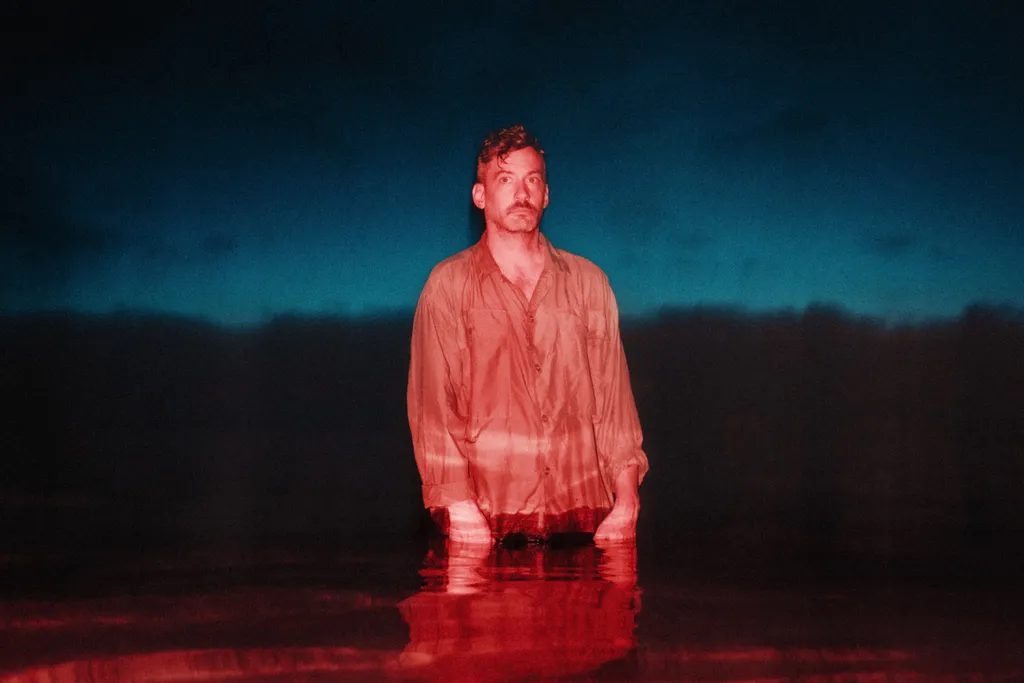
Breaking the cycle: Bonobo’s evolution is entering a new phase
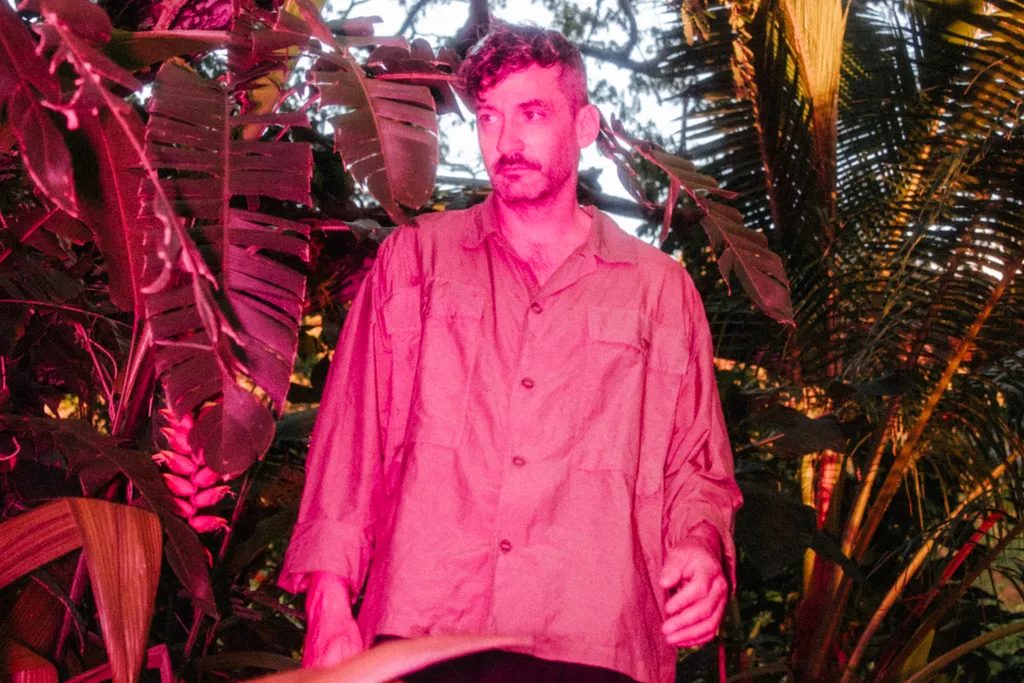
Bonobo has never stayed still as a musician, constantly evolving his approach to sound and performance across 26 years of acclaimed album cycles and tours. Now with his eighth album ‘Distance In Static’ being billed as “perhaps his last record in the traditional sense”, with an expanded live show to coincide, all signs indicate there’ll be a new version of Bonobo coming out the other side Continue reading...
True artistry always involves evolution. If you look at dance music’s biggest acts you won’t see anyone standing still or trying to recapture past glories. From the eccentric disco mastery of DJ Harvey to the big-room techno bravado of Carl Cox , no artist can sustain a long career unless they keep it moving. Simon Green AKA Bonobo is no exception. Mixmag catches up with him in the lead-up to the release of his eighth album, ‘Distance In Static’ , which is out 11 September. It’s on Ninja Tune , his label for 23 years since his second album ‘Dial ‘M’ For Monkey’ in 2003 (his debut ‘Animal Magic’ was released on Brighton label Tru Thoughts in 2000). But this new album’s announcement finds him saying that this will probably be his last Bonobo album “in a traditional sense.” So this seems like a good time to catch up with clubland’s favourite chimp analogue, live music maestro and DJ extraordinaire. Since releasing albums he’s evolved into one of electronic music’s most skillful performers, while selling 900,000 records, billions of streams and getting a handful of BRIT and GRAMMY nominations into the bargain. Now this could be his final foray into album-making as we know it from Bonobo.
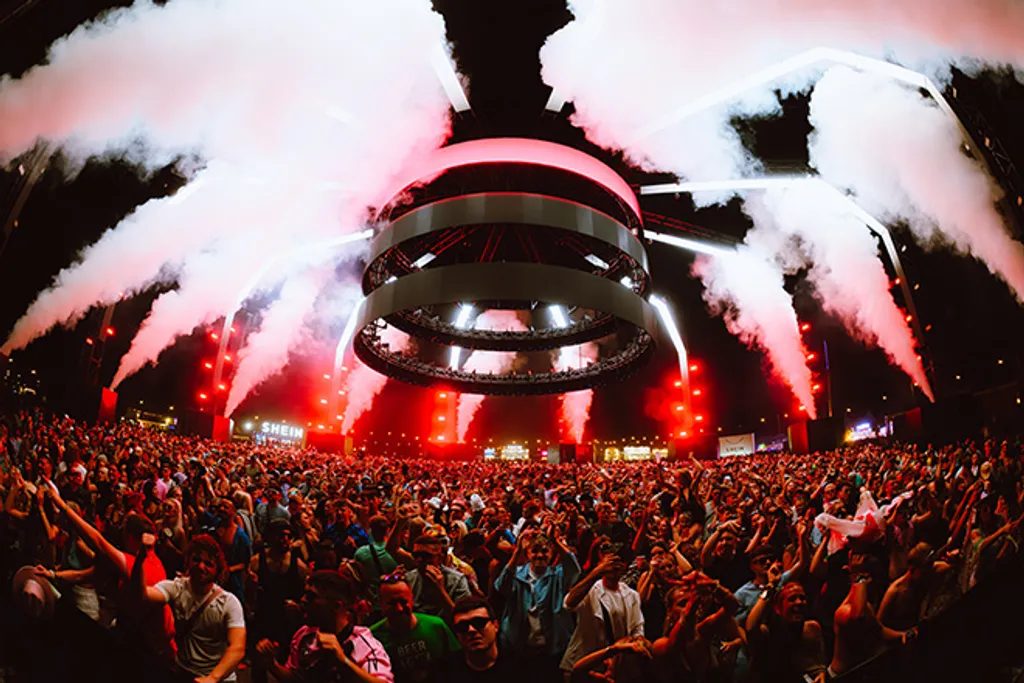
Green’s Bonobo productions have been called downtempo and dance and at times they are both; you’re as likely to find a warm vocal collaboration with a wide range of co-stars (both Erykah Badu and Damon Albarn feature among his back catalogue) as you are deeply atmospheric jams that head straight for the dancefloor. Green’s never been one for being pinned down to any one genre. That’s one of the reasons he’s maintained such a long career. Another is his wide skillset: he balances big club DJ performances with astounding live shows, where a full band presents the back catalogue he’s honed since 2000. These live shows have seen him take over the Sydney Opera House, Alexandra Palace and command a record-breaking five-night run at the Albert Hall; the longest engagement there by any electronic artist. Having started with him using live vocalists and instruments around 2003, they evolved into a full band performance by 2010, as he wanted to differentiate between what he does as a DJ - which is very much focused on the dancefloor - with a full reflection of the music he makes on his albums, which can be both uptempo and down.
After that record-breaking run at the Royal Albert Hall, he was almost done with live shows altogether: “I talk to my peers sometimes and I mention my live show and they say ‘Oh, you do a live show?’ and that just hits, like, I’ve been doing this for so many years and people don’t even know that I do it at all. Why am I spending so much time, energy and money on this?”
But the full bi-coastal run of US gigs he’s got coming up in November and December make it clear that Green’s not quite done with his multi-instrumental live shows yet. “I’ve got the chance to work with this incredible set designer, Pierre Claude, who’s worked with Phoenix, Air and The Strokes. This time we’re going to have a big visual element to the show and we’re going to bridge into more electronic sounds too. When I started playing live the music was more jazz-leaning, but now it’s become something different. I’ve done live solo shows with just modular synths and a few other bits of kit, so this will be a hybrid of that and my live band. Slightly different from last time with more pacing and energy.” The Bonobo live show clearly keeps evolving, like everything else Green touches.
Since 2000 there’s been also strong evolution in the Bonobo productions, from the early period downtempo vibes of his debut to 2003’s ‘Dial ‘M’ For Monkey’ and 2006’s ‘Days To Come’. “The whole idea of being a professional musician has changed so much since I started out,” says Green, recalling a pivotal moment from the early days: “When I first saw a mate in Brighton messing around with an Akai MPC that just blew my mind. I’ve come full circle working with a full band now, but the whole idea that you could make music without anyone else in the room was just crazy to me.” In effect, that encounter introduced Green to the core of his practice today, 26 years later.
Green credits Brighton, where he moved as a teenager and later went to art school, as being vital to Bonobo’s evolution too. “Brighton in the '90s felt like the centre of the universe for me. Clubbing-wise there was the whole nu-skool breaks thing from Adam Freeland and later big beat with Fatboy Slim and the Big Beach Boutique events. It felt very free. You could buy a sampler and buy these records from all the local record shops and just sort of stitch the samples together. And the clubs were going every night so there was always something to do. It felt really exciting back then.”
Next in Green’s evolution is Bonobo’s mid-period from 2010, where you can hear him incorporate more uptempo elements into his productions, such as the bouncy Latin house-flavoured ‘We Could Forever’ and the bumping techy feel of ‘1009’ on his fourth album, ‘Black Sands’ , an album beloved by fans as the start of his modern cross-genre sound. Green says that at this point it was his new home, London, that was a big influence. “I had my spot in Dalston around the mid-2000s,” he remembers. “And CoOp was happening at Plastic People , so broken beat was really going on. Plus later FWD>> too with that whole post-dubstep sound. So early Mount Kimbie, ‘Hyph Mngo’ by Joy Orbison , all that was happening. London felt like it was having a moment and I was too, after my musical upbringing in Brighton. That really flipped the script of what I was doing.” This period continues on his 2013 album ‘The North Borders’ , for example with the UKG bounce on ‘Emkay’ or the sub-bass reverberating through ‘Know You’. By this point Green had made another move, this time to the US, where he would spend five years in New York then a decade in LA, “In New York I felt I had to stay very focused on what was happening in London,” he remembers, “So I ended up making a very UK-type record with ‘The North Borders’, even though I was somewhere else entirely.”
This brings us to present period Bonobo with 2017’s ‘Migration’ and 2022’s album ‘Fragments’ , which both got to Number 5 in the UK charts. Now Green has evolved into making dancier jams like the snare-led house stepper ‘Outlier’ on ‘Migration’ and ‘Rosewood’, which was the lead single for ‘Fragments’. Both showcase his signature warm style that mixes samples with real instruments and layers both so it feels like a full band is playing. And now we have ‘Distance In Static’, which could be a bookend to the Bonobo albums. If this is his swansong, it’s a hell of a way to go out. There’s the solo belters Bonobo fans know and love, like ‘Drift’, which is the kind of warm organic house music that Green deals in when he’s feeding the dancefloor. It’s all echoing vocal samples chopped up with resounding keys but underpinned by a resonant bassline that builds and builds. It’s one of Mixmag ’s favourites on the album and Green says it’s one of his too. “What I love about that one is that it’s just me in a room making music, no collaborations. It just strips everything down to its essential parts. I have a Prophet-5 synth in my house and I made a patch on it and it all came together easily after that. All the parts just seemed to suggest what to do next, so much so that I actually felt sad when I was finished. That can happen when you’re having fun making a track. ‘Cirrus’ from ‘The North Borders’ came together in a similar way actually - really quickly and really fun to make.” This feels like the essence of Green’s creativity, as well as a comment on how he’s evolved from his more downtempo beginnings to where he is now, ready to pump up the jams or take you on a more emotional, vocal journey.
The tracklist is also stacked with collaborations, where Bonobo's style deftly merges with the wide range of artists, including Nilüfer Yanya, Aanya Martin, Ichiko Aoba and Kanako Yamamoto. A strong example of how Green has evolved that vocal and collaborative side of Bonobo is the recently released ‘Fire On The Water’ , featuring US-based Pakistani artist Arooj Aftab . Her lush Urdu vocals alongside Green’s distinctive beatwork are an evocative combination that came together in an unusual place: Neil Young’s Broken Arrow Studio, part of his Broken Arrow Ranch in California. “It became this kind of meditative music retreat in a way, because there’s not much out there at all. I mean I wasn’t going into town, I wasn’t shaving, I was just working consistently on music in a way that I don’t think I’ve ever had the chance to do before.”
“We’d actually worked on something else beforehand," Green continues, "but for ‘Fire On The Water’ we’d hit a dead-end so we took some time off. Then I had this little guitar loop that I fired up that morning and it wasn't really supposed to be anything. It was just me doing a little sound-check. And she's like,’What’s that?’ ‘Oh, this is some dumb little loop I did earlier’, I told her, but it got us going. Then the whole thing fell into place and we’re both really excited by it. We really needed that long process to get there in the end.”
That’s the thing with Green: his process is never static but always evolving. For example ‘Distance In Static’ features his first returning vocal collaborator, Nicole Miglis , on the delicately driving ‘Talk To Me’. Mixmag asks how this came about after 26 years of no repetition? “It was kind of circumstantial really," Green says, giving us the context behind the track: “Nicole was a live vocalist on the last album tour and she was doing some vocal warm-ups in this very reverberant Vienna corridor, which I recorded on my iPhone. Then the next day we recorded the vocal in a hotel room, and after that I had everything I needed. It came together on tour and it existed in a lot of demos until we got the one you hear on the album.”
His newly-released track, the soulful ‘Talk To Me’ with Joy Crookes , was done over email. “I sent Joy this jam with the bass and backing vocals as we couldn’t manage to get in a room together. Then there was a delay, as there can be because people have careers and lives going on. But a few months later I got this email back with Joy’s vocals, so I rebuilt the whole track around them with only the smallest amount of editing. That’s just how it works sometimes.”
This discussion of his process leads Mixmag to wonder just what lies in Green’s future. “I've always been somewhere on the wheel of making an album, promoting an album, touring an album, since I first started making them in 2000. I think it's time to just get off that wheel for a bit,” he says. Which seems fair enough to be honest, 26 years later. He’s quick to reassure his fans “I’ll still make music, but I’ll do it on my own terms. Same with touring, it will be about playing shows when I want to, but not being tied to the album cycle,” he says. “I want to show you people you can be more than one thing. Because that’s something that’s very important to me. I couldn’t do what I do any other way.” He drops some interesting hints at the next stage in Bonobo’s evolution: “I want to switch things up and try other projects, like maybe working in the visual arts or film. I’ve been interested in film since my art school days and I did the score for Lazarus , an anime series, last year. Maybe I’ll do some kind of physical installation in an arts space instead of a traditional show to present a record. Or I might do a modular string quartet record. It’s just a vague idea at this stage, but I’ve really enjoyed working with people like Miguel Atwood-Ferguson , who’s a great arranger from LA who’s always very inspiring.”
There’s a whole world of artistic possibility ripe for exploration for this multi-talented virtuoso. While he’s weighing up the many potential avenues, there’s a mainstay of his skillset that he sounds increasingly interested in adapting through the next version of Bonobo. “I never actually wanted to be a DJ. It just sort of happened by accident,” he recalls of his days starting out music, but now, he’s clear-eyed in his intentions. “As a DJ I actually love playing to crowds who aren't always there for me, because you don't have to play any of your music, you just have to be a really good DJ,” he says. “When you DJ, there’s the set you want to play and the set you feel obliged to play. While I always represent my music, I don’t always play it. The live show is about that spectacle, me and my band up there on the stage. But when I’m there to DJ that’s what I do.”
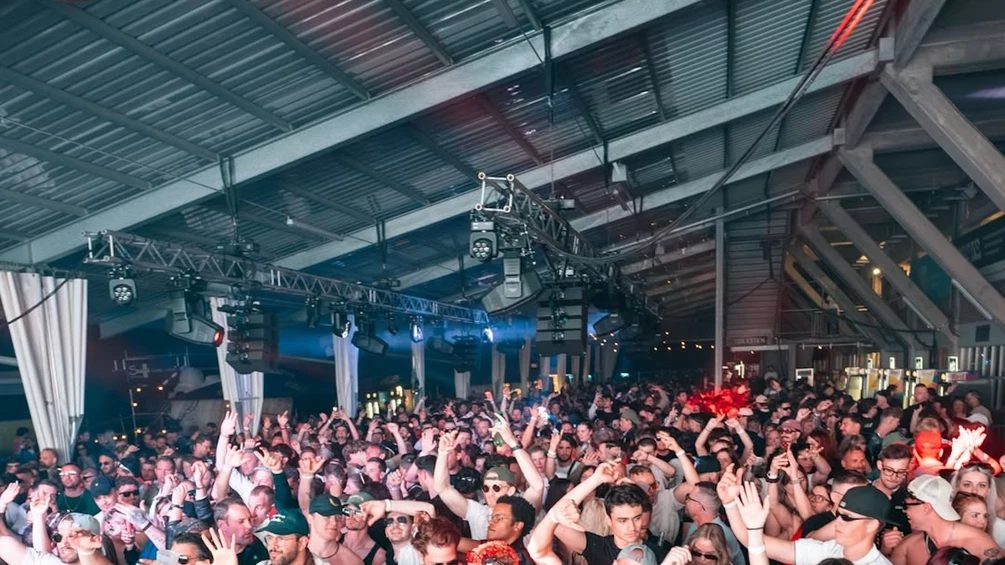
“Sometimes when you get to a certain level as a DJ they’ll just stick you on a table in the middle of a big stage and that’s no fun for anyone. I love playing in clubs and places that are actually built for dancing,” he continues. “So when we do the OUTLIER shows, it’s a way of taking control of an environment and making sure everyone knows they’re there to dance.” Green’s referring to his club-focused OUTLIER imprint which has evolved from NTS radio shows to dancefloor-rocking releases like its breakbeat-laden, irresistibly ravey 2020 debut co-production with TEED , ‘Heartbreak’ into club shows that keep him firmly rooted in the rave. These shows boast a diverse line-up of guest talents, from the pumping house of salute , who played B2B with the always high-energy Mall Grab at London’s Drumsheds in 2024, to the driving techno of Kelly Lee Owens at O-EAST in Tokyo the same year, and HAAi ’s inimitable mix of bass flavours with techno beats on Brighton Beach in 2025.
Green’s core love of DJing is on display at the recent Bonobo Mixmag Lab at London rooftop venue Wagtail, with him playing in the round as the sun went down, surrounded by dancers as he fires off a set sprinkled with his own productions, which gives a great glimpse of what a Bonobo DJ set is really like in 2026. Early on the delicately soaring strings of ‘Dawn’, the new album’s opener mixes into its second track, ‘Cycles’, with the latter’s throbbing bassline setting the tone for what’s to come. Interesting moments follow thick and fast, including the driving bass of ‘Karimu’ by Chicago producer Bulat getting the party started around the 10-minute mark. This is effortlessly complemented by Green mixing in ‘Jera’, the West African-inspired house track by Narasimha , which “we had just released that week on OUTLIER,” Green informs us. Jera’s Northern Ghanaian Dagbani vocals marry with Karimu’s Arabic tones give an international flavor to proceedings. “I think I was trying to look for some sort of thread, be it rhythmically or the type of sounds or the geography of where they’re from, because I like something that threads one song to another,” says Green about the mix.
Around the hour mark we hear more Bonobo productions, as ‘Age Of Phase’ from 2017’s ‘Fragments’ and its shimmering melodies and warm synths backs onto ‘Drift’ from ‘Distance In Static’ . Then the Bonobo standalone single ‘Expander’’ really pumps up the rave vibes with its snare that was originally the sound of Green’s car’s central console opening, before he recorded it to use in the track . “It’s been out for a couple of years but it’s still a big moment for the dancefloor,” Green says with a smile. A real classic rears up around this point, as Green works in a remix of ‘Everything In Its Right Place’ by Radiohead that is closely followed by his own OUTLIER label track with TEED, ‘Heartbreak’, with its '80s disco vocal accentuating the fist-pumping vibes accordingly, before a quick mix into ‘Sekete’ ft. Swordman Kitala by London producer O’Flynn sees Kitala’s Lugandan vocals bring Ugandan vibes to a summery night in London, which compels Green into dancing alongside the crowd for a moment.
It’s clear that the next phase for Bonobo, whatever it may include, will involve DJing. This seems to be at the core of who Green is as an artist. As our time together ends he tells us about a recent gig at the Cannes Film Festival. Here “no one knew who I was, no one cared, but they were dancing on the tables at the end! I didn't have to represent any one sound or to play anything in particular. I don't think I played any of my music. That was one of the most fun gigs of the year for me. It's nice to have the responsibility of those big rooms sometimes, because I feel like I've still got something to say in those environments.” This feels telling: Bonobo has now evolved to a point where he doesn’t need to keep making albums to keep rocking crowds, like Carl Cox or Sasha, who between them have made as many artist albums as Simon Green has. And with his eyes simultaneously drawn to an array of other artistic outlets, he’ll no doubt dazzle us in more ways besides. One thing's for sure, Bonobo hasn’t reached his final form, and a concept so static may never accurately apply to him. Whatever his endeavours, it will always be worth watching what Bonobo turns into next.
‘Distance in Static’ is out on September 11 via Ninja Tune, pre-order it here
Manu Ekanayake is a freelance writer, follow him on Instagram
Reported by Mixmag · presented in full by the Europes Room.