Spekki Webu’s freeform psychedelia
Rushing into the future with a sound that takes gabber and free tekno energy into deeper dimensions of sound, Spekki Webu has cultivated a singular and exploratory style on his own terms. Oli Warwick speaks to the Dutch multidisciplinary artist about the roots of his inspiration, his new album ‘Bootstrap Paradox’, and the many directions he's heading in next
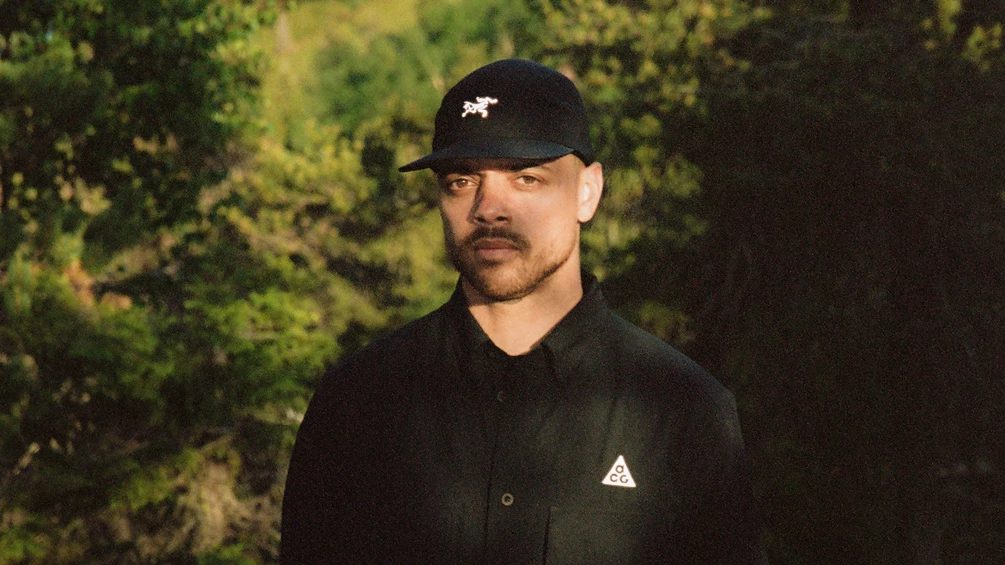
"I don't really care if I'm confusing people," says Spekki Webu. The Dutch artist is speaking from his home in Delft, The Netherlands, running down his many endeavours in electronic music. He reels off the multiple albums he has in development, releases lined up on a rolodex of labels and sub-labels, ambitious augmented reality projects, and a spider's web of collaborations, live club sets and festival shows. It’s a dizzying amount to take in, but spend enough time listening to his psychoactive strain of techno, and you’ll soon realise that this feeling is partly the point.
"I think the power with my music is that people can't really get a grip on what it is," he says. "There's so much different stuff going on that you can't place it. It's very fun to experiment in that way, because I don't want to place it somewhere. I just want to let it speak."
In conversation, Spekki Webu’s passion for the work he does is infectious, driven by a sharp focus and absolute reverence for the music and the culture around it. He's deadly serious about everything he discusses, but never pretentious. His music may be out-there, but crucially, he emphasises, it’s for everyone. It’s an ethos no doubt drawn from his roots in gabber, even if he moves through visual art and abstract sound realms as much as he does through dancefloors these days.
"I don't see myself as a DJ anymore, you know?" he says. "I saw myself as only a DJ for a long time, but Jane Fitz said to me a while ago, 'You're not a DJ. You're a multidisciplinary artist'. Now I understand that more, and it gives me much more freedom."
It’s a mercurial vision that’s demonstrated on his new album ‘Bootstrap Paradox’, which landed in early June on New York’s Outer Orbit Records. Described as a meditation on some of the formative sounds that have guided his "myriad adventures across the many microcosms of electronic music", the eight-track LP recalibrates aspects of ilbient, trip-hop and downtempo into a polychromatic swirl of deep and exploratory techno. It’s unlike anything else you’ll hear this year.
Across the board, Spekki Webu’s sound is thrillingly disorienting. In releases for labels like Blue Hour Music, Amniote Editions and his own Mirror Zone, he moves freely between tempos, and draws on a broad church of influences, from ambient and IDM to goa trance and drone. Certain tracks are firmly rooted in the whipcrack pace of gabber and hardcore, but replace their bludgeoning abrasion with psychedelic textures and intricate grooves.
"People often come to me after a set and ask, ‘What style are you playing?'" he says. “I'm always like, 'You can't ask me this question!’ Two things I don't think about anymore are genre and tempo. I just channel music or sound."
One thing you can say for sure is that Spekki Webu’s sound is wholly separate from contemporary techno’s big-room gloss and four-to-the-floor focus. His approach is at once cerebral and raw, bearing an anti-hype spirit much more in line with the outsider energy of the ‘90s free tekno movement in Europe, the notorious UK sound system Spiral Tribe , and its affiliated artists like R-Zac and 69DB. Future-facing as his music certainly is, acknowledging these precedents to what he does is something he’s adamant about. “All the stuff in the past is very important and I always refer back to it, because I didn't invent something new. I'm just trying to take a fresh approach to it."
Spekki Webu’s journey into electronic music began in the ‘90s. Born in New Orleans, his childhood was soundtracked by his mother’s jazz and Afrobeat records. After relocating to Delft, they’d attend events and festivals together, where he’d fixate on the virtuosic percussion of the musicians improvising on stage. His interest in drums meant that, when he first encountered jungle via a cousin’s boyfriend some years later, he was immediately hooked. From there, a teenage run-in with the Thunderdome mixtape series sealed the deal, and he was sucked further into the hard and fast world of Dutch hardcore and gabber.
While Thunderdome brought mainstream commercial success to the hardcore scene in The Netherlands, it was the working-class rooted, and widely stigmatised, gabber subculture that Spekki Webu found himself drawn to. He attended his first rave at 15, and spent every weekend from then on travelling across the country and beyond, swinging his limbs at licensed events to free parties of all shapes and sizes.
By the turn of the millennium, experimental offshoots of gabber were starting to take the sound in fascinating new directions. Spekki Webu avidly namechecks the likes of Hellfish & Producer and their influential Deathchant label, as well as Enzyme Records, Micron and DJ Radium, as magnetising forces in his still developing tastes at that time.
"There was a new wave of artists producing in a darker, more stripped back and more industrial way," he says. "This branch of gabber music was really the blueprint of what I was into. It went in all these different directions, intertwined with drum & bass, harder jungle and speedcore. We started to call it 'crossbreed'. This was the corner of hardcore I really liked. It hurts my heart a little bit when I see all this bullshit online about what people think gabber is when I know it's so much more."
Over time, the young Spekki Webu pulled together a vast record collection of his own, and was eventually persuaded to start DJing himself. Coming up alongside longtime friend and fellow Delft DJ Woody92 , local gigs naturally progressed toward out of town sets and, eventually, international slots. The more he played, the more his genre-agonistic style developed, mixing comparatively lower-tempo strands of experimental and club-oriented music into his traditionally high-speed framework. He dipped into making his own edits too, before inevitably "surrendering" to learning production proper in 2019. He released his debut EP, the deep, dark and driving ‘Euclidean Doorway’, on Seoul’s Beyond The Bridge label in 2023.
In 2018, he set up the Mirror Zone label, kicking off with a reissue of a little known tribal house curio from 1994: ‘Beneath A Different Sun’ by Memphis . Stylistically slower and softer than the sound most would have associated with Spekki Webu at that time, it nevertheless gestured to the alien quality that would come to permeate the music he’d make and play in the years to come.
Subsequent releases from cult names like DJ Ungel and Vector Trancer further solidified the outsider approach that still drives Mirror Zone today, which has gone on to put out new music from a host of underground psychedelic specialists such as Yasei , Synthbiont & Anassimandrus , and crp . For Spekki Webu, the focus is on fostering real-life connections and indulging the broader reach of his music taste, a philosophy that extends to his Optic Portal and digital-only cycle bender sub labels. "Everybody on the label is there because they came on my path for a certain reason" he says.
The same storytelling sensibility applies to his own releases, with his 2025 LP ‘Neural Network’ being a fine case in point. Sonically and aesthetically, the release is loaded with imagery from the school of Blade Runner, inspired by a drive from rural Taiwan back into Taipei after playing the fabled Organik Festival.
"I was still coming down from a super intense acid trip," he says. "Taiwan is one of my favourite countries, and the architecture in Taipei has this dystopian vibe, like you're really in this cyberpunk movie. Obviously, I was out of my mind a little bit, but I felt like I was connected to this bigger cyborg network. We're entering a period of AI taking over and human modification, so that's where the album is coming from."
‘Neural Network’ bristles with Spekki's signature sound design and light-footed but physically commanding percussion, barreling at a rate of knots through peaks and troughs of surreal synthesis on a non-linear path. In it, you’ll sense a direct link back to that early wave of free party tekno, where the mission was to conjure disorientation and disembodiment rather than the nosebleed annihilation usually associated with faster dance music. It’s an energy that Spekki Webu weaves into his highly improvised live sets too, both solo and alongside his collaborators in the outer reaches of the scene. The resulting impression is that of an organism evolving and growing rapidly, a mass of interconnected music that never sounds quite the same twice.
As his sonic profile matures and expands, there’s no better example of where Spekki Webu’s at right now than ‘Bootstrap Paradox’. The music contained within has a distinctly different feel to his previous work, reaching toward downtempo influences as much as toward breakbeat and deeper shades of techno. It's an approach that calls to mind artists like Andrea Parker, Urban Tribe and Carl Craig, treading the line between club music and home listening. More consciously in Spekki Webu’s case, it drinks deep from the lesser known works of Swedish techno veteran Cari Lekebusch.
"I have a lot of these CDs in this crossover between techno and trip-hop or ambient," he says. "I really wanted to do something like that with a richer, wider sound. A very important inspiration for this album is a very overlooked, underrated album by Cari Lekebusch from the early 2000s called ‘The Architect’. This album has electro, downtempo, even some vocalist stuff, but also very slow deep house and dub techno. I've always carried that album close to my heart."
Spekki Webu has managed to bring the influence full circle, linking up with Lekebusch for some studio sessions in The Hague that led to some "very weird, super experimental" results. Lekebusch also appears on ‘Bootstrap Paradox’, providing a remix of closing track ‘Goodbye Paradise’ to see out the record.
Every successive facet of Spekki Webu’s work leads to further personal connections and collaborations, and the scene is set for his artistic output to grow exponentially at the mercy of his avid work ethic. You only have to mention field recordings to him to start hearing about a new geo-tagged sound archive project he's developing with a friend. Crucially, there's nothing random or chaotic about the many dimensions to his output, not even his hectic gig schedule, which will take him to events like Nous'klaer Festival in Rotterdam, rural in Japan, Final in Taipei, Opera Festival in Sicily, and beyond this summer