China mass-produces sodium batteries to cut 75% lithium reliance
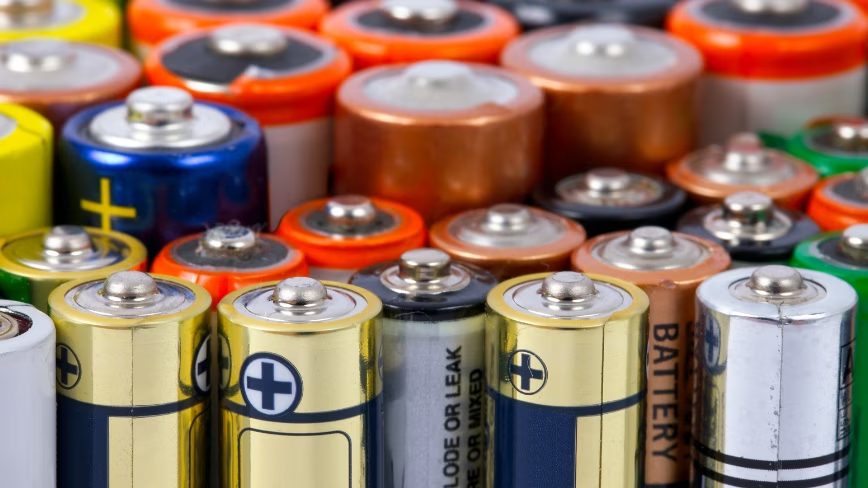
A breakthrough four-minute charging sodium battery is pushing China toward energy storage independence from imported lithium, threatening to upend global battery markets by the end of the decade.
Chinese scientists and manufacturers are rapidly scaling sodium-ion battery technology that can fully charge in roughly four minutes, a development that could sever the country's heavy reliance on imported lithium. Lu Yaxiang, a professor at the Chinese Academy of Sciences’ Institute of Physics, developed a sodium metal battery using a quasi-solid gel electrolyte that retains 90% of its capacity after 2,000 cycles and functions even when bent.
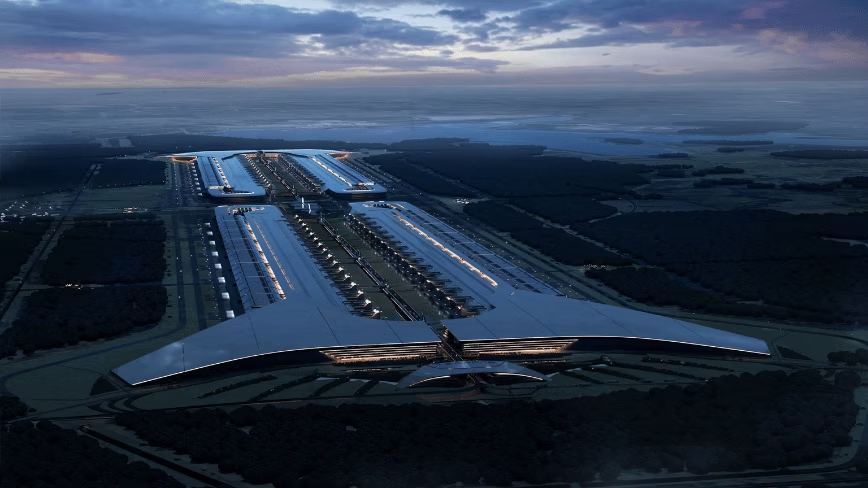
The technology has already moved far beyond the laboratory. CATL has signed a deal to supply 60 GWh of sodium batteries for grid-scale energy storage in Ningde, Fujian. Separately, a sodium battery station the size of 15 football fields is already feeding a Chinese power grid and storing enough energy to power 12,000 homes.
Closing the performance gap
Current commercial sodium cells typically achieve an energy density of 150-175 Wh/kg at the cell level, trailing the 250-280 Wh/kg typical of high-nickel lithium-ion batteries. However, Chinese manufacturers are eroding that deficit. In May, Gotion unveiled sodium battery products reaching 261 Wh/kg with a lifespan of 20,000 charge cycles, putting sodium on par with lithium iron phosphate for many uses.
The economic calculus is shifting fast. An AI-driven memory shortage has recently pushed lithium demand higher, making the cheaper alternative of sodium increasingly attractive. Analysts now project that sodium-ion technology could reach lithium cost parity by 2027, with overlapping price ranges arriving by 2028. MIT Technology Review subsequently named sodium-ion batteries one of its 10 Breakthrough Technologies of 2026.
Strategic implications for Europe
Beijing's acceleration of sodium batteries is a direct response to a specific vulnerability: China currently imports 75% of its lithium. Sodium is roughly 500 times more abundant than lithium, can be extracted from seawater, and costs a fraction of the price. Lu's work, which earned him China’s Youth May Fourth Medal in April, fits a familiar pattern of scaling domestic alternatives when foreign supply chains become unreliable, much like the country's recent memory chip expansion.
For European industry and policymakers, this rapid scaling presents a stark challenge. If China successfully decouples its massive battery sector from global lithium supply chains, it could heavily subsidize its own energy storage and electric vehicle industries. That would leave European manufacturers competing against a self-sufficient rival using a domestically sourced, dirt-cheap alternative, fundamentally altering the continent's own critical minerals strategy.