US Federal Reserve holds interest rates steady amid Middle East inflation fears
The US central bank kept borrowing costs unchanged for a fifth consecutive meeting, signalling caution to European investors as Middle East tensions threaten to derail global disinflation.
The US Federal Reserve held interest rates steady between 3.5% and 3.75% on Wednesday, marking the fifth consecutive meeting without a change. Policymakers voted 9-3 to maintain the current level, with the minority pushing for a small increase.
For European markets and companies, the decision underscores the persistent fragility of the global economic outlook. Elevated US borrowing costs continue to pressure the dollar and complicate monetary policy divergence across the Atlantic.
Inflation in the US stood at 3.5% in the year to June, remaining well above the central bank’s 2% target for over five years. The Federal Reserve noted that price growth remains elevated, driven in part by energy costs linked to the ongoing conflict in the Middle East.
Brent crude, the global oil benchmark, surged more than 6% to above $89 a barrel on Wednesday. This volatility has sparked speculation that the central bank might eventually raise rates to pre-empt future spikes in energy and food costs.
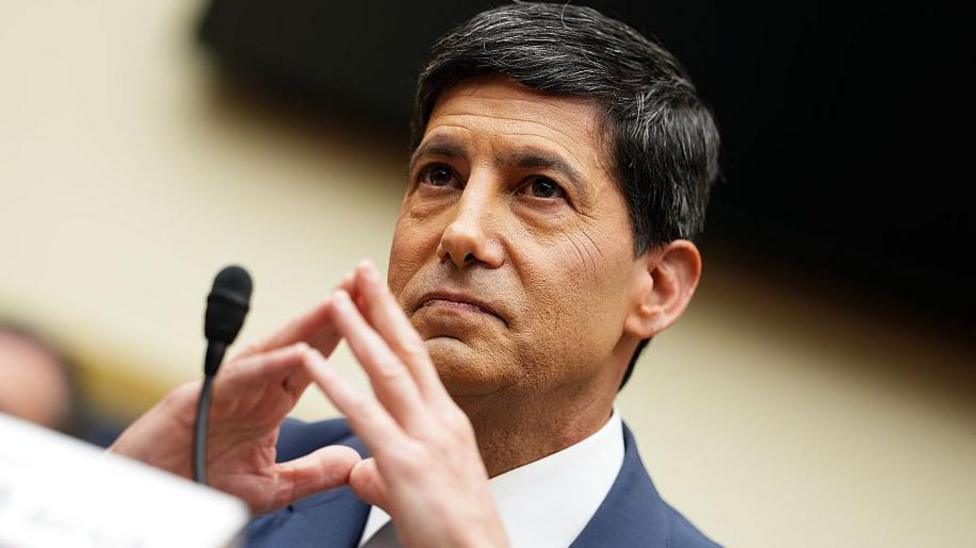
Newly appointed Fed chairman Kevin Warsh, who took office in May under President Donald Trump, pushed back against expectations of a quick fix. He told reporters that while there is impatience among households, the board has no "magic wand" to ease the cost of living.
Warsh described the rate deliberation as a "family fight" that he actively encouraged to test the policy rationale. He noted that his team, in place for only eight-and-a-half weeks, remains "focused like a laser" on delivering lower inflation over time.
Market reaction and political pressure
US equity markets reacted negatively to the hold. The Dow Jones fell 2.19%, its largest single-day drop recently, while the S&P 500 hit a one-month low and the Nasdaq traded roughly 9% below its June record.
Investors are currently navigating a complex mix of rising oil prices and declining artificial intelligence chip stocks. Anxieties also persist over the massive capital expenditure by big tech firms.
Richard Flynn, managing director at Charles Schwab UK, identified the energy market as the "biggest smoke signal" for future US monetary policy. He warned that the ongoing conflict in Iran will heavily influence upcoming rate decisions.
The decision also carries domestic political weight, with US mid-term elections less than 100 days away. President Trump previously pressured former chairman Jerome Powell for rate cuts and expects lower borrowing costs, though Warsh has insisted on the central bank’s independence.
Richard Carter of Quilter Cheviot observed that the White House will be watching closely. Sustained inflation and the threat of future rate hikes make it difficult for the administration to craft a positive economic narrative ahead of the polls.